Renovation is under way at nearly all of our area colleges and universities. For students heading back to school this fall — and their parents — we offer this crash course on the highlights of these projects and their projected benefits.
Downtown Pittsburgh is booming. The Golden Triangle has grown in ways that previous generations may never have envisioned, and the perception of the neighborhood at the heart of Pittsburgh is changing rapidly –– for the better.
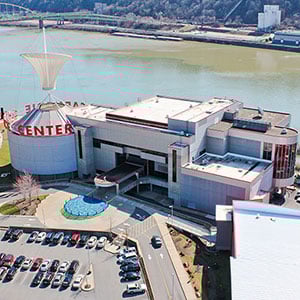
Three major highways — the Pennsylvania Turnpike, William Penn Highway (aka Route 22), and the Parkway East — converge here. Roadways always have played a key role in this region’s growth; so has shopping. Developers built the Miracle Mile Shopping Center in 1954 to take advantage of the traffic, then other developers one-upped them with a 1 million-square-foot mall in the next decade. Research labs for U.S. Steel, Westinghouse and others attracted engineers from around the world, particularly India, and the new immigrants often built temples — one of which is a familiar sight perched on a hillside overlooking I-376
With exciting options for work and play, these Pittsburgh neighborhoods are the places a rising number of urbanites want to call home. Attractive new housing options are popping up to meet the demand of folks young, old and in between who want to take advantage of the easy access to entertainment, an exploding dining scene and iconic city scenery.
Past meets the present in the communities making up Pittsburgh’s eastern and Mon Valley regions. Here you’ll encounter reminders of where we started as leaders in the steel industry and — while plenty of these small towns still face challenges — you’ll find glimpses of where we’re going in neighborhoods moving towards revitalization.
There’s a lot happening in the area between the South Side and the Hilltop, and every time you visit, it seems a new business has cropped up. The communities around Mount Washington enjoy beautiful views of the city as well as parks, strong neighborhood associations and ethnic restaurants.
This is where the city’s southern suburbs begin, at the edge of the city limits and drifting into the areas closest to Pittsburgh proper. Along the south bank of the Monongahela River — in an area with heavy industrial roots — you’ll find neighborhoods in the midst of revitalization, with plenty of business and more quaint places to live.
The completed construction on Route 28 makes access to these northern neighborhoods a breeze — which is great because these boroughs increasingly are becoming destinations. The river communities that have been home to many families with histories in steel- and glass-making have a wealth of quaint, independent retail stores, restaurants and businesses, as well as much-loved libraries, festivals and community days enjoyed by locals since well before their neighborhoods were starting to buzz.
The neighborhoods west of Downtown were among the region’s first. Most were part of Chartiers Township, which (like the creek) was named for Pierre Chartier, a local trader of French and Shawnee parentage who later became a chief. He and his tribesmen helped defeat George Washington in the Battle of Fort Necessity, sparking the French and Indian War. Formerly farmland, most of this area was transformed by industry into working-class neighborhoods, a legacy which persists today.
Each borough and municipality in this northeastern corner of Allegheny County contains surprises. To those who live along the river’s edge, they’re familiar, hometown destinations and sights; to visitors, they’re spots worth making the drive out along (the finally construction-free) Route 28. Make a day trip to explore a chunk of the region off the beaten path — you might get so attached that you start thinking about a permanent move up the river.
While driving southbound on Interstate 79, don’t be scared to take an exit and explore. These townships and boroughs range from scenic farmland to busy main streets. Regardless of the surroundings, the areas in this region all offer plenty to experience.
When people talk about the revitalization of Pittsburgh, it usually involves the tagline meds and eds — and meds and eds it is in College Town. You’ll find the sprawling buildings of Carnegie Mellon University, Carlow University and the University of Pittsburgh as well as several UPMC medical complexes. Here, you can climb to the top of the second-tallest educational building in the world. Whether you’re working on your degree or visiting someone who is, you’ll never be bored, thanks to a wealth of cultural opportunities.