Why is an AI Summit Taking Place in Pittsburgh?
The AI Horizons conference will take place in Bakery Square Sept. 17-18, addressing concerns and possible uses of artificial intelligence.

PHOTO FROM PITTSBURGH MAGAZINE ARCHIVES
Love it or hate it, there’s no doubting that artificial intelligence is a hot-button topic — or that Pittsburgh is uniquely positioned at the front lines of the new technology.
With “AI Avenue,” a stretch of the East End that is home to more than 20 AI-forward companies such as Duolingo and Google, the Steel City has begun to forge a niche for itself in the tech industry. That’s what makes it the prime location for the upcoming AI Horizons Summit, which will take place in Bakery Square Sept. 17-18.
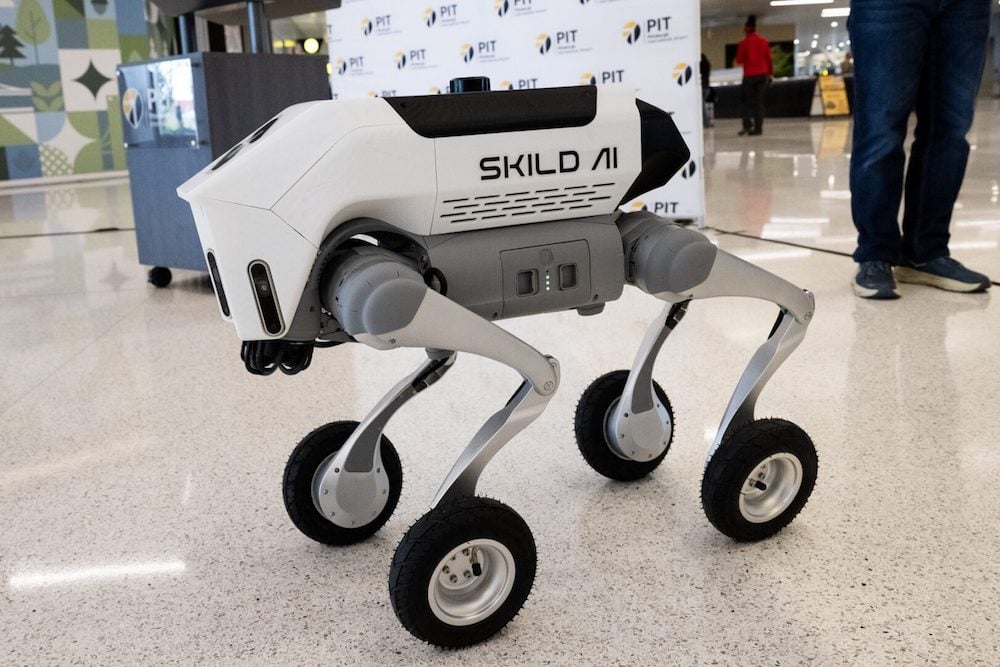
The fact that the summit convenes at Bakery Square is intentional; the plaza is the anchor of AI Avenue, making it a fitting backdrop for the more than 1,000 technology, government and corporate leaders in attendance to address enterprise adoption, physical robotics, workforce disruption and federal policy of AI.
“We started this three years ago because we believed Pittsburgh had to be at the center of this next economic epoch — not watching it happen from the sidelines,” says Joanna Doven, CEO of the AI Strike Team, which hosts the summit. “Now the national conversation around AI is moving at a dizzying pace, and Pittsburgh has exactly the people who should be helping make sense of it.”
She adds that the goal is to find a way to be both responsible and competitive; AI Horizons, in addressing the acceleration, security and real-world impact of artificial intelligence, aims to fuel conversations on how to do exactly that.
“That’s what AI Horizons is about: putting the builders, the adopters, the policymakers and even a Catholic monk in the same room to wrestle with what this technology means for our economy, our workforce and ultimately, for us as humans,” Doven says.
Pittsburgh has been at the center of the AI discussion for some time. In the May issue of Pittsburgh Magazine, freelancer Meg St-Esprit explained how innovations at Carnegie Mellon University in the 1980s, long before ChatGPT or Waymo were in the cards, paved the way for the tech boom the region has seen in recent years.
However, not all attention has been positive. While some community members embrace AI as the ticket to the future, others fear that it could bring environmental ruin and strain our aging electric grid, especially if more data centers move in. Others go a step farther, worrying that AI could even threaten humanity if it grows and learns at a quicker pace than we can match.
The summit intends to address these concerns and more through 20 cross-sector discussions with industry leaders.
Registration for the summit is open and available online. You can also view an agenda here.