Pittsburgh Didn’t Just Join the AI Boom — It Helped Start It
Fueled by innovations at Carnegie Mellon University, startup growth and global investment, the region is redefining its economy through artificial intelligence.
Long before most Pittsburghers had heard of generative AI, large language models or chatbots, a group of scientists from Carnegie Mellon University were out on the city’s streets having fun with robot cars.
It was the 1980s, and the researchers were deeply interested in artificial intelligence, including how it could be used to make choices and predictions; it would help shape the foundation of modern machine learning. The neural network research happening at CMU helped underpin everything from autonomous vehicles to today’s generative AI systems, among them ChatGPT.
Beginning in 1983 with a small cart called The Terregator, which could cruise a Schenley Park trail at slow speeds, developers were eager to test a self-driving car in the real world. Eventually, Dean Pomerleau, a senior research scientist at CMU, hit the road, albeit quietly.
“One thing led to another,” recalls Tom Mitchell, who founded the world’s first Machine Learning Department at Carnegie Mellon University. “He said he didn’t ask, he didn’t tell, he just did it; I think on a Sunday morning.”
The work happening in Pittsburgh paved the way for Pomerleau’s journey out of Pittsburgh at 55 miles per hour while heading north on Interstate 79 inside one of the first autonomous vehicles; it also drew folks like Mitchell, who came to CMU in 1986, to the city.
The innovation set the stage for every single one of today’s self-driving vehicles, from that first robot cart to a minivan called the NavLab 5 — which was the first self-driving car to cross the United States from Pittsburgh to San Diego in 1995 — to the garage full of Waymos currently stored in Bakery Square on what’s become known as AI Avenue.
“We said, ‘Something is happening here that just makes it possible to do things we couldn’t even come close to doing before,’” says Mitchell. He remembers the 1980s as an explosive period for AI. “Machine learning was just beginning to work,” he adds, although CMU’s inaugural Machine Learning Department wasn’t officially launched until 2006.
Well versed in the history of the technology he has spent his career developing, Mitchell outlines a long and storied history of artificial intelligence. It was born out of a 1956 conference at Dartmouth College, but centered largely around Pittsburgh as a whole, and Carnegie Mellon University specifically.
The university’s work in artificial intelligence goes all the way back to the school’s founding in 1967, when the Mellon Institute of Industrial Research merged with Carnegie Tech to form a new research powerhouse. In that environment of bold innovation, pioneering researchers such as Raj Reddy, Alan Newell, Herb Simon and Allen Perlis helped shape the emerging field of computer science, and positioned AI as one of the most transformative technological advances in human history.
As to whether CMU deserves the title as the “Birthplace of AI,” Mitchell says it’s a well-earned moniker; he notes, though, that it would be remiss to discount the great work being done across the nation in the ‘80s.
“It was a country-wide phenomenon, but Pittsburgh played an absolutely major role,” he says. “CMU invested early, bought in and gambled early on machine learning.”
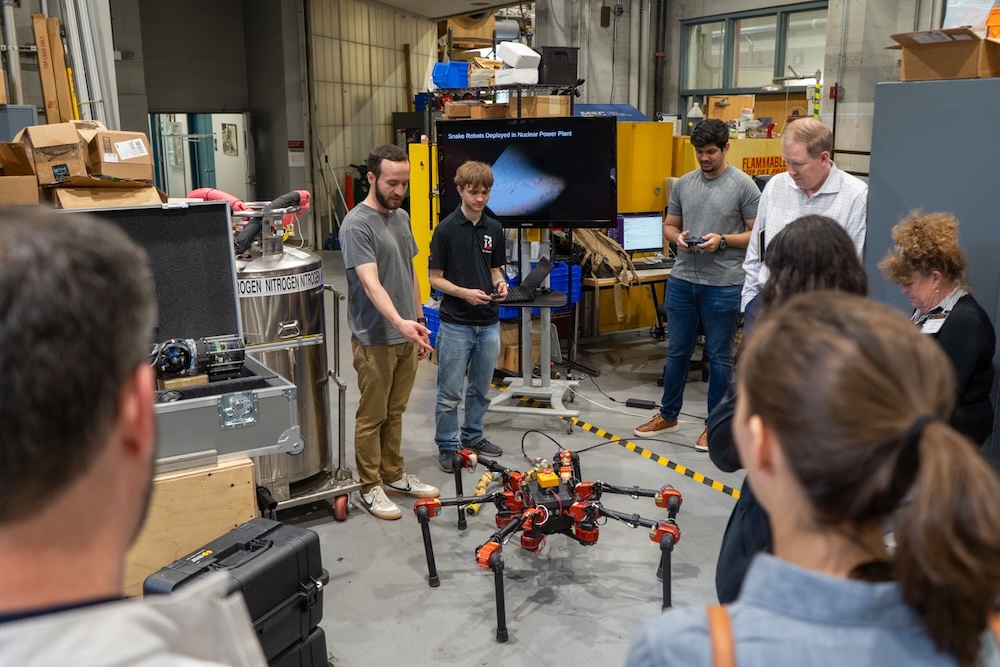
ALPHALAB’S ROBOTICS FACTORY
Magnetic Pittsburgh
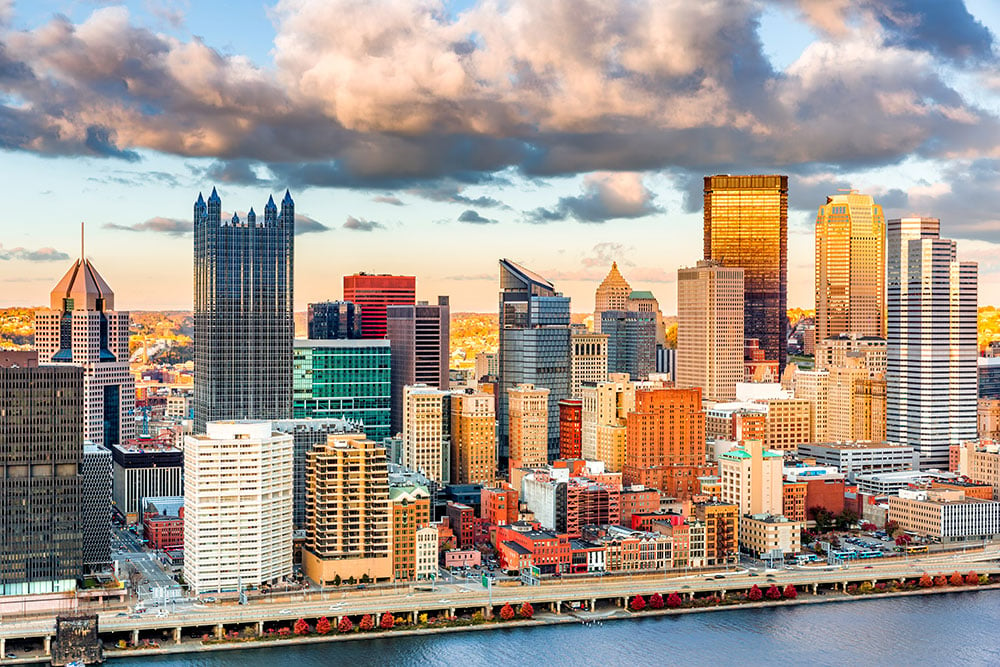
That gamble paid off. The buzz of excitement that Mitchell and colleagues found contagious in the neon era still persists today at Carnegie Mellon. With students, faculty, and alumni from more than 150 countries, the school has a magnetic pull to those with an interest in AI.
“I ended up at CMU because I was initially drawn by the artificial intelligence major,” says graduate student Allison “AJ” Seo.
When the university debuted the major in 2018, it was the first standalone AI undergraduate major in the nation. Other universities, such as MIT, have since followed suit. Seo, who is from Northern Virginia, says a robotics club in high school first piqued her interest in technology, although she quickly honed in on machine learning.
“When I came to CMU, my eyes were opened to machine learning and how limitless its capabilities were,” she says.
Since completing her undergraduate program in AI, Seo is now working on a master’s degree in machine learning. Seo says the research opportunities available to her, even as a freshman at CMU, would not have been available anywhere else.
It’s not just Carnegie Mellon that’s drawing brain power to the region. At the neighboring University of Pittsburgh in Oakland, investment in AI healthcare technology and research is driving innovation at a rapid pace.
In 2025, technology company Leidos partnered with the school for a $10 million investment earmarked to develop AI-powered healthcare tools, accelerating the already-growing healthtech industry in Pittsburgh.
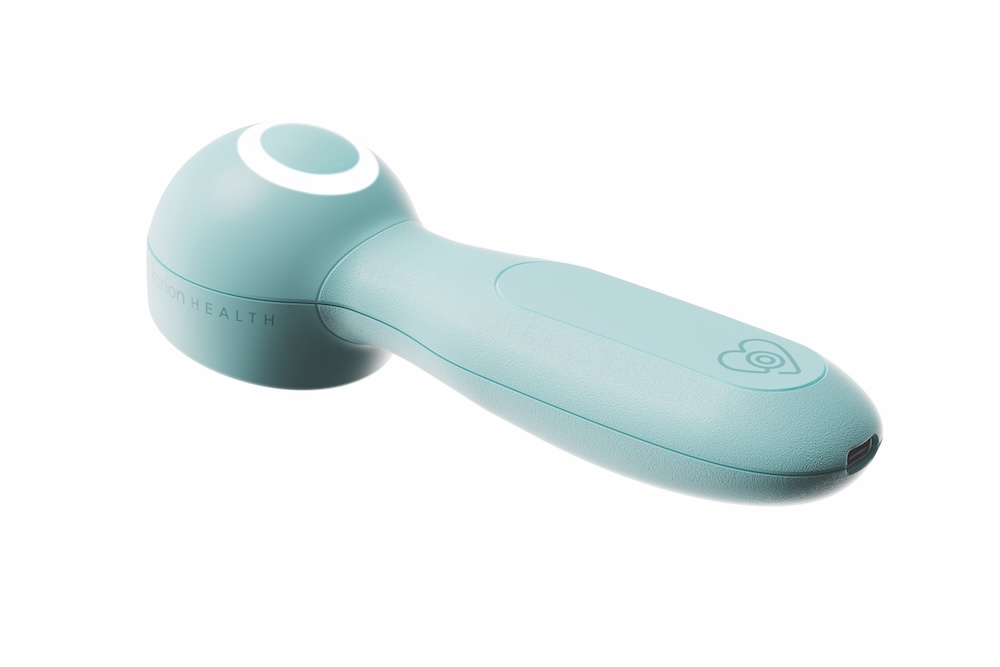
A project for the 2021 Pitt Challenge Healthcare Hackathon, designed by Anna Li, a joint MD-PhD student at the University of Pittsburgh and Carnegie Mellon, also is reshaping the face of telehealth. The SoundHeart is a remote stethoscope that uses augmented reality and AI technology to gather biometric data and assist in remote diagnosis. The invention won a $1 million Hult Prize in 2024 and has continued to gain traction through support from both universities and Hellbender, Pittsburgh’s first AI hardware manufacturer.
The company Li co-founded, Korion Health, expects its product to secure FDA approval this year. Li, who is passionate about equity in healthcare, hopes her invention will improve outcomes for those with limited access to in-person medical care.
Seo emphasizes that while academic offerings draw students to Pittsburgh, these kinds of partnerships between local universities and wildly successful tech companies are what keep them here. “All of the students know about Duolingo,” she says. The software company was founded in 2011 by CMU graduates Luis von Ahn and Severin Hacker and today is valued in the billions, making it one of the city’s most well-known tech success stories.
It’s not just Duolingo, though — Seo says Pittsburgh retains its tech graduates due to the many opportunities in the region.
“There’s a Google office here, an IBM office, and I feel like a lot of people are choosing to stay for that reason,” she says. “They are choosing to stay here to work, but still remain connected to the CMU community behind the scenes or as a member of the teaching staff.”
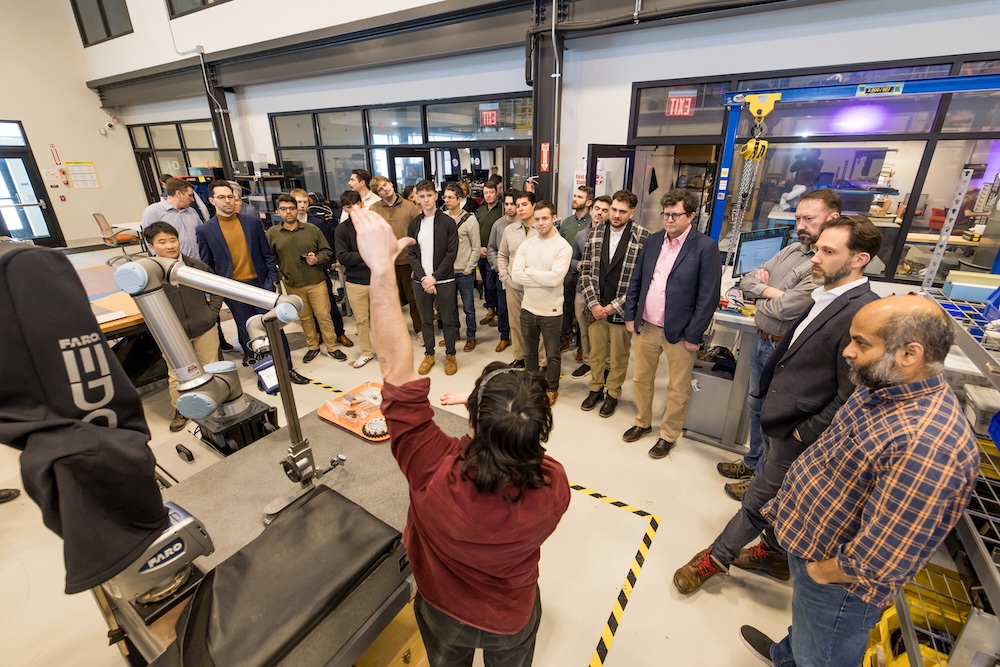
AGTECH AT CMU
The AI Economy
While the symbiotic relationship between both tech giants and innovative startups is bringing, and retaining, talent to Pittsburgh, it’s also creating a new economy in the region.
Today, Pittsburgh is ranked in the top 10 nationally for AI investment, bringing in $2.29 billion in funding to the region last year, primarily driven by a high volume of corporate and venture capital deals at both early and later stages, according to Ernst & Young LLP and Innovation Works, Inc. in their annual review of Pittsburgh’s technology investment landscape. The total funding amount is up from Pittsburgh’s 2024 total of $1.89 billion and is the third-highest total on record for the region.
Walking along AI Avenue in Bakery Square, Joanna Doven says Pittsburgh needed to seize this moment. The loss of the steel industry wreaked economic havoc, but AI investments in the city can bring about a new era for Pittsburgh, she says.
Doven is the executive director of AI Strike Team, a public-private task force built to turn AI research into regional growth for the region. Think of it as Pittsburgh’s AI brain trust.
Doven says the city is perfectly primed for this moment; the hard work will be in convincing others that a Rust Belt city such as Pittsburgh is ready to shed its smoggy past. Doven points to the arrival of Waymo, the self-driving taxi company housed in Bakery Square, as a harbinger of Pittsburgh’s tech future.
A subsidiary of Alphabet Inc., Google’s parent company, Waymo did not initially have plans to test its autonomous taxis in Pittsburgh until 2028. Then the city pitched itself. Waymo executives prefer to launch taxis in communities that are growing, and Pittsburgh has only recently begun to show modest population growth after decades of decline.
“It’s a death spiral,” says Doven. “They call it disinvestment.”
The AI Strike Team researched what Waymo needed to thrive in a city: parking, charging, access to the airport and support from local officials. Pittsburgh delivered on all four aspects. In December 2025, Waymo officially launched its test program in Pittsburgh.
While much of the city’s most visible AI-powered history centers around vehicles, that same technology has launched companies in every sector of the economy; Pittsburgh’s AI economy currently is measured in the billions.
Skild AI, which designs AI models for robotics that could power everything from warehouse automation to household helpers, has broken records with the amount of investment it has garnered. In less than three years, the company, which was founded by CMU alumni Deepak Pathak and Abhinav Gupta, has climbed to a $14 billion valuation, placing it among the most valuable robotic AI startups in the world, and marking it as one of the fastest valuation surges in Pittsburgh tech history.
In the healthcare sector sits Abridge, which builds generative AI tools that transform medical conversations into structured clinical notes to save medical professionals time. The company has topped $5 billion in valuation and currently is used in more than 150 healthcare systems across the U.S.
Abridge also has deep Pittsburgh roots; founders Dr. Shivdev Rao, Zachary Lipton and Sandeep Konam are all graduates of both CMU and the University of Pittsburgh. The company’s valuation places it among the most prized healthcare AI startups in the nation.
This rapid acceleration across sectors, rooted in the research coming out of CMU and Pittsburgh’s innovation ecosystem, is to Pittsburgh’s future what smoke stacks and blast furnaces were to its past.
“If we don’t lean in, we are going to die,” says Doven. “It’s a table-stakes moment just to maintain your economic position. If you’re not future forward and figuring out how your ecosystem is going to apply AI, adopt AI, and lead in the commercialization of technologies, then you are living in a dream world.”
THE SOUNDHEART
AI Ethics and Learning Lessons
Just as those smokestacks and blast furnaces brought great economic development to Pittsburgh, the steel industry also brought challenges and ethical quandaries. Pollution, unsafe working conditions, and the unequal distribution of the wealth created by steel, have left permanent marks on the city.
In the same way, the region’s explosive AI economy is not without its own moral dilemmas. It raises the question: Will the next industrial revolution be more equitable and ethical?
It’s hard to ignore the moral implications of a technology that can disrupt job markets, introduce bias in the information it provides and consume considerable amounts of energy — but that doesn’t mean Pittsburgh can turn its back on this moment.
At CMU and across the AI sector in western Pennsylvania, the conversation about the ethics of artificial intelligence is robust and constant. Zico Kolter, the current director of the Machine Learning Department at Carnegie Mellon, sits on OpenAI’s board and chairs its Safety and Security Committee, which oversees AI safety practices for the tech giant. The local universities have their own ethics board, and Carnegie Mellon’s philosophy department is researching the ethics of artificial intelligence daily.
Nationally, the federal government has been slow to place ethical parameters around AI usage and growth, although Pennsylvania has taken some action at the state level. In February, Gov. Josh Shapiro debuted a plan to protect Pennsylvanians from harm that may be caused by AI tools. It aims to prevent AI chatbots from impersonating licensed professionals like doctors or therapists, stop scammers from using AI to generate convincing fraud targeting seniors and families and curb deceptive “companion” bots that could mislead vulnerable users.
The state has also made moves to address environmental and disruptive concerns surrounding data centers while working to ensure continued AI investment. Kevin Dowling, the managing director of The Robotics Factory, the robotics start-up program operated by Innovation Works, understands public reservations about creative work and overutilization of chatbots.
“There’s no excuse for utilizing previous work and representing it as your own,” he says, though he notes that the general mixing bowl of data pulled by a chatbot can be a great information source — if used well.
He encourages Pittsburghers to look at the broader picture, though. The type of AI innovation happening in the city is focused more on industry, and less on apps and entertainment.
“The rise of interest in physical AI, where AI and robotics meet the real world, has driven a high interest in safety,” says Dowling.
Local success story Gecko Robotics, for example, has created robots that repair power plants — eliminating dangerous situations where workers had previously died.
“Many companies are examining this. Sometimes the founders are a bit naive about how the data is obtained and used, but we coach, mentor and help them on that journey,” Dowling says. “I can say that safety was a consideration from the very first indoor robots to the road-worthy robots and vehicles … AI has introduced many additional conditions requiring thought and caution,” he adds, noting this issue is not unique to Pittsburgh.
While it’s not a reason for Pittsburgh to exit the AI race, he reiterates that it does require ongoing thoughtfulness.
“The AI ethics issue will continue to arise, regardless of who is doing the work or where it is being done,” Dowling says.
As AI becomes more widely used, data centers are swelling in size and number in Southwestern Pennsylvania. For more coverage of where data centers are being built in the region, economic impact and residential and environmental concerns, visit here.