Celebrate Día de los Muertos in the Cultural District
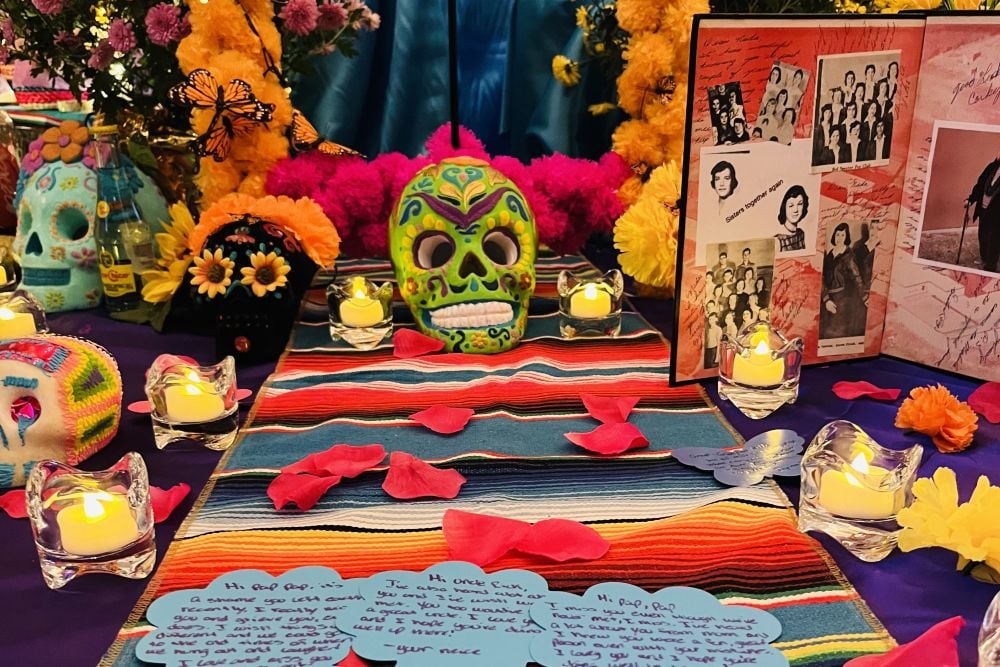
Through Nov. 2, visitors can leave offerings to deceased loved ones at an ofrenda in Downtown's Greer Cabaret Theater lobby.

PHOTO BY KRISTY GRAVER
Making people laugh and cry is Lisa DiGioia-Nutini’s goal during Día de los Muertos, or Day of the Dead, a traditional Mexican holiday celebrated Oct. 31-Nov. 2.
For the third year in a row, she partnered with fellow artist Alison Zapata and the Pittsburgh Cultural Trust to design and build an ofrenda, an intricately decorated altar to honor loved ones who have passed away.

PHOTO BY KRISTY GRAVER
Now through Nov. 2, Pittsburghers can visit the ofrenda at the Greer Cabaret Theater’s Kara Family Lobby Downtown to leave offerings of flowers, photographs, mementos and handwritten notes, or to simply marvel at the colorful installation. The lobby is open from 10 a.m. to 6 p.m. Monday and 10 a.m. to 8 p.m. Tuesday through Sunday.
Other events include a $10 ofrenda happy hour in the lobby from 5:30 to 9 p.m. on Oct. 28 and a matinee screening of “The Book of Life” at the Harris Theater at noon on Oct. 31 that’s free for kids 12 and under.
More than 600 students will visit the ofrenda next week to learn about Dia de los Muertos traditions from the artists.

PHOTO BY KRISTY GRAVER
DiGioia-Nutini and her late husband Jean-Pierre Nutini often traveled to Mexico, where he had familial roots. They were married in Oaxaca by the renowned woodcarver Manuel Jimenez. The couple began selling Mexican folk art online in 2002 and ran Mexico Lindo’s brick-and-mortar store in Squirrel Hill from 2004 to 2017.
DiGioia-Nutini, a “cultural consultant,” has built more than 50 ofrendas throughout the city over the years. Her first one was dedicated to former Pittsburgh Mayor Bob O’Connor, who died in 2006.
A dozen volunteers spent four days assisting Zapata and DiGioia-Nutini with the installation.

PHOTO BY KRISTY GRAVER
Carlyn “Chuck” Santistevan, co-owner of Dos Reyes, a Sonoran-style Mexican eatery in Lincoln Place, made dozens of tissue paper flowers and butterflies and hung them from the ceiling.
Terri Bell, the Cultural Trust’s vice president of strategic partnerships and community engagement, says she was inspired to create a public ofrenda in Pittsburgh after seeing one in Los Angeles.
“It’s a gift to the city,” she says.

PHOTO BY KRISTY GRAVER
Can’t visit the Cultural District’s ofrenda? Make one at home. Traditionally required elements featured in an ofrenda include:
- Three or more levels representing the underworld, the earth and the heavens.
- The colors orange, yellow, purple, pink, black and white to symbolize the harvest, the sun, religious devotion, grief, the underworld and hope.
- Marigolds, which entice the dead with their fragrance.
- Salt and water to represent the flavor and foundation of life.
- Papel picado, colorful cutout paper banners that symbolize wind and the fragility of life.
- Pan de Muerto, a sweet bread decorated with crossed bone shapes.
- Skeletons and sugar skulls to reflect both death and the sweetness of life.
- Candles that guide spirits to the living world.
- Monarch butterflies, which begin their annual migration to Mexico during Día de los Muertos.
“The main thing,” DiGioia-Nutini says, “is to create your ofrenda with love.”