The Pittsburgh Irish Festival Needs Your Help
Facing a significant financial shortfall driven by bad weather and rising prices, festival organizers are hoping to raise $200,000 by the end of the year.

PHOTO COURTESY OF THE PITTSBURGH IRISH FESTIVAL
For 35 years, the Pittsburgh Irish Festival has brought together upward of 20,000 people annually, all with one goal in mind: to celebrate the city’s strong Irish roots in a way that fosters community. The Irish heritage dates back to the earliest days of a burgeoning steel industry.
However, organizers warn that the 2026 festival, held Sept. 11-13 at Carrie Blast Furnaces in Rankin, may have been the last, at least for a while.
“It’s been a series of unfortunate events,” says Mairin Petrone, executive director and president of the Pittsburgh Irish Festival.
First came a massive flood in 2018. During the festival weekend, held then at the Riverplex at Sandcastle, the Steel City endured its second-highest rainfall ever recorded. The torrential downpours brought severe flooding that crested at 16 feet overnight on Saturday, destroying tents and other equipment erected along the Mon River and forcing organizers to cancel the event’s third day altogether. Facing an imminent financial threat, they called out to the community for the first time in the event’s decades-long history, and the community — moved by pictures of the destruction circulating on social media — came through.
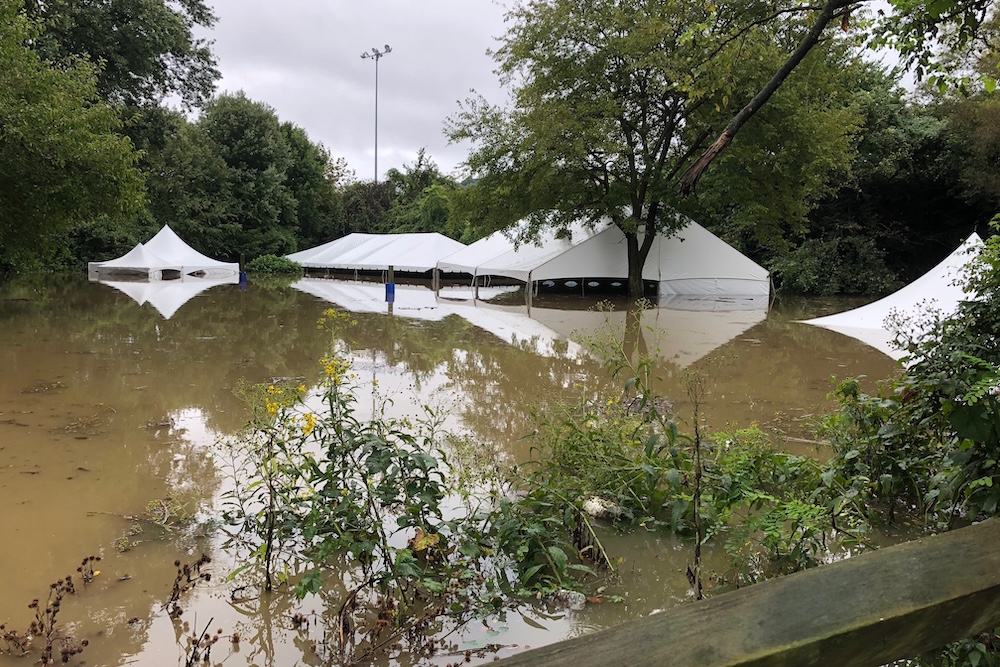
PHOTO COURTESY OF THE PITTSBURGH IRISH FESTIVAL | IN 2018, PITTSBURGH’S SECOND-HIGHEST RAINFALL EVER RECORDED FLOODED THE IRISH FESTIVAL AND LED TO THE CANCELLATION OF ITS THIRD DAY.
Then the Covid-19 pandemic hit.
“Covid had shifted things in the industry pretty dramatically for a number of reasons, but primarily, costs went up,” Petrone says.
In a typical year, she adds, costs may increase between 1% to 3%. But during the three years most impacted by the pandemic, costs for festival organizers leapt to 10% to12%. Overall, Petrone estimates that the festival now costs close to 30% more to host than it did eight years ago.
“And then none of it went away when we came out of Covid,” she says.
On top of it all come weighty federal tariffs on products from Ireland in recent years and a consumer base with tighter wallets, caused in no small part by economic disruptions and a significant rise in the cost of living.
And the weather wreaked havoc once more in 2026.
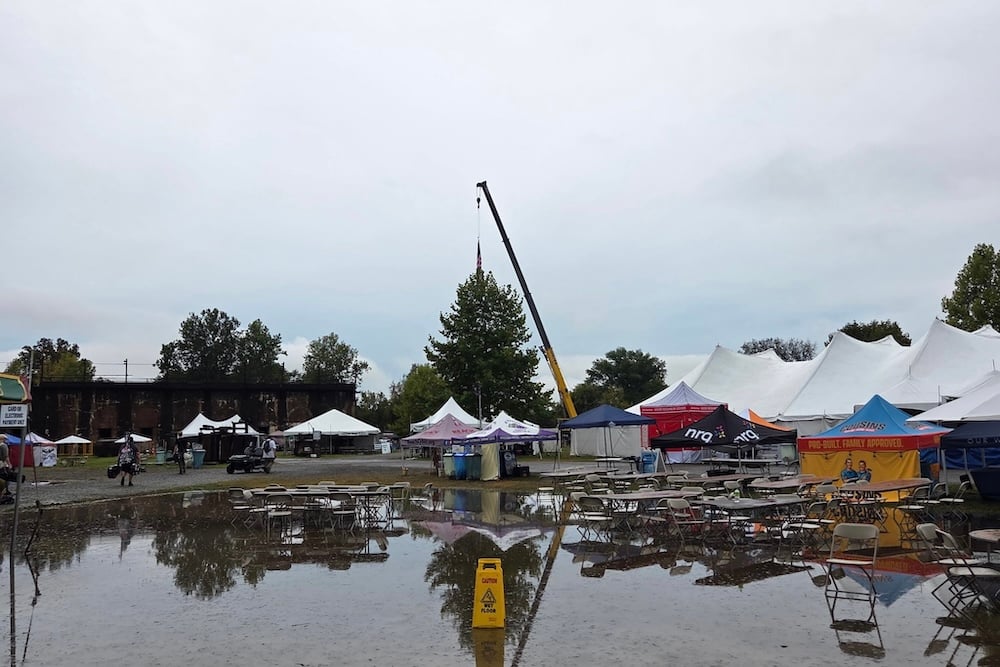
This year, destructive thunderstorms rolled in on Saturday, Sept. 12, forcing an evacuation during what normally would’ve been the festival’s peak hours at Carrie Blast Furnace. The result was a nearly 50% drop in attendance; an anticipated weekend total of 20,000 attendees became closer to 10,000, which had a ripple effect on just about every revenue source, from food and beverage sales to marketing merchandise and raffle tickets.
“We lost the heart of the festival — our eight most important hours from an attendance and revenue-generating perspective. The grounds were partially flooded and the rain just didn’t stop,” she says, adding that the region’s increasingly unpredictable weather has recently been a thorn in the festival’s side.

PHOTO COURTESY OF THE PITTSBURGH IRISH FESTIVAL | FLOODING IN 2026 FOLLOWING A THUNDERSTORM SO SEVERE THE SITE HAD TO BE EVACUATED ON SATURDAY, SEPT. 12.
“I think climate change is a factor. I don’t have data on how much of it is, but it sure feels different than it has before,” she says. “In 35 years, this was the first time we evacuated due to a thunderstorm.”
The Pittsburgh Irish Festival’s organizers also raise significant funds during Picklesburgh in July, which this year was impacted by smog from wildfires burning out west. Because of yet another weather-related disruption, Irish Festival organizers lost money that typically would have been raised during the summer event to cover things like band deposits or tent rentals.
“It was a perfect storm for us to be in a position that we really need the community to help support us,” she says.
Now, the organization is hoping to raise $200,000 by the end of the year. Folks can donate directly on its website, by purchasing tickets to Celtic Rock Christmas at Velum Fermentation on Dec. 10 or by buying Irish-inspired wares from the festival’s booth at the Holiday Market in Market Square. (At the Celtic Rock Christmas event, organizers will also be collecting goods for the Greater Pittsburgh Community Food Bank as a way of giving back to the community.)
The money raised in support of the Pittsburgh Irish Festival will go toward putting on 2027’s flagship event — an endeavor that usually costs anywhere from $550,000-$600,000 of the organization’s annual $800,000 budget. All the while, Petrone says organizers are looking into taking additional protective measures to ensure unstable weather patterns won’t strike again, including potentially moving some of the festivities indoors and investing in insurance that could help recoup lost revenue from rain, wildfires or other disruptions.
With just under $10,000 raised as of Nov. 17, a 2027 Pittsburgh Irish Festival is not a guarantee.
“We’re working really, really hard,” Petrone says. “If this hard work pays off in any manner, we’ll bring the festival back. But does it look the same? That is something we’re talking about at length.”
In the absence of the necessary funds, next year’s Irish Festival could be scaled back, a smaller event that could give organizers a buffer to get back on their feet. It’s also possible that the festival could have a bye year, allowing organizers to take a break and focus on their other year-round programming while fundraising to come back strong in 2028.
Either way, the absence or reduction of the Pittsburgh Irish Festival, one of the organization’s signature annual events, would be felt throughout the community.
“We sell out hotels, we bring in a lot of tourism dollars into the region. We employ over 300 artists … who would lose this opportunity,” Petrone says. “We work with a lot of small businesses, a lot of women-owned businesses. We hire roughly 500 people through the companies that we use to do sound, light and electric work. They all rely on that income.”
The cost of losing the festival, though, would go far beyond dollars and cents. Just as importantly, it has become a cultural institution for generations of Pittsburghers, regardless of whether or not they are Irish.
“We’ve had people go on their first date at the festival, and they get engaged at the festival, and then they get married at the festival and then they bring their kids,” Petrone says. “It’s something that I think is culturally important.
“We want people to know that we’re working really hard, and that we’re grateful and that we hope that they can see the importance of the significance of what we think for many is a beloved tradition.”