Love and War: What’s It Like to Get Married Under Maxo Vanka’s Murals?
The artist's startling depictions of immigration, sacrifice, battles and faith are found throughout St. Nicholas Croatian Catholic Church in Millvale.
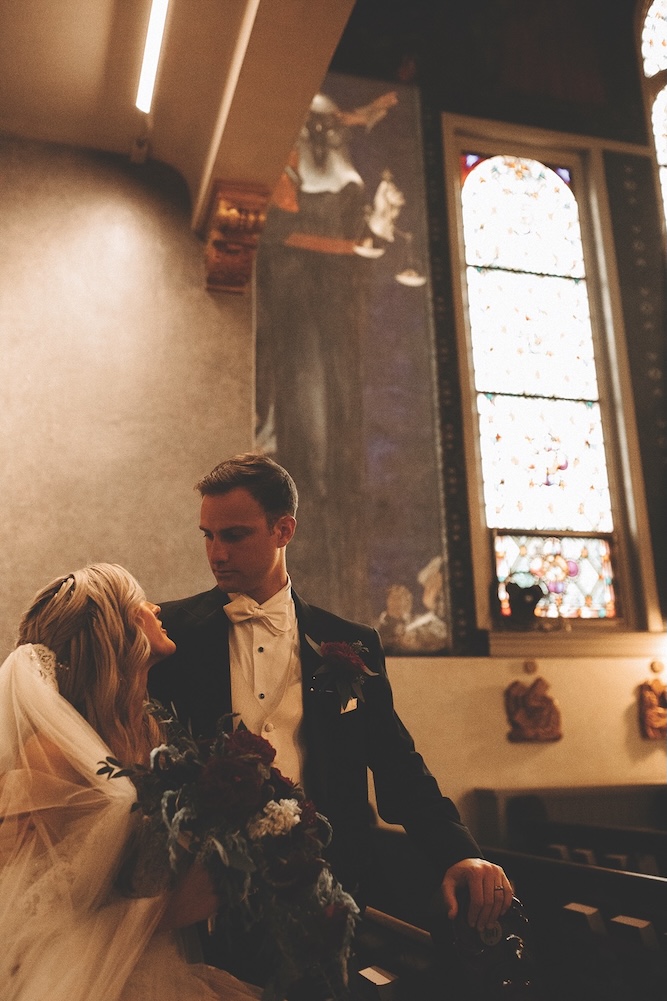
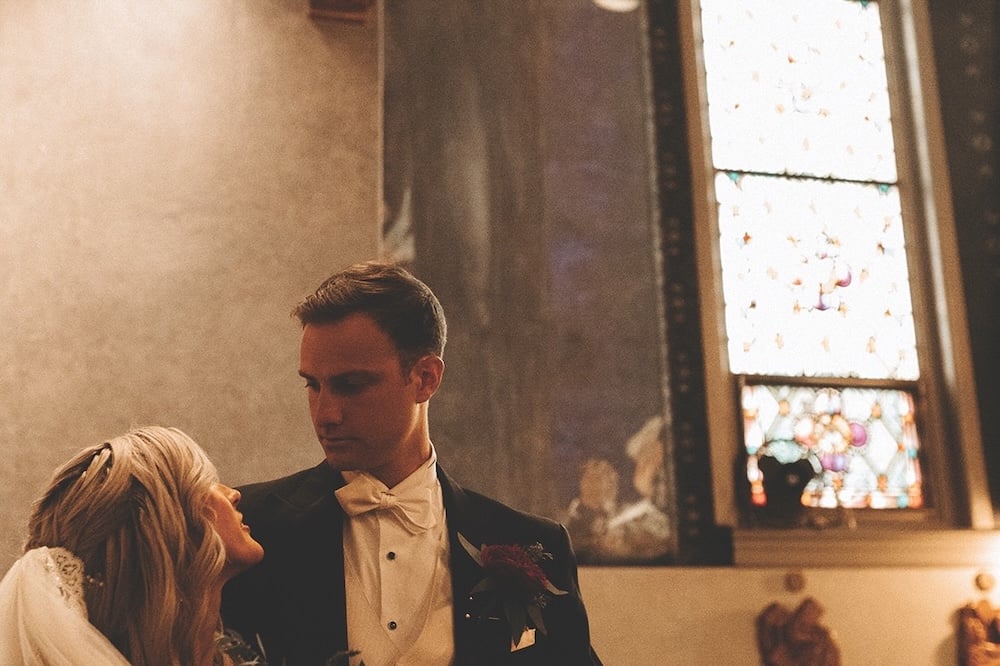
PHOTO BY DREAM QUEEN PHOTOGRAPHY
From Route 28, St. Nicholas Croatian Catholic Church can look almost incidental: a pale stone building tucked into the hillside above Millvale, glimpsed through a windshield before disappearing around the next bend.
That was how many of Alexis and Paul Svirbel’s guests knew it. “The church next to Route 28,” Alexis says.
Then their guests stepped inside — and they couldn’t help craning their necks.
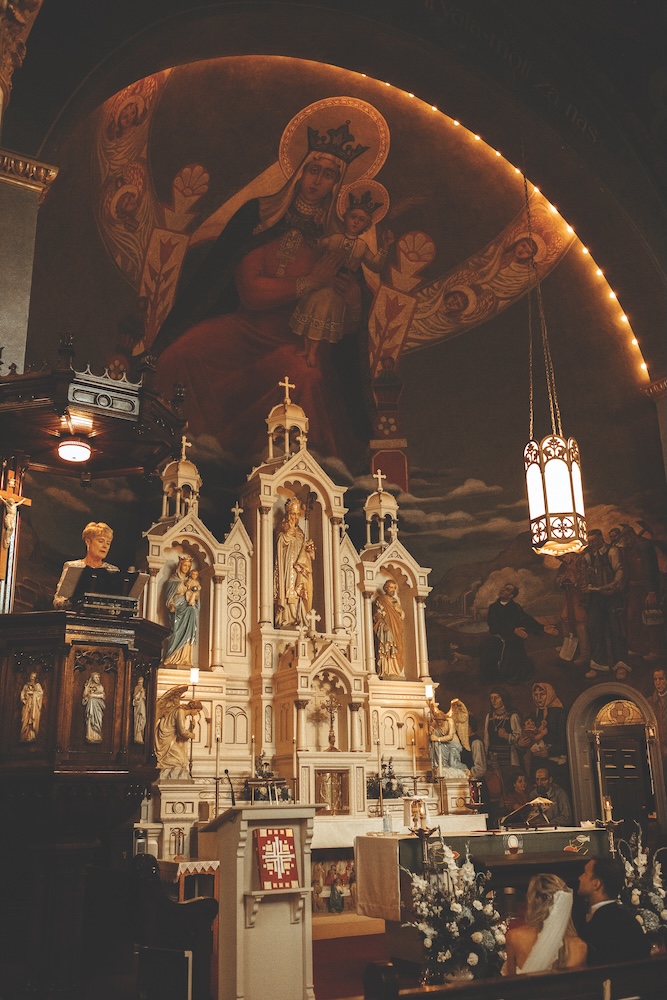
PHOTO BY DREAM QUEEN PHOTOGRAPHY
The walls inside St. Nicholas burst with murals by artist Maxo Vanka of Croatian villagers, immigrant mothers, Pittsburgh steelworkers, soldiers, saints, grieving families and well-fed capitalists. Christ appears in the middle of a battlefield. A modest family breaks bread beneath the mills. Above the altar, Croatians kneel in prayer on opposite sides of an ocean beneath Mary, Queen of Croatia.
“It’s marvelous. It’s magnificent,” says Andrew Stefanick, who has spent more than half his life volunteering with the Society to Preserve the Millvale Murals of Maxo Vanka. “But it’s not necessarily beautiful or romantic.”
Not in the classic wedding sense, anyway. There is too much death for that, Stefanick says. Too much toiling and hardships. His wife, Courtney Stefanick, has another name for it: “The Slavic death church.”
Their friends preferred “the most metal church” they’d ever seen. And yet, generation after generation of couples have come to St. Nicholas’s to get married.
They arrive in white dresses and dark suits, carrying flowers and rings, and make promises beneath images of exile, sacrifice, injustice and survival. The murals do not offer them a fantasy of life untouched by difficulty. They offer something more useful: “A vision of people staying human through it,” says Courtney. “You see families. You see people coming together through hardship and loving each other through hardship.”
That, she realized, was a beautiful way to begin a marriage.
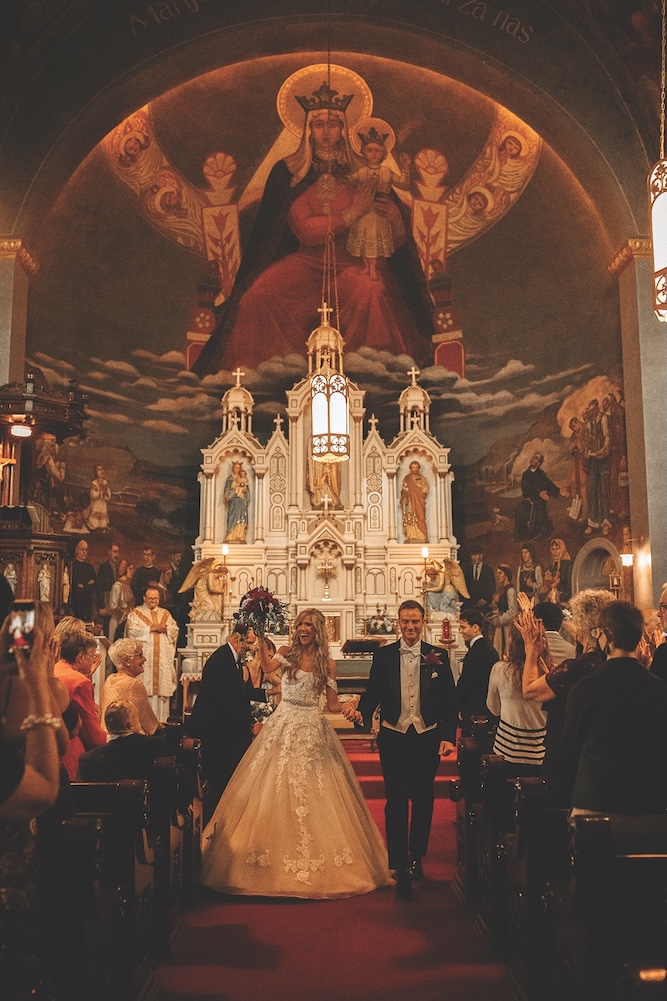
PHOTO BY DREAM QUEEN PHOTOGRAPHY
St. Nicholas grew out of Pittsburgh’s Croatian immigrant community at the turn of the 20th century. The first Croatian parish was established in Allegheny City, today’s North Side, in 1894. As more Croatians arrived to work in the region’s mills, mines and factories, the Catholic Diocese of Pittsburgh approved a second parish in Millvale.
Its cornerstone was laid in 1900, creating the first church in the United States built specifically for a Croatian Catholic congregation. The original building burned in 1921. The current church, rebuilt soon afterward, later became the canvas for Croatian artist Maksimilijan “Maxo” Vanka.
Invited to the church by the Rev. Albert Zagar, Vanka painted 25 murals in two campaigns taking place in 1937 and 1941. He filled the sanctuary not just with saints and biblical scenes, but with the lives of the people sitting in the pews: workers, immigrants, mothers, relatives separated by oceans, families gathered around simple meals and men whose labor built Pittsburgh’s steel industry.
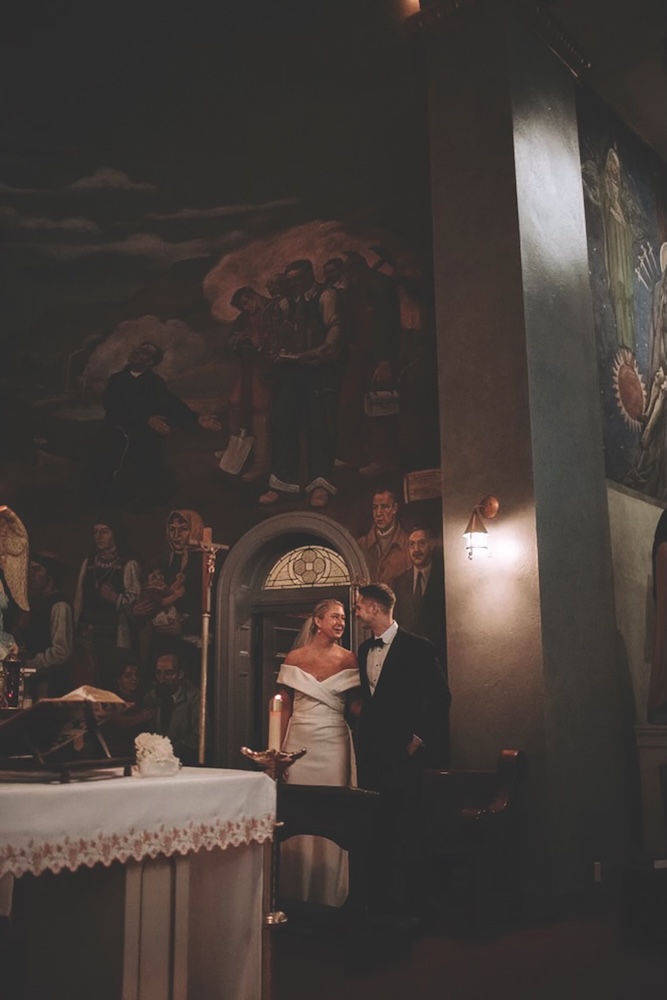
PHOTO BY SOLICH PHOTO & FILM
For Lyn Doverspike, that history isn’t something preserved on the church walls. It’s her family’s story. Her grandparents, Anna Profozic and Mathew Frketich, were married at St. Nicholas in 1929, just after Mathew first spotted Anna walking to her factory job and arranged, through her brother-in-law, to meet her. Their first date was a trip to the movies, although neither of them understood the film.
A month later, they married.
The couple lived two blocks from the church and raised seven children, all of whom attended St. Nicholas School. Six of the seven children later married there. Mathew worked in the steel industry, belonged to the United Steelworkers and was active in Croatian organizations throughout Western Pennsylvania. Over the decades, the family celebrated weddings, baptisms, funerals and memorial masses at St. Nicholas; their family eventually grew to include 22 grandchildren.
“St. Nicholas has always been a family place of home to all of us,” Doverspike says.
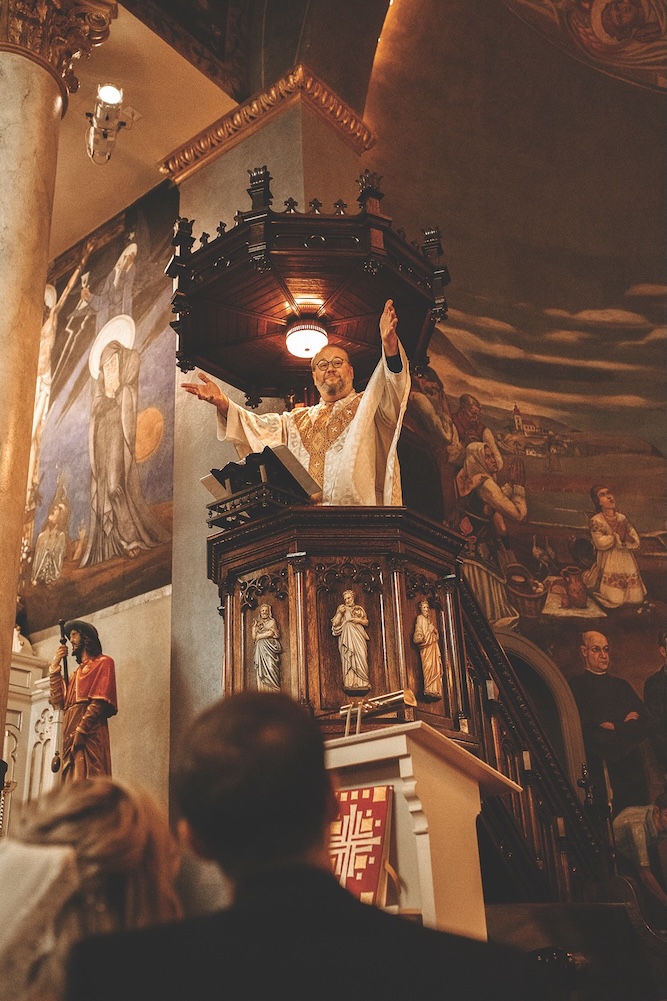
PHOTO BY DREAM QUEEN PHOTOGRAPHY
Her cousin, Sandy Koch, continued the tradition when she married there in 1982. As a little girl, Koch and Doverspike remember being frightened by some of Vanka’s murals. As Koch grew older, the fear gave way to understanding.
“You grow up and understand what they represent,” Koch says. “Then you get married there, and they become part of your own history.”
Andrew Stefanick never needed persuading on where he wanted to say “I do.”
His parents were married at St. Nicholas; his grandmother was, too. He started volunteering with the Society to Preserve the Millvale Murals of Maxo Vanka when he was about 16, later serving on its board and managing its docent program.
“In my mind, I was always going to get married there,” he says.
His wife, however, did need convincing. Courtney Stefanick grew up in Cranberry and comes from a Lithuanian family, but she had never heard of St. Nicholas before meeting Andrew. She pictured something more conventionally grand for her wedding, perhaps St. Paul Cathedral in Oakland.
Andrew knew St. Nicholas might be a tough sell.
“One of my favorite questions on tours is, ‘Which mural frightens you the most?’” he says with a laugh. “People usually give me a top five.”
His own answer is Christ standing on a World War I battlefield, being stabbed with a bayonet by a soldier. “You don’t see that very often in another church,” he says.
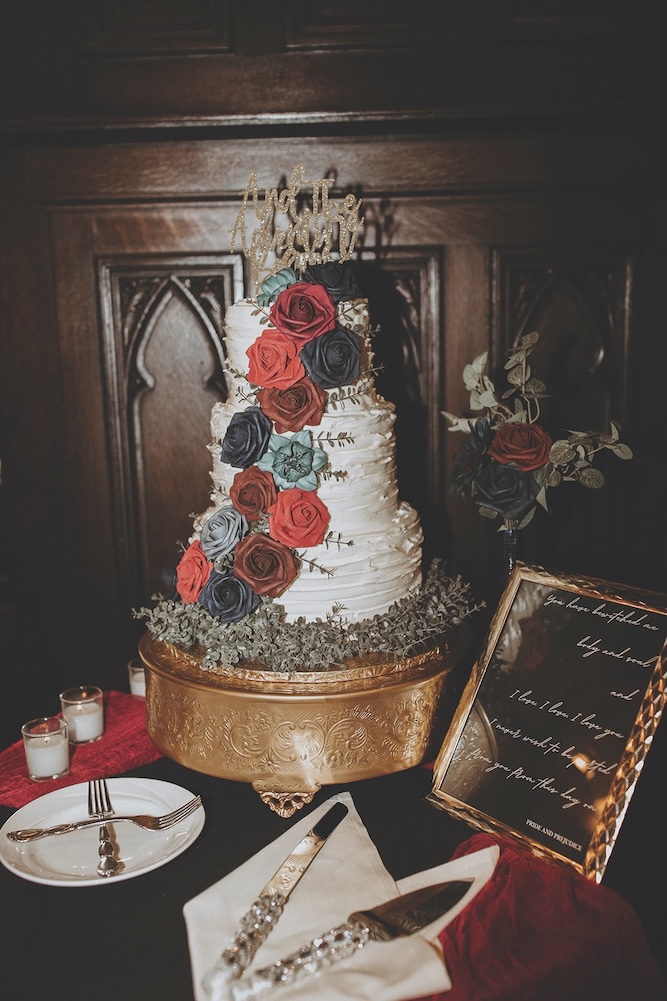
PHOTO BY DREAM QUEEN PHOTOGRAPHY
But the more Courtney looked, the less she saw violence. Instead, she saw tightly bonded families. She became especially attached to A Simple Family Meal, in which a working-class family shares bread while Pittsburgh’s mills rise in the background. Across the church, a wealthy capitalist sits surrounded by abundance.
“The simple things in life can be the most important,” she says. “It shows ordinary family togetherness as holy.”
Andrew and Courtney were married at St. Nicholas in October 2022. With a little intentional dark humor, they posed for one of their favorite wedding photographs in front of “The Immigrant Mothers Give Their Sons to the Building of American Industry.”
After the ceremony, guests didn’t rush off to the reception. They wandered through the church, lingering beneath the murals, studying the details and lining up questions for Andrew.
“Everywhere you look, there is some new detail, something shocking, something stunning,” Courtney says.
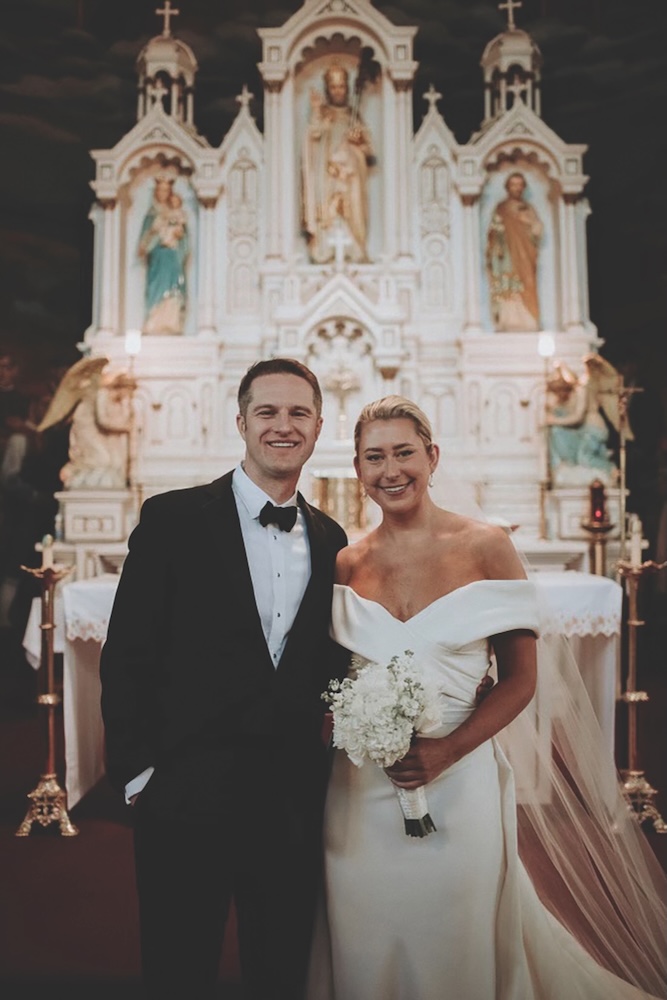
PHOTO BY SOLICH PHOTO & FILM
Like Andrew Stefanik, Alexis Svirbel always imagined marrying beneath Maxo Vanka’s murals.
Her father’s parents immigrated to the United States in the 1950s while her mother’s grandparents arrived in the 1920s. Her parents were married at St. Nicholas. Alexis was baptized there, attended Mass there as a child and spent every Christmas Eve celebrating midnight Mass with her extended family.
When she and Paul began dating, they often attended Mass at St. Nicholas together. By the time he proposed during a walk through Point State Park in November 2022, choosing the church was barely a question. They were married there the following year.
“We did not really consider getting married anywhere else,” Alexis says.
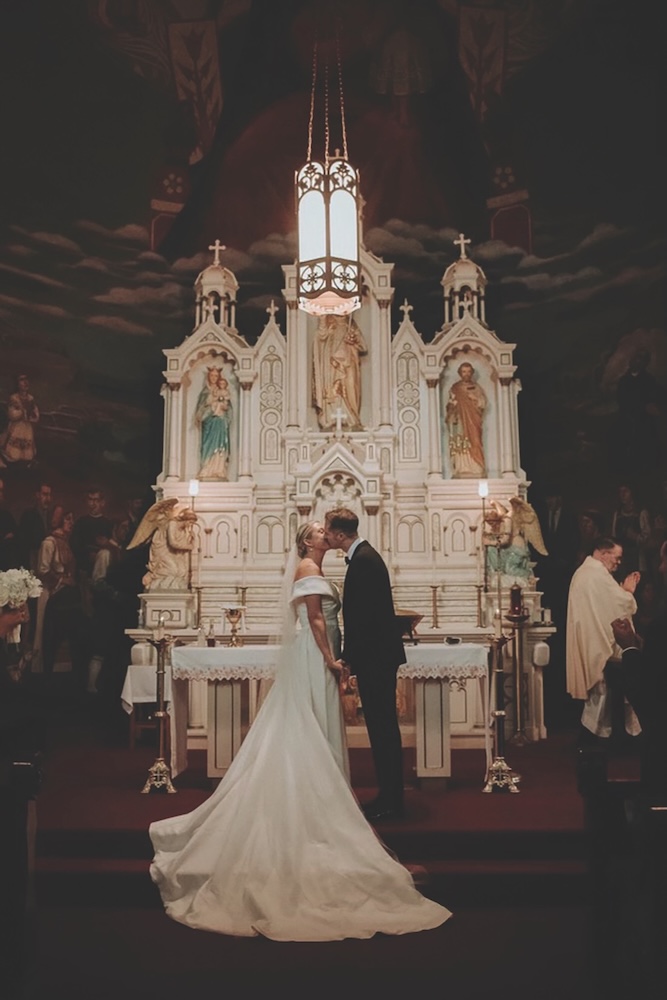
PHOTO BY SOLICH PHOTO & FILM
Behind them at the altar were the murals she had grown up studying: Croatians praying in their homeland on one side, Croatian immigrants praying in America on the other, all beneath Mary, Queen of Croatia.
“It has always served as a reminder of all that those who immigrated, like my grandparents and great-grandparents, sacrificed in hopes for a better life in America,” she says.
Standing beneath the murals, Alexis felt the distance between past and present disappear.
“It felt as if my own Croatian immigrant ancestors were there witnessing our wedding in spirit,” she adds.
Today, the church holds even more meaning for Alexis and Paul. This summer they celebrated another milestone when their daughter, Vivienne, was baptized at St. Nicholas.
“It truly meant everything to me to get married in the same church that I grew up going to,” Alexis says. “When we attend Mass there now, we’re always reminded of that beautiful day surrounded by our families and closest friends. St. Nicholas is a place that now holds special meaning to us both.”