Leah Lizarondo Shares Details on Her Upcoming Column About Women and Aging
In a Q&A session, digital editor Ollie Gratzinger sat down with Lizarondo for coffee to talk about what readers can expect from her new column, 50 Sense.

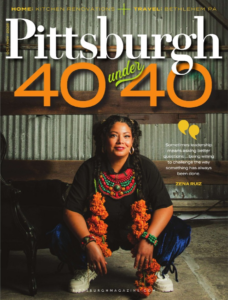
PHOTO BY LAURA PETRILLA
A familiar face is coming back to Pittsburgh Magazine — this time to talk about life at the doorway to middle age.
Longtime readers of Pittsburgh Magazine may remember Leah Lizarondo for her “Brazen Kitchen” column, which ran from 2012 through 2015. What began following her diagnoses of fibromyalgia as a way to treat food as medicine would go on to win national accolades. It also inspired Lizarondo’s later work at 412 Food Rescue, which she founded in 2015 and served as CEO through 2023.
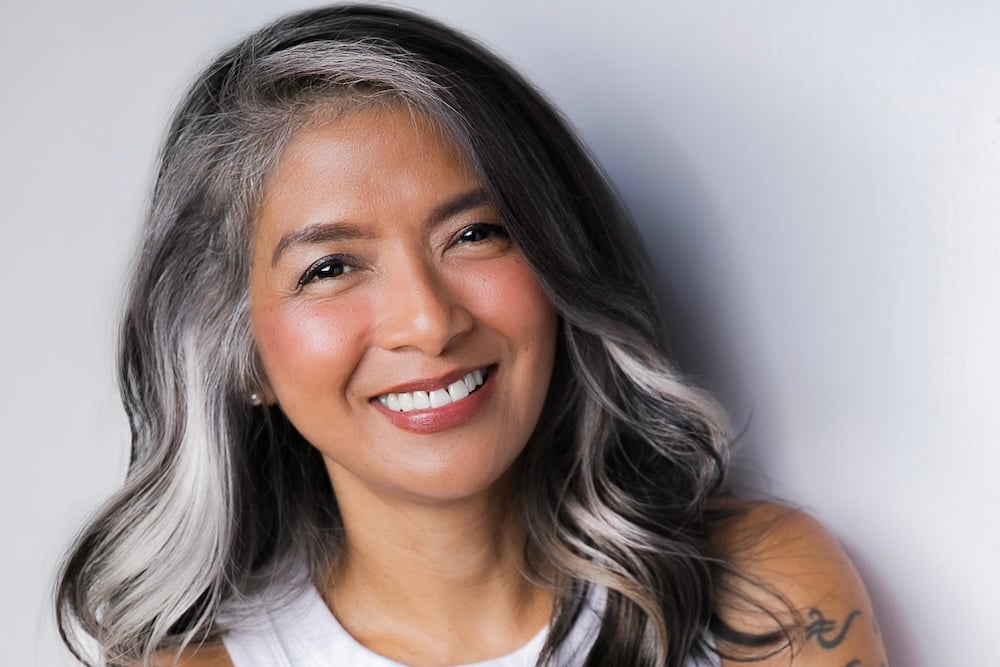
Now 53, with two kids in college and one starting high school, Lizarondo is returning to her roots as a writer with a new Pittsburgh Magazine column, 50 Sense. The monthly series will serve as “a journey forward into this new stage of life,” she says, addressing a range of questions and quandaries that women may share as they enter a new chapter.
Ahead of Lizarondo’s first column, I sat down with her to talk a little about what readers can expect. It was a fun reunion for us; in 2020, when I was a senior journalism student at Duquesne University and Lizarondo was the CEO of 412 Food Rescue, I took part in the Women’s Press Club of Western Pennsylvania’s Gertrude Gordon Writing Contest. Each student had a set amount of time to interview Lizarondo about her work and write up an article highlighting her many, many accomplishments. I was honored that my article took home first place.
Lizarondo’s new 50 Sense column will be another feather in her cap.
OG: If you had to give an elevator pitch to this column, how would you describe it?
LL: So kind of like with the Brazen Kitchen, the reason why I did it was that I was in the process of figuring things out. I was diagnosed with an autoimmune disease, and I didn’t want to be on medication for the rest of my life. And so I started doing research, and in that research, I found out that changing the way you eat can have massive implications in terms of alleviating symptoms of not only the autoimmune disease that I had, but many, many things. I really wanted to share that journey with everyone. Brazen Kitchen was the result of that.
Now I’m going through this next phase of life, where I’m somewhat experiencing similar symptoms, but in a different way, you know? Like, these body pains, inability to sleep, all of these changes, and I’m starting to educate myself on this process. I thought I could share my experience in the hope that it helps someone, and helps people see that they’re not alone. It’s really in the hopes that what I learned is useful to someone else.
OG: That’s so exciting! What are some of the topics you want to address?
LL: I want to address a number of things. So first is the changes in our body, just really physically. What is going on? We talk about estrogen, we talk about hormones. We talk about what it does to our joints and our skin, our hair, our mood, our everything. We talk about our teenage years, puberty, a lot; Now, though, people are talking about this stage of life, and I think the more women are getting educated about it.
It’s writing about our bodies, and then writing about other things: Who are the doctors out there that they can go to, physical therapists. Then just the more subtle things like our sleep, and then the other things that we go through in this life; this is the stage of life where a lot of people experience that sandwich period — caring for your kids, caring for your parents. How do you even navigate that? What support systems do we have out here? And then with our work in our career? A lot of people my age are going through a lot of changes not only physically, but also socially in their relationships. Anywhere from children going off to college, possibly navigating divorce and a new kind of independence, or you’ve spent 20 years in a career, and you want to change. What is that process like?
Then when you talk about ourselves too: I’ve had this identity of mother, and that’s in the center of my life. And now that my kids are going off to college, it’s like, how do I get back to myself? Oh, my goodness, I have some time. What do I do with this time? Who do I want to spend time with? So it’s all of these things that you think about.
OG: It’s a new chapter. But it’s also one that I feel like people historically haven’t really talked about, especially for women. It was just this culture of suffering and silence.
LL: Exactly. Maybe you don’t even have to suffer at all, because there’s support now. We know more about it now.
Our bodies are just the starting point, right? But then even how we look; It’s like, even grappling with gray hair. It’s just all of these questions, right? Some of them subtle, some of them really clear and distinct. It’s that range of things I want to talk about, because I know I’m not going through this alone.
OG: Why do you think this is something that you wanted to write now versus a year ago or a year from now? What makes it feel like this is the time for these stories to be told?
LL: I think I needed time to reach a point where there’s something that I can say about it. If I wrote about it right when I turned 50, I didn’t know what the process was like. Not that I know the full process now, but I feel like I’m a little bit more in it. You know, I knew what kinds of questions I was actually asking.
OG: Definitely. Can I ask how old you are now?
LL: 53.
OG: Oh awesome. Can I put that in the article?
LL: Oh yeah! That’s what this whole column is about. Why are people ashamed to say their age? I read somewhere that, you know, the greatest gift is aging. It’s like when you think about it, it really is. It’s like, to have the opportunity to age is like the best gift. Just be able to say you’ve been on this earth for that long, you know? I’m so happy I haven’t died yet. *laughter*
OG: You’ve talked about feeling less alone and feeling more empowered to find these resources, but what specifically do you hope readers will take away from this column?
LL: I hope it’s useful. That’s really it. I hope it answers someone’s question out there. Yes, there’s the Internet for research, but it’s kind of different to hear it from a person’s voice in the city they live in.
OG: How would you think it’s similar to some of the things you’ve done in the past, like Brazen Kitchen?
LL: It’s great to come home to Pittsburgh Magazine. What I’ve always done is just follow where things bring me. It’s similar in the sense that I’m researching all of these things, I’m learning all of these things. I’m sure there are people with the same questions.
My perspective is only one perspective, of course, but it’s something to build community around, the same way that the Brazen Kitchen built this particular community around food that just kind of grew and grew and grew. Hopefully for this one, it builds that kind of community as well.
OG: That’s fantastic. What’s different about this endeavor than previous things you’ve been working on, if anything?
LL: Well, it’s different because it has a subject matter. I mean, that’s really it. It’s not food; there will probably be things about food in it, but it’s not all about it.
In the end, the Brazen Kitchen evolved into something. It started out with recipes, and then it just became about the resources within the community. It became about community and helping others, and in the end, really, it was the start of 412 Food Rescue. So it’s just that cool. You don’t know where it’s going to go. For me, in every journey that I take, I just take the first step.
I’m grateful to Pittsburgh Magazine for really asking the same questions and knowing that their readers are asking the same questions.
OG: Are there any challenges that you see in the way people talk about women’s health, or is there still a reluctance to talk about women’s health? How do you think that that conversation is developing?
LL: There’s a number that I read: only 1% of health research goes to women’s health. Now there’s more awareness that there’s a need, and there’s more women talking about it. There’s Dr. Vonda Wright, who started out in Pittsburgh and is now one of the biggest voices in women’s health. There’s all of this momentum now, and I think that it’s getting easier to talk about it because of that. We know so much more now because no one ever talked about it with me. My daughter will know more about menopause than I ever did.
OG: What would you say to someone who maybe was a little shy to talk about it?
LL: Again, hopefully more people talking about it will remove this… I hate to use the word stigma, but it’s almost like this taboo of even talking about your age. Is there something about being so much younger that passing a certain age invalidates you? It’s all of these questions that are physical, emotional and cultural, really.
We all age. You can’t stop it. It happens every year. I mean, every single moment you’re aging. Age is about a number; it’s time passing. That’s all it is, and it should be celebrated, celebrated again. You’re alive.
This interview has been lightly edited for length and clarity.