Your Guide to Pennsylvania’s Caves and Caverns
From casual tours to caving expeditions, there are countless ways to explore the region's rich geological history.

PHOTOS BY HUCK BEARD
Mother Nature may have been playing favorites with Pennsylvania. Throughout the state, you can find an abundance of natural beauty, from sprawling evergreen and deciduous forests to unique rock formations forged over a millenia. At the intersection of history, nature and tourism sit the state’s plentiful caves and caverns, bearing age lines and scars of an ancient world. In this guide, you’ll find four popular stops on a cavernous tour of the commonwealth. Whether you’re looking to hike along the ridge of the state’s own Grand Canyon or take a 25-story descent into the belly of Laurel Caverns, Pennsylvania’s wilderness beckons.
Penn’s Cave and Wildlife Park

This ancient cavern is made up of limestone rock that experts estimate is between 400 and 500 million years old; it’s also filled to the brim with stories. The famous Seneca legend of Nita-nee — from whom Penn State’s Nittany Lion, the adjacent Mount Nittany and the regional Nittany Valley are named — and her French lover, Malachi Boyer, has been told around campfires for generations. Forbidden to marry because of a tribal custom, the couple ran away before being captured; Malachi was then thrown into Penn’s Cave to die. While Penn State’s official website declares the tale, penned by Henry W. Shoemaker, to be “purely fictitious,” it continues to draw visitors to the region and inspired a regional identity that persists today. Penn’s Cave & Wildlife Park is the only all-water cavern and wildlife park in the U.S., and the only cave in Pennsylvania on the National Register of Historic Places. During guided tours, visitors are taken through the caverns on a flat-bottom motorboat to see glittering stalactites and stalagmites, including famed natural sculptures dubbed “The Statue of Liberty” and “The Garden of the Gods.” Those not comfortable with being so deep underground may still enjoy the curated wildlife habitats around the cave through the Farm-Nature-Wildlife Tour, which traverses 1,400 acres and includes stops at a butterfly garden and views of bison, Texas longhorn cattle, elk, wolves and mountain lions.
154 miles/2.75 hours | pennscave.com
Meadowcroft Rockshelter and Historic Village

Meadowcroft Rockshelter and Historic Village takes visitors back in time some 19,000 years to the region’s earliest signs of habitation. While this isn’t technically a cave or a cavern, it’s still worth mentioning for its titular rockshelter — a massive rock overhang that archaeologists say was used as shelter by Western Pennsylvania’s prehistoric hunters and gatherers. Folks can embark on guided tours of the rockshelter to learn what life looked like so long ago, or explore interpretative villages with reenactors who bring the past to life. Guests can see a wigwam and test their aim with a spear thrower from the 16th-century Eastern Woodland Indian Village, experience an 18th-century log cabin and trading post, watch a blacksmith forge red-hot iron and take a lesson in a one-room school house at the site’s 19th-century historic village.
41 miles/1 hour | heinzhistorycenter.org/visit/meadowcroft/
Laurel Caverns State Park
Recently designated as Pennsylvania’s newest state park, Lauren Caverns is among the largest calcareous sandstone caves in the world. What started when a hillside collapsed some 340 million years ago has become a boon to Fayette County’s tourism and recreation industries, attracting more than 50,000 visitors each year. Begin your trip at the Laurel Caverns Visitors’ Center, where you’ll be able to purchase tour tickets — there are no online purchasing options — receive an introduction to the park and access the caverns. After the tour, take a trek through the Visitors’ Center’s souvenir shop, which features a range of themed collectables and a “panning for gemstones” experience. With more than four miles of passages, the caverns invite visitors to embark on one of four tours to explore the ancient marvel. Each tour provides different levels of access for those with different abilities, caving experience and interests. Tours range from the 25-minute Maze Tour, which takes visitors of all abilities through the easiest passages of the cave, to the two-hour Introduction to Caving Program, which guides daring participants through a 25-story descent into the belly of the mountain. Remember to bring a jacket; the temperature in the caves sits at a chilly 52 degrees all year, making it the perfect escape from a mid-summer heatwave.
68 miles/1.5 hours | laurelcaverns.com
The Pennsylvania Grand Canyon
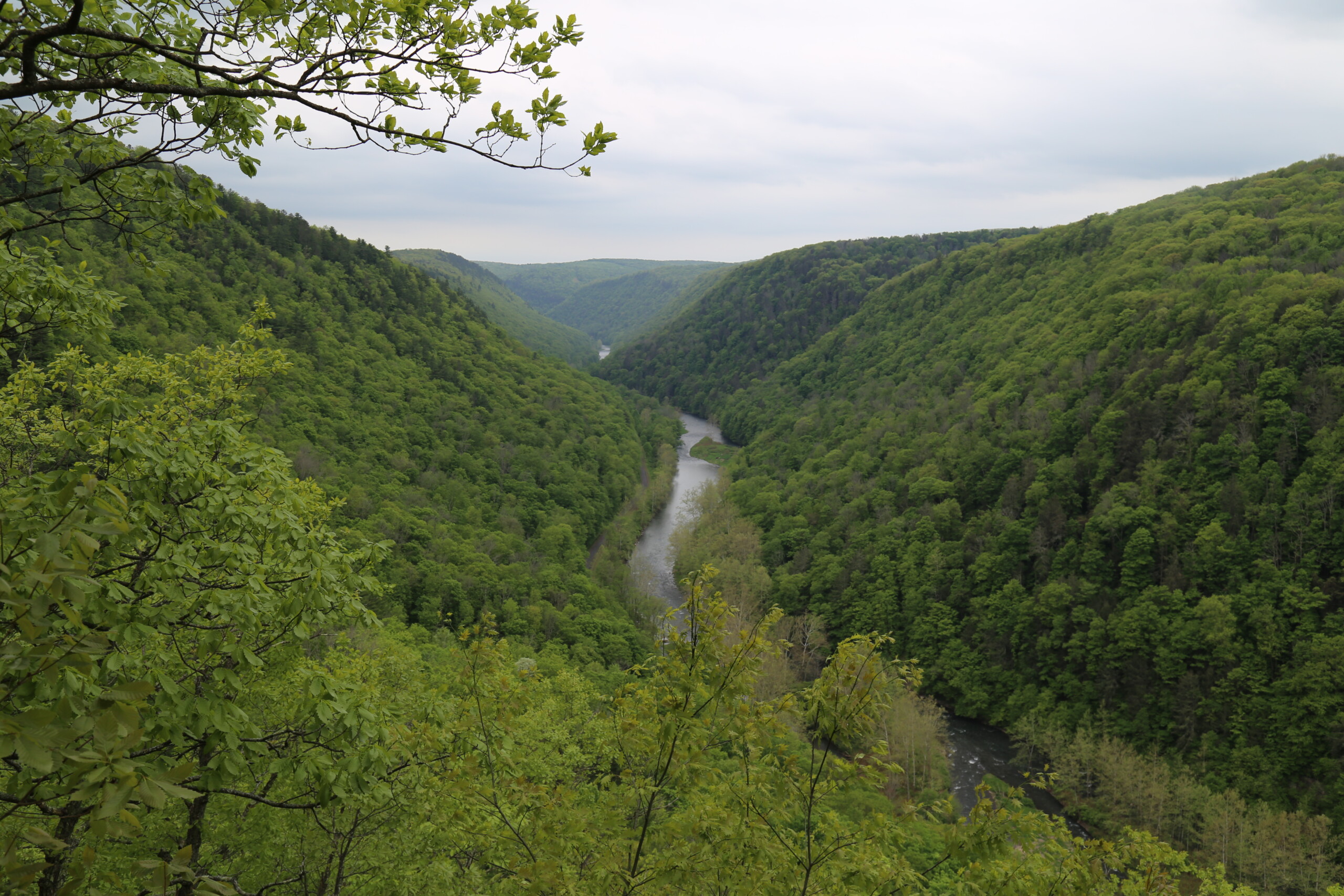
The Pine Creek Gorge is better known as the Pennsylvania Grand Canyon — a fitting name for the massive ravine, which stretches for more than 45 miles and boasts depths of nearly 1,500 feet. The dynamic topography of the space creates a range of scenic wonders, including steep canyon ridges and flowing waterfalls. For some of the best views, hike up to Colton Point on the west rim and Leonard Harrison on the east rim. One of the most popular attractions within the park is the Pine Creek Rail Trail, a converted railroad bed that travels along the Pine Creek Gorge at the floor of the canyon. It’s especially popular among cyclists; USA Today cites the trail as one of the 10 best places to take a bike tour in the world. In the summer months, visitors can camp along the gorge in rustic tents — or in more modern cabins with electricity and bathrooms — or do some whitewater rafting, kayaking and fishing at the bottom of the gorge in Pine Creek, an 87-mile-long tributary that winds through the canyon before flowing south into the West Branch Susquehanna River. In the winter, Tioga State Forest boasts more than 177 miles of snowmobile trails, making the Pennsylvania Grand Canyon a place that, much like the evergreen trees that dot its landscape, is gorge-ous year-round.
231 miles/4 hours | visitpottertioga.com