National Book Award For Nonfiction Winner Honed Writing Skills at Pitt
The native Egyptian and University of Pittsburgh alum was denied a visitor visa to attend the ceremony in New York City on Nov. 18.

PHOTO BY DAVE DICELLO
The best nonfiction writers evince curiosity, empathy and intellectual ambition, according to Michael Meyer, professor of English at University of Pittsburgh.
Abdelrahman ElGendy entered Pitt’s master of fine arts program in 2022 brimming with all three of these qualities, Meyer said in an email.
“He was an exceptional student from the start,” he added. But ElGendy lacked confidence. And the Egyptian native also wondered whether American readers would care about his story, which recounted his years as a political prisoner in post-revolution Egypt. A student activist, he was imprisoned at age 17, swept up by police at a mass protest in Cairo.
Those accounts became his master thesis at Pitt, which were published by Hogarth in a memoir this year — “Huna, A Memoir of Revolution, Prison, and Becoming.”
And on Nov. 18 his memoir won the prestigious National Book Award for Nonfiction — the annual literary prizes that honor the best writing in the United States.
According to the national judges citation: “ ‘Huna’ is a lyric testament to survival and resistance threaded through with a father-son story of love, endurance, resilience, and hope. Inspired by the Arab protest song ‘Sawfa Nabqua Huna (We Will Remain Here),’ this debut memoir is a phenomenal liberation story that resists all forces of authoritarian silencing and erasure with full-throated song.”
Huna is the Arabic word for “here.”
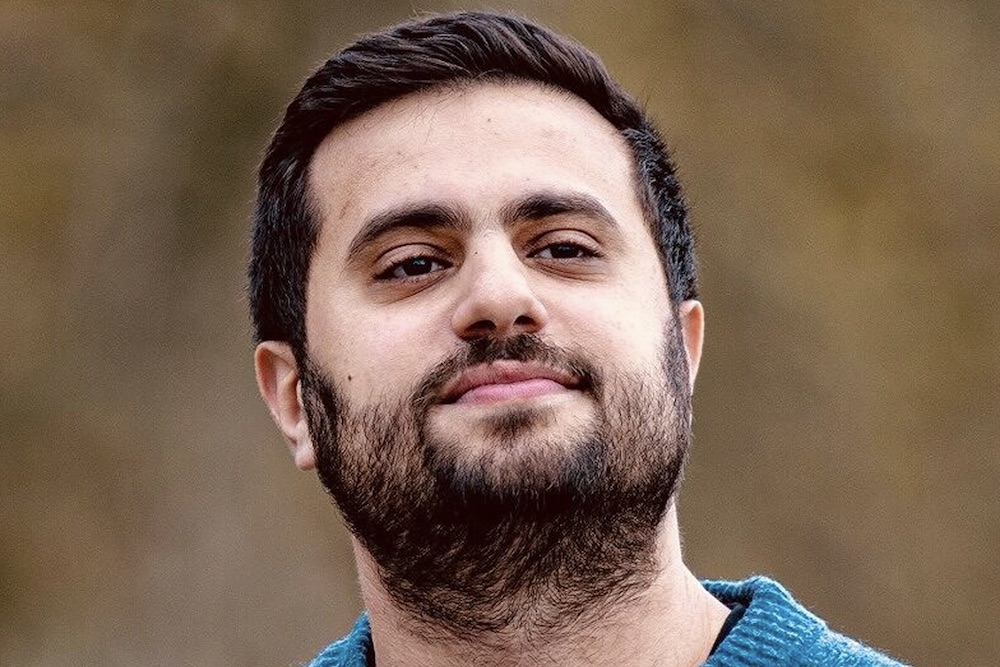
PHOTO BY FADEL DAWOD | ABDELRAHMAN ELGENDY, WHO COMPLETED HIS MFA AT PITT, WON THE NATIONAL BOOK AWARD. HOWEVER, HE WAS DENIED ENTRY INTO THE U.S. TO ATTEND THE CEREMONY ON NOV. 18.
The award was bittersweet, however. ElGendy, 30, who had been living in Europe after his U.S. student visa expired, could not attend the ceremony in New York City. In an essay published by The New Yorker on Nov. 13, he explained that the U.S. denied his visitor visa under the Immigration and Nationality Act.
That was despite submitting a list of upcoming book tour events in the United Kingdom and Europe, “evidence that I would leave the U.S. once my brief visit was over,” he wrote.
The National Book Foundation, which administers the awards, opened eligibility in 2024 to authors who are not U.S. citizens, which allowed ElGendy’s memoir to be considered.
Meyer, who was ElGendy’s nonfiction professor and has taught at Pitt for 15 years, said the young writer entered the program with the hope his reflections of his brutal life in the Egyptian prison could one day become a published memoir. He also was guided by Jeanne Marie Laskas, distinguished professor English at Pitt, book author and podcaster who founded the university’s Center for Creativity.
ElGendy had the talent, Meyer wrote. “His time here saw him work hard on the craft. He really earned this award.”
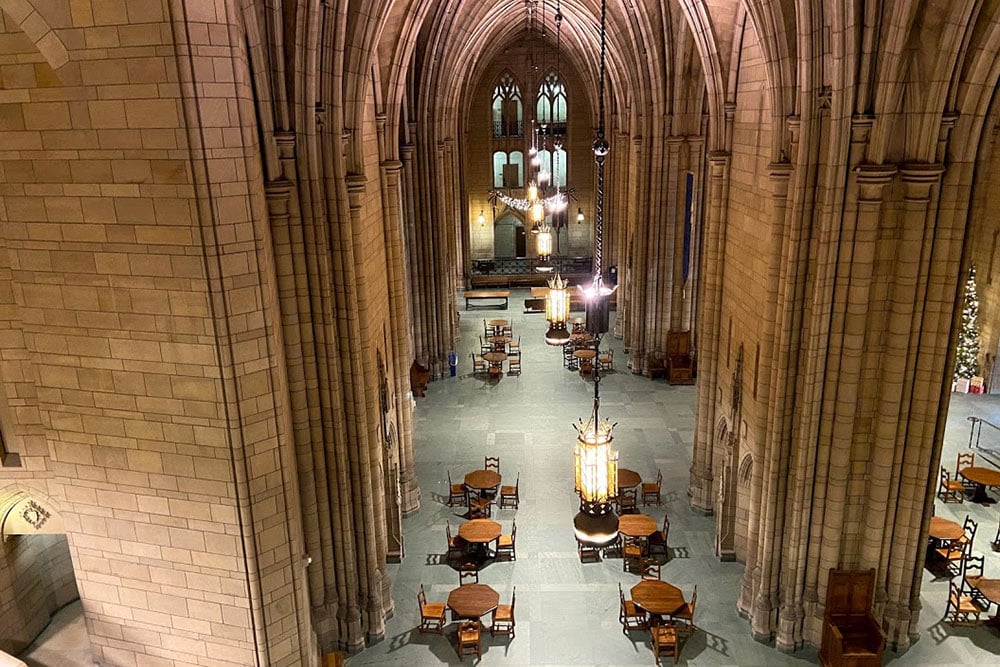
In Pitt’s program, which is housed in the Cathedral of Learning, the students “look after each other.”
“We take nonfiction writing seriously,” Meyer wrote. “On most college campuses, nonfiction is the neglected stepchild, compared to poetry and fiction. But Pitt offered the world’s first MFA in nonfiction, and we admit the same number of graduate students in the genre as our peers in poetry and fiction.”
Up until this year, the nonfiction program also offered very small class sizes. “[El]Gendy’s workshop with me had four students, and so he received a lot of feedback on his work…Gendy’s MFA thesis won the National Book Award! If that’s not an endorsement of small class sizes and personalized instruction, I don’t know what is.”
Impressed with ElGendy’s talent and progress, Meyer introduced him to Jin Auh, one of the top literary agents, who works at the Wylie Agency, based in New York and London.
“She signed him in his second year at Pitt, which is highly abnormal. She did such a great job finding the right press and editor to help him bring that book to our shelves.”
ElGendy, in his New Yorker essay, wrote: “The three years I spent at Pitt were crucial to the creation of my book. I made a home, found my people, and built a warm, tender literary community, one I lean on to this day.”
After his student visa expired, he left the U.S. in April 2025 for Europe and attended Pitt’s MFA graduation ceremony remotely. He also lost the chance to tour the U.S. to promote his book.
He ended his New Yorker essay with reflections of these restrictions: “My book has made it into rooms that I never will. I don’t know what to do with that, and so I write.”