Pittsburgh is Getting Its Michelin Moment
The Michelin Guide is expanding into the Great Lakes, meaning dining in Pittsburgh will be highlighted to a global audience. Plus, local chefs weigh in on the region’s burgeoning food scene.

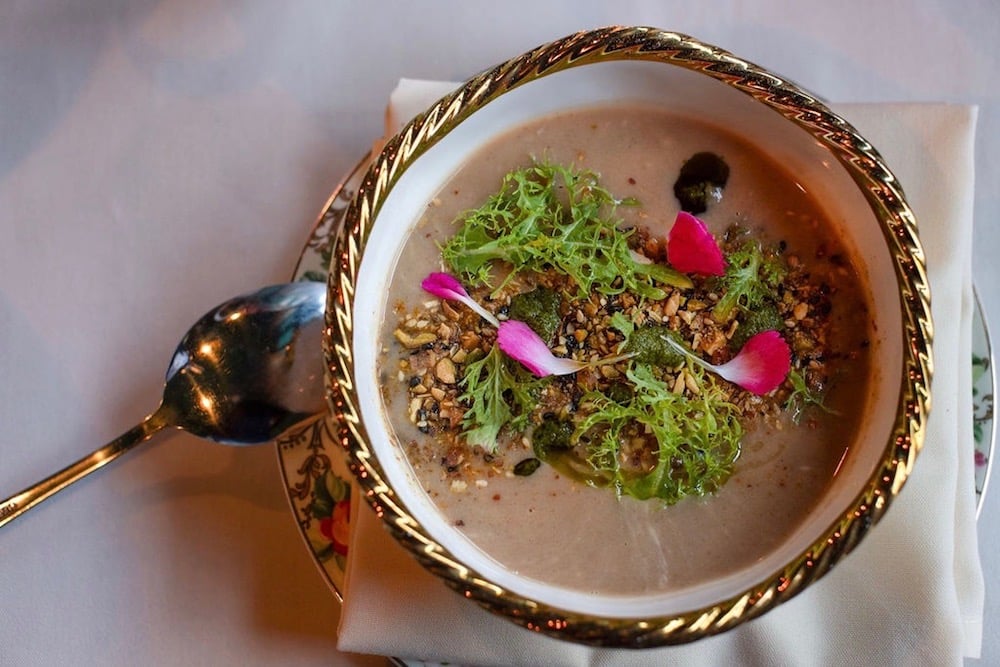
LILITH PHOTO COURTESY OF VISITPITTSBURGH
Any foodie — novice or expert — can sense the building momentum of Pittsburgh’s culinary scene. While some Yinzers may lament changes transforming certain neighborhoods and establishments, others seem thrilled at all of the fresh energy and talent sizzling within citywide kitchens.
This morning, a big announcement proved things are about to get shaken up even more.
The Michelin Guide has introduced its latest expansion into the Great Lakes region, meaning Pittsburgh now gets put on the map with this prestigious distinction. The Michelin Guide constantly observes the evolution of culinary destinations around the world; now the new, multi-city Michelin Guide American Great Lakes edition will cover the Steel City, as well as Cleveland, Detroit, Indianapolis, Milwaukee and Minneapolis.
The staff at VisitPITTSBURGH, who developed a partnership with the Michelin Guide to highlight local happenings, believe this marks a promising moment for their broader culinary tourism strategy.
“This partnership with the Michelin Guide is an exciting opportunity to showcase the incredible creativity and modern diversity of Pittsburgh’s culinary community on a global stage,” says VisitPITTSBURGH President and CEO Jerad Bachar. “Our chefs and restaurateurs have been building a vibrant food scene for years, and this recognition will help attract new visitors, support local hospitality jobs and strengthen Pittsburgh’s reputation as an exciting culinary destination for taste-driven travelers.”
While this partnership doesn’t guarantee Michelin stars, it does mean Pittsburgh now gets included in the global conversation. Designed to grow the overall market, the idea is to bring in new customers and revenue to restaurants across the region, while also growing the behind-the-scenes talent pool.
Bachar says the partnership ensures Pittsburgh gets evaluated alongside top culinary cities, using the same independent criteria.
“Pittsburgh is home to more than 500 restaurants in the city alone, with thousands more across Allegheny County and the region beyond, representing an incredible range of creativity, innovation and cultural influence,” he says. “They deserve an opportunity to be part of the global culinary conversation.”
As the food scene grows, so do opportunities for chefs, sommeliers, managers and hospitality professionals. The hospitality industry currently supports more than 43,000 jobs across Allegheny County. The hope is that this growth will benefit everyone from those in bakeries and neighborhood spots to local farms and fine dining.
The Michelin Guide’s selection process involves anonymous inspectors already out in the field, making reservations and diving into dishes; it remains completely independent. The full restaurant selection will be revealed in 2027 at the Michelin Guide American Great Lakes Ceremony. A date is still to be determined.
For those who might be concerned this addition could drive up prices and hurt locals, Bachar offers some reassurance.
“Michelin recognition often highlights the very neighborhood-driven, culturally rooted restaurants that define a city’s identity, especially through its Bib Gourmand (value dining) recommendations,” he says.
He believes visitors to Pittsburgh look for authenticity and great food across all price points. Here, this means chefs drawing inspiration from the region’s deep industrial and Appalachian heritage while also embracing modern techniques and global flavors.
Bachar expresses gratitude to the many chefs, operators and hospitality workers who make Pittsburgh’s dining scene special.
“Today’s announcement with the Michelin Guide is a celebration of their work and a commitment to continue investing in Pittsburgh and the southwestern Pennsylvania region as a vibrant, welcoming and world-class culinary destination,” he says.

LILITH PHOTO COURTESY OF VISITPITTSBURGH
Chefs Weigh in on Pittsburgh’s Blooming Dining Scene
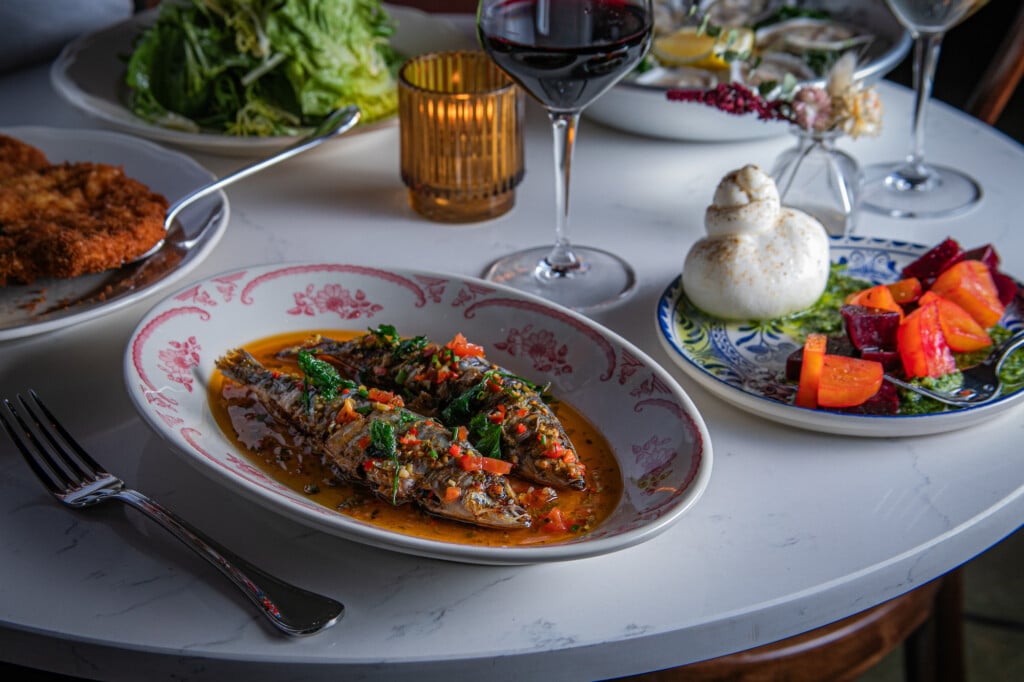
Pittsburgh’s culinary scene has been building momentum for years. Some chefs weighed in on this shifting landscape, including Lilith’s chef-owners Jamilka Borges and Dianne DeStefano.
At their intimate Shadyside eatery, the duo pull from their respective Puerto Rican and Sicilian backgrounds to inform cuisine which is largely led by seasonality and bounty provided by the region. Their seafood- and pasta-forward coastal Italian restaurant Giulia is expected to open this fall in Bloomfield.
In assessing Pittsburgh’s culinary movement, DeStefano credits the rise of personal cooking alongside the advent of more chef-owned, chef-driven restaurants.
“Chefs connecting their roots to what ends up on the plate, using heritage as a connection point with new audiences,” she says. “Thankfully, the return to full-service hospitality after the COVID interruption is in full swing.”
She and Borges attribute the current vibrancy of Pittsburgh’s dining scene to more open mindedness among diners, as well as people wanting to experience higher-end versions of cuisine historically available only in casual formats and settings.

PHOTO PROVIDED BY SCRATCH & CO.
At Troy Hill’s Scratch & Co., owner and native Pittsburgher Don Mahaney has seen the culinary scene evolve dramatically in recent years; he feels the future of dining looks brighter than ever.
Within his casual and comfortable neighborhood restaurant, which includes private dining, Scratch & Co serves “flavorful and thoughtfully crafted dishes and drinks, each with a story worth sharing.”
“New, best-in-class restaurants are opening regularly and are being led by passionate teams dedicated to their craft,” Mahaney says. “I’ve also noticed a renewed interest in local sourcing, a shift away from alcohol as the centerpiece of the dining experience, and a stronger emphasis on thoughtful, guest-driven hospitality in every plate and pour.”
Mahaney believes the current vibrancy boils down to diversity — all of the different voices, perspectives and talents fueling lasting growth and excellence in Pittsburgh’s eateries. He also notes the domino effect; since Pittsburgh offers tourists an array of experiences, this means they’re excited to share that with friends.
“We have a fervent local media that drives national attention for new and must-visit high-quality restaurants,” he says. “At the same time, the city is wonderfully discoverable, so those willing to dig a little through research or online sleuthing can land in any number of more under-the-radar dining rooms that serve equally inspired food and drink.”
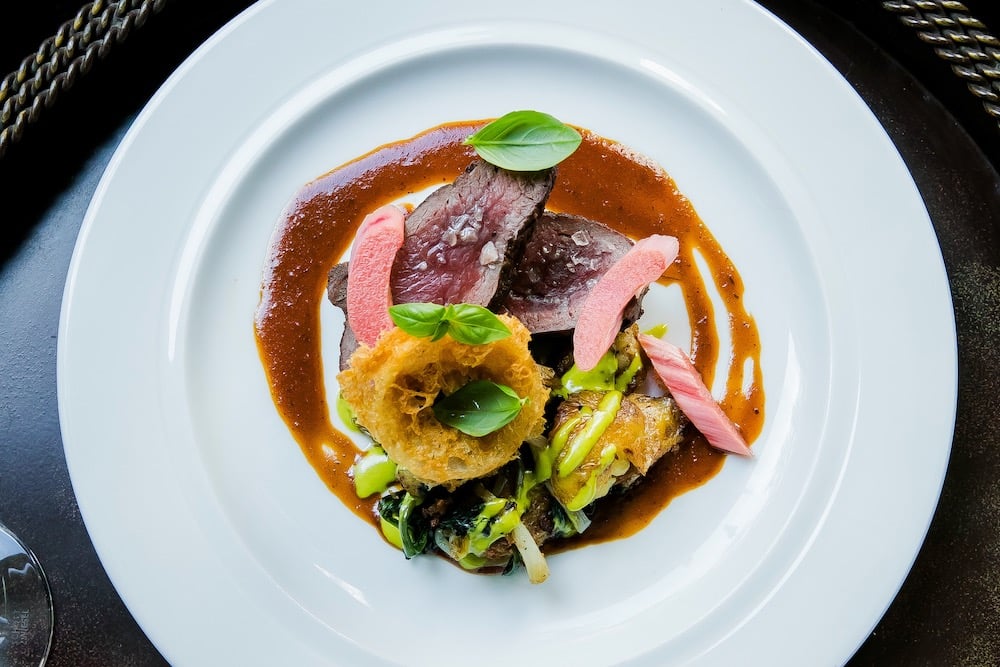
HYEHOLDE PHOTO BY LAURA PETRILLA
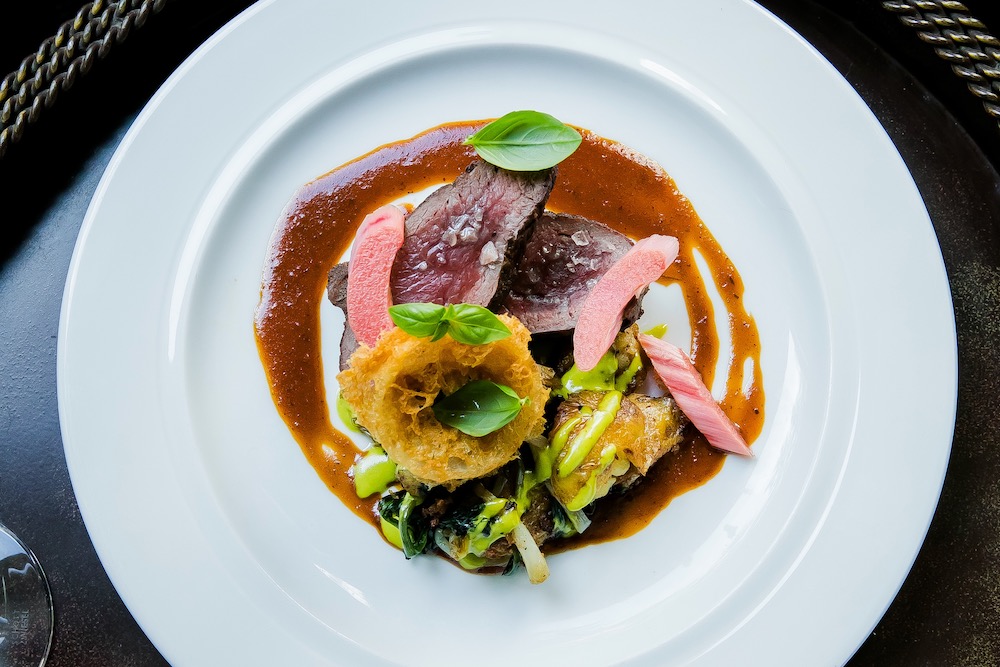
In the storybook setting at Coraopolis’s Hyeholde, a venue where the food reflects the seasons and land around them, chef-owner Chris O’Brien has noted a real shift away from playing it safe.
“Pittsburgh has always had strong traditions, but now there’s more confidence,” he says. “Chefs are taking risks and bringing their own perspectives to the table. The level of execution has gone up. It’s not just about having a good idea anymore; you have to deliver on it, night after night.”
Beyond that, O’Brien believes that expectations are higher. Guests no longer come in just for dinner; they’re looking for a full experience — something that feels intentional from start to finish.
At Hyehole, the restaurant focuses on more than what’s on the plate, aiming to create an experience people can connect with. “Something that stays with them after they leave, and that they can carry with them in different ways,” O’Brien says.
O’Brien attributes much of the region’s restaurant success to chefs who trained in bigger markets and chose to stay, or who come back to Pittsburgh and build something there. He adds there’s also a strong sense of collaboration, which helps raise the bar for everyone.
Diners themselves also have evolved, according to O’Brien. “People are more curious now, and they care about where their food comes from and what’s behind it,” he says.
In general, it seems unanimously recognized that culinary tourism is shifting. Some say national and local awards and accolades are the main driver, while others might declare it’s all about a city’s lesser-known treasures. The pair behind Lilith believes there’s room for both.
“There are a lot of people who gravitate toward each approach,” says DeStefano. “Awards will bring people into the city, but it’s up to the tourist to explore and find places that are often overlooked and are usually delicious.”
O’Brien agrees both can co-exist; they just play different roles.
“Awards help put a city on the map and bring attention to what’s happening. But the real character of a food scene lives in its ‘hidden gems,’” he says, “the places that are consistently great, whether they’re recognized or not.”