Chef Csilla Thackray Reveals the Inspiration Behind Titusz
The celebrated chef draws on family history, Central European traditions and years in Pittsburgh kitchens to bring Hungarian and Austrian cooking into focus.

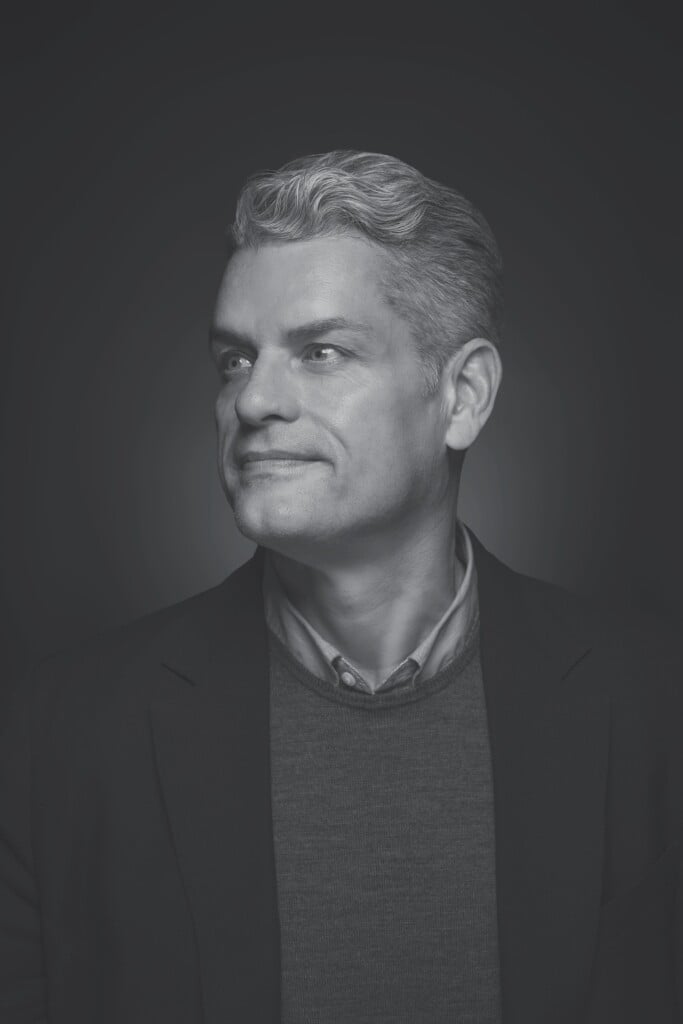
PHOTO BY SARAH LAPONTE
The cooking at Titusz begins with “a rather heavy hand of paprika,” the deep-red spice that defines much of Hungarian cuisine.
Chicken paprikash, one of Hungary’s defining dishes, takes its identity from the spice itself. Paprika became central to Hungarian cooking in the 18th and 19th centuries, when farmers in regions like Szeged and Kalocsa began cultivating the sweet red peppers that would replace black pepper as the country’s dominant seasoning.
At Titusz in Lawrenceville, paprika blooms in fat with onions before a half chicken braises slowly in the rust-colored sauce until tender. The dish is finished with sour cream and served with nokedli, the small egg dumplings designed to absorb the sauce.
“If you think you’ve added enough paprika, you have not,” says Csilla Thackray, Titusz’s celebrated head chef.
The rule came from Thackray’s Hungarian grandmother, whose cooking shaped the foundation of Titusz, the new restaurant set to open April 2 at 4129 Butler St.

PHOTO BY AARON SHEEDY
For Thackray, the restaurant is both a tribute and a personal reckoning with heritage.
“To me, it means the world to bring Central European cuisine back to Pittsburgh,” she says, describing the restaurant as an homage to her grandmother, “whose spirit was so remarkable from her lived experience as a Hungarian refugee during WWII.”
Thackray’s grandmother spent years moving through displaced persons camps before eventually arriving in Pittsburgh through sponsorship from a Hungarian church in Hazelwood. Despite the upheaval of migration, she carried with her the traditions of Hungarian cooking and hospitality.
Those memories, Thackray says, shaped her earliest understanding of food.
“My mom was a single, working mom, so she would just drop me off with my gram,” Thackray says. “I spent a tremendous amount of time with her.”
Her grandmother was known as much for hosting as cooking, filling the house with visitors, stories and abundant meals. Food, Thackray learned early on, was inseparable from gathering.
Her new restaurant takes its name from another family figure, her great-grandfather Titusz, remembered as charismatic, indulgent and with a love for hosting of large celebrations. The restaurant carries that spirit forward.

PHOTO BY AARON SHEEDY
The 49-seat restaurant occupies the former Merchant Oyster Co. space, though little of the seafood restaurant’s nautical identity remains.
The dining room has been opened visually, with a wrought iron railing replacing heavier elements along the mezzanine to create a more expansive feel. Interior designer Cara George helped reimagine the room with Central European references rather than maritime ones.
The design draws on Hungarian folk traditions, particularly marriage chests and colorful regional patterns. Deep maroon tones appear throughout the space, including the bathrooms and planned exterior accents, while textiles inspired by Austrian designer Josef Frank add pattern and warmth.
Thackray notes that Central Europe is often stereotyped visually as dark or austere.
“I think people think about Central Europe and it’s drab and depressing and heavy,” Thackray says. “It is all of that, but there’s this other side that is very celebratory.”
Thackray has spent more than a decade cooking in Pittsburgh restaurants, leading kitchens at The Vandal and Churchview Farm and working closely with the team at Legume Bistro. Titusz represents the most personal expression of her cooking yet.

PHOTO BY AARON SHEEDY
The menu focuses on Austrian and Hungarian traditions presented through an à la carte dinner service.
Dishes move between Hungarian and Austrian traditions with a focus on process rather than reinterpretation. Lángos, the fried fermented bread common across Hungary, comes layered with sour cream, shredded cheese and herbs.
Kaspressknödel, a crisp Alpine cheese dumpling, nods toward Austrian cooking. Liptauer, the paprika-driven cheese spread found across Austria and Hungary, appears as a composed opening course built from house-made farmer cheese blended with mustard, vinegar and cream cheese, served with toasted slices of seeded Kornspitz rye developed in-house.
Other dishes on the opening menu include walleye, topfen cheesecake and the restaurant’s namesake, Titusz Torte.
The food is rooted in comfort but driven by technique. Thackray’s years in Pittsburgh kitchens reshaped how she approaches that balance. Reflecting on her time at The Vandal, she describes a younger chef focused on the end result. Titusz represents a different, stripped-down philosophy.
“Now it’s less, less, less,” she says.
The shift reflects lessons learned in kitchens that prioritized sourcing, fermentation and careful preparation over visual complexity
“I care a lot more about what the process is,” Thackray says. “And I think that’s just going to ring true on the plate.”
Central European cuisine, she argues, already operates this way. Pickles, sauces, braises and fermentation carry intention even when the dishes appear simple.
“It’s not hard to elevate Hungarian cuisine,” she says. “They themselves are so process-oriented.

PHOTO BY AARON SHEEDY
The beverage program follows a sharp regional focus as well. Consulting beverage director Sean Rosenkrans, Thackray’s husband and the longtime wine director at The Allegheny Wine Mixer, leads the program, bringing years of experience working with small producers and European wines to the restaurant.
At Titusz, the wine list centers on Central Europe. Riesling forms the backbone, reflecting its range across Germany and Austria and its compatibility with paprika-driven cooking. Grüner Veltliner brings herbal brightness against richer dishes, while Hungarian wines such as Tokaji introduce diners to one of Europe’s historic wine regions.
Thackray herself is “a really big Riesling gal. Once you get into it, you’re into it. It goes phenomenally with both Hungarian and Austrian foods.”
Rather than presenting unfamiliar regions as a challenge, Rosenkrans guides guests from familiar grapes toward Central European expressions. Cocktails follow classic formats built with regional spirits and seasonal ingredients.

PHOTO BY AARON SHEEDY
For Thackray, authenticity is less about strict preservation than about regard.
“Pittsburgh has a sizable Central European community, but I find that people look down upon the cuisine as being quite heavy,” she says. “It is rich food, but much the same can be said of French and Italian cuisine.”
Bright sauces, herb-driven finishes and composed plating introduce nuance without distancing the dishes from their origins.
“How do we make things multi-level,” Thackray says, “not just an inundation of heavy?”
She often thinks about restaurants in Budapest, where even the simplest bowl of goulash might arrive with white-glove service.
“That is love to me,” she says. “There is no romanticizing there. It is simply a high regard for their own culture.”
At Titusz, that regard shapes every part of the restaurant. “My goal here is to not overwork the dishes, or overthink what we are putting out,” Thackray says. “This is my bid for simplicity served at a very high standard.”