New Programs Support Hispanic Business Owners During Hispanic Heritage Month
The Pennsylvania Metropolitan Area Hispanic Chamber of Commerce is offering grants, English classes and roundtable conversations for entrepreneurs.

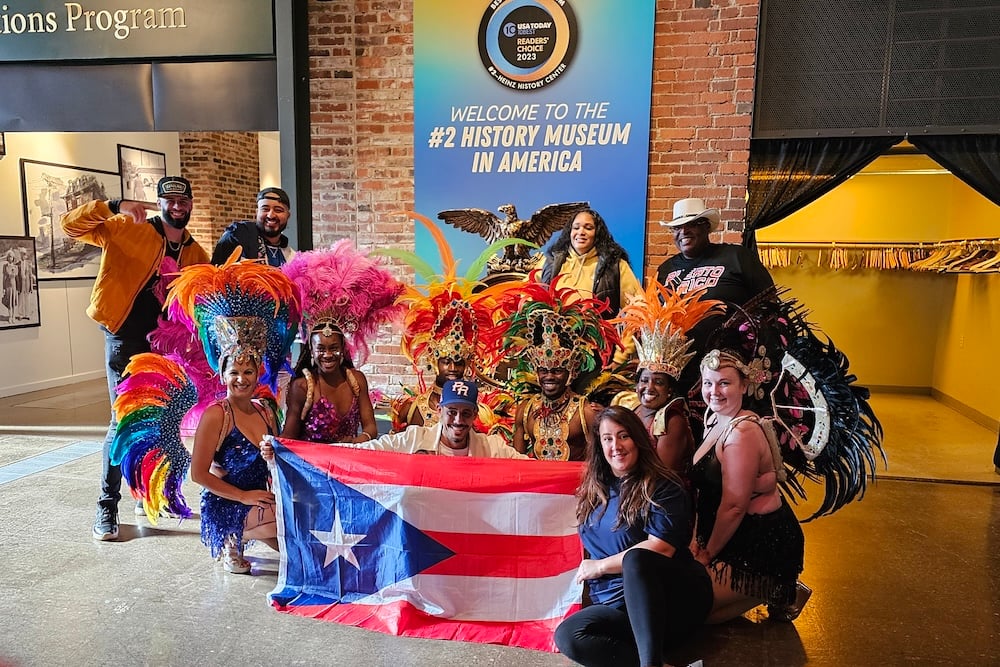
PHOTO COURTESY OF THE PENNSYLVANIA METROPOLITAN AREA HISPANIC CHAMBER OF COMMERCE | PMAHCC HOSTS GALAS, FESTIVALS AND OTHER EVENTS TO SUPPORT THE LOCAL HISPANIC BUSINESS COMMUNITY
Hispanic Heritage Month takes place from Sept. 15 — the independence anniversary for Costa Rica, El Salvador, Guatemala, Honduras and Nicaragua — through Oct. 15, and the Pennsylvania Metropolitan Area Hispanic Chamber of Commerce is honoring the region’s Hispanic community through the launch of three new programs.
PMAHCC has previously marked the occasion with galas, festivals, parties and educational seminars, but this year, it is offering $420,000 in grants for Hispanic, African American, Asian American and LGBTQ+ owned businesses. It will also provide Business English for Entrepreneurs courses with full scholarships, as well as monthly Entrepreneur Roundtables hosted at Hispanic-owned restaurants, so even the meeting room is a member business getting paid.
“Access to capital is the number one barrier our members name, year after year, and the national data says the same thing,” says Melanie Marie Boyer, CEO of PMAHCC. “This month we are putting real dollars into the hands of the entrepreneurs who are building this region, and we are doing it alongside the chambers that serve every historically disadvantaged community in Southwestern Pennsylvania.”
While the Latino economy is the fourth largest in the world, according to PMAHCC, there is a significant gap in capital; the 2026 State of Latino Entrepreneurship report from Stanford Graduate School of Business and the Latino Business Action Network found that on loans of $1 million or more, only 22% of Latino-owned businesses received full funding. That’s compared to 45% of white-owned businesses. Additionally, the report found that 77% of Latino owners who were denied said the feedback gave them no specific reason or next step.
“When we invest in historically disadvantaged businesses, we invest in the entire region,” Boyer says.
The Grant Process
PMAHCC is opening Hispanic Heritage Month with grant applications and closing it with grant winners. Applications for $420,000 in small business grants open Sept. 15 and close Sept. 30.
Recipients will be announced Oct. 15, the last day of Hispanic Heritage Month. Information, including how to apply, can be found here.
The grant dollars come from two awards made by the Pennsylvania Department of Community and Economic Development under its Historically Disadvantaged Business Assistance Program.
DCED awarded PMAHCC $400,000 through the HDBA microgrant component, part of a $15 million statewide investment by Gov. JoshShapiro’s administration to create 10 microgrant programs across the Commonwealth. PMAHCC was the only Hispanic chamber in Pennsylvania to receive an award.
Eligible applicants are for-profit businesses at least 51 percent owned by a historically disadvantaged Pennsylvania resident, operating in Southwestern Pennsylvania, in business for at least three months or with a clear plan to launch, in good standing on state and local taxes and with no outstanding liens or loan defaults.
Applications are available in English and Spanish. Recipients will be announced Oct. 15, the final day of Hispanic Heritage Month. All three programs are backed by no-cost technical assistance through the chamber’s partnership with the Duquesne University Small Business Development Center, and every applicant to any PMAHCC program receives a complimentary one-year PMAHCC Small Business Membership, whether or not they are selected.
DCED microgrants are awarded in three tiers: $2,500, $5,000 and $10,000, and are designed to cover the concrete costs that hold businesses back, including licensing and certifications, equipment, marketing, working capital and the expenses required to compete for contracts with government, health care and higher education buyers.
A separate question on the application identifies businesses that would benefit from a micro-award of $1,000 or less through the Duquesne SBDC partnership.
“That is what heritage looks like to a chamber of commerce: not just honoring the entrepreneurs who came before, but funding the ones building right now,” Boyer says.
The money will be distributed in four phases over the next year, one chamber at a time, so that each community gets a full, focused application cycle: PMAHCC first, opening Sept. 15, followed by the Asian American Chamber, then the Three Rivers Business Alliance, then the African American Chamber. Each partner will announce its own application dates.
The grant dollars break down as follows, in the order the cycles will open:
Phase 1, open now: $130,000 available for Hispanic and Latino owned businesses, administered by PMAHCC. $110,000 in DCED microgrants of $2,500 to $10,000, plus $20,000 in micro-awards of $1,000 and under through the Duquesne University SBDC partnership. Applications open Sept. 15 and close Sept. 30.
Phase 2: $90,000 available for Asian American owned businesses, administered by the Asian American Chamber of Commerce of Western Pennsylvania. Dates to be announced.
Phase 3: $90,000 available for LGBTQ+ owned businesses, administered by the Three Rivers Business Alliance. Dates to be announced.
Phase 4: $90,000 available for African American owned businesses, administered by the African American Chamber of Commerce of Western Pennsylvania. Dates to be announced.
As significant as the grants are, PMAHCC says that money alone doesn’t grow a business. Through the Business Assistance Service Center partnership, every PMAHCC grant applicant, selected or not, can receive no-cost, confidential one-on-one consulting from the Duquesne University SBDC: business planning, financial projections, access to capital, marketing, government contracting and certification, and more. Consulting is available in Spanish. PMAHCC refers its members and program participants to the SBDC on an ongoing basis so that a $5,000 grant lands in a business that has a plan for the next $50,000.
“The grant gets a business over a hurdle. The consulting is what keeps it moving,” Boyer says. “Our partnership with the Duquesne SBDC means a business owner who applies for a grant with us walks away with an advisor, whether or not they win an award.”
Business English for Entrepreneurs
The Business English for Entrepreneurs courses are designed to help business owners like Sindy Malorz, founder of A&E Cleaning. Since opening up shop in 2022, she has built a team and earned demanding commercial accounts, but when a building manager sends a contract or prospective client wants to negotiate terms, Malorz says her confidence wanes.
“When I am cleaning, nobody is better than me,” Malorz says. “When I have to negotiate in English, ask about the terms or explain what makes my company different, I feel my English holding me back. I have walked away from conversations I should have won.”
PMAHCC says Malorz is far from alone; 37% of Hispanic immigrant entrepreneurs in the U.S., more than 567,000 business owners, have limited English proficiency, according to the American Immigration Council. The barrier is sharpest in the trades where many Pittsburgh Latino businesses are built: cleaning and personal services, construction and hospitality.
Business English for Entrepreneurs is an eight-week program developed for Hispanic and Latino business owners who want to communicate confidently in the situations that directly affect their companies, offered in partnership with Fluent Minds LLC, according to a statement by PMAHCC.
Every accepted participant receives a full scholarship valued at $3,000. Applications are open through Friday, Sept. 18. Selected participants will be notified the first week of October, and the program begins Monday, Oct. 12.
“This is not a vocabulary class,” Boyer says. “A contractor who cannot push back on a bad clause signs it. A restaurant owner who cannot explain her numbers to a banker does not get the loan. This program is about helping entrepreneurs advocate for themselves, explain the value of their work, ask the right questions and hold their own in the rooms where contracts, capital and opportunities are decided.”
The program begins with an individualized language and pronunciation assessment, followed by a hybrid combination of virtual sessions, in-person learning and one-on-one support built on real business situations: communicating with customers and employees, explaining services, discussing prices and contract terms, participating in meetings, networking, pursuing funding and presenting a business professionally. Each participant leaves with a business communication portfolio to keep using after the program ends.
“Language development becomes meaningful when people can immediately use what they learn,” says Amy Metzger, founder of Fluent Minds LLC. “We see the difference when someone begins asking questions instead of staying silent, speaks up in a meeting or handles a customer conversation with confidence. Those changes benefit the learner, the business and the customer.”
The program is designed for entrepreneurs who own a business or are actively preparing to launch one, speak Spanish or Portuguese as their first language and are committed to completing the full eight weeks. Workshops are held Wednesdays from 5 to 7 p.m., with a total weekly commitment of approximately 2.5 to 3 hours. Space is limited. Applications close Friday, Sept. 18.
Information and the application can be found here.
Entrepreneur Roundtables
PMAHCC is also accepting applications for its new Entrepreneur Roundtables, a monthly business development series for Pittsburgh-area entrepreneurs. Each Roundtable brings together seven business owners, a guest expert, PMAHCC’s CEO and the chamber’s program coordinator for a two-hour, confidential conversation focused on one practical business topic. The first topic is Marketing on a Small Budget.
Every Roundtable is held in person at a Hispanic-owned member restaurant, and the chamber pays the host for the space and the meal. The program is built so that the dollars spent to run it land in the community too: every month, a Latino business owner gets a paying booking and a room full of fellow entrepreneurs who now know where to find them.
Grace Betancourt-Jones, owner of Café Tu y Yo in Glenshaw, will host one of the Roundtable sessions.
“When I opened Café Tu y Yo, the hardest part was not the recipes or the rent. It was not having anyone to ask,” Betancourt-Jones says. “Every business owner hits a problem they have never seen before, and most of us solve it alone at 11 at night. Seven owners at one table, talking honestly about what is actually working, is worth more than any seminar. I am hosting because I wish someone had put a table like this in front of me when I started, and because I want these entrepreneurs to know my café is a place they can come back to.”
There is no cost to participate. Every participant receives a complimentary one-year PMAHCC Small Business Membership and may request no-cost one-on-one consulting through the Duquesne University SBDC. Applications are open year-round: business owners apply once and select the topics that matter most to their companies. Seating at each session is limited and curated so that no two participants compete in the same industry.
Roundtable information and the application can be found here.