Getaway: Black History and Eastern European Traditions Meet in Cincinnati
Travel with PM's Creative Director Huck Beard to the Queen City.
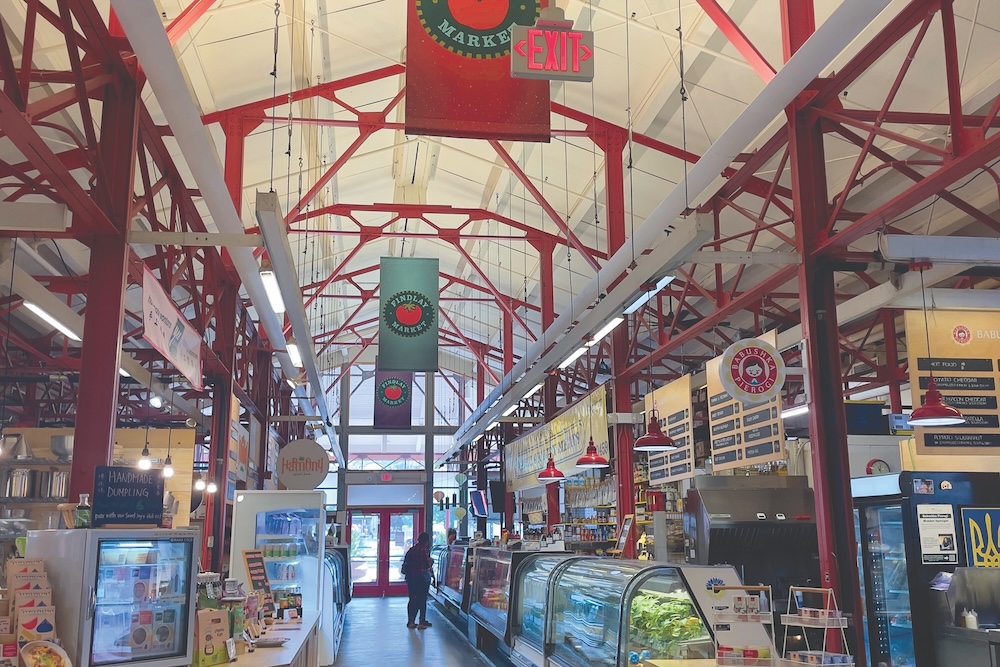
FINDLAY MARKET. PHOTO BY HUCK BEARD
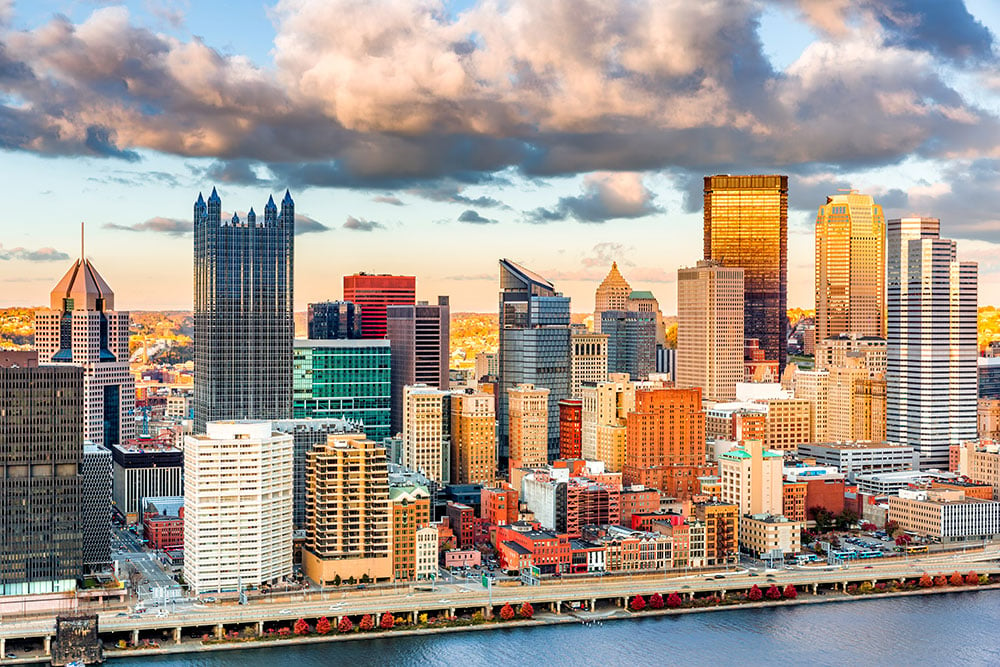
The Ohio River has always been a dividing line.
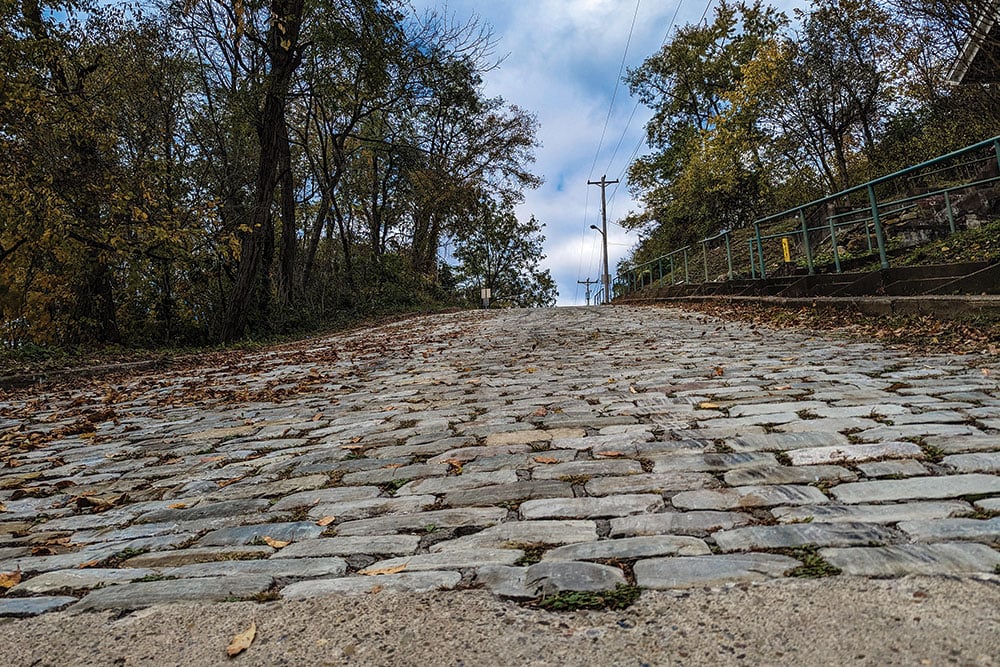
For much of the 19th century, it separated slave states from free ones, South from North, one kind of American life from another. Standing on its banks on a warm, late-summer afternoon in the early 21st century while watching a barge push upstream in the amber light, that history didn’t feel distant.
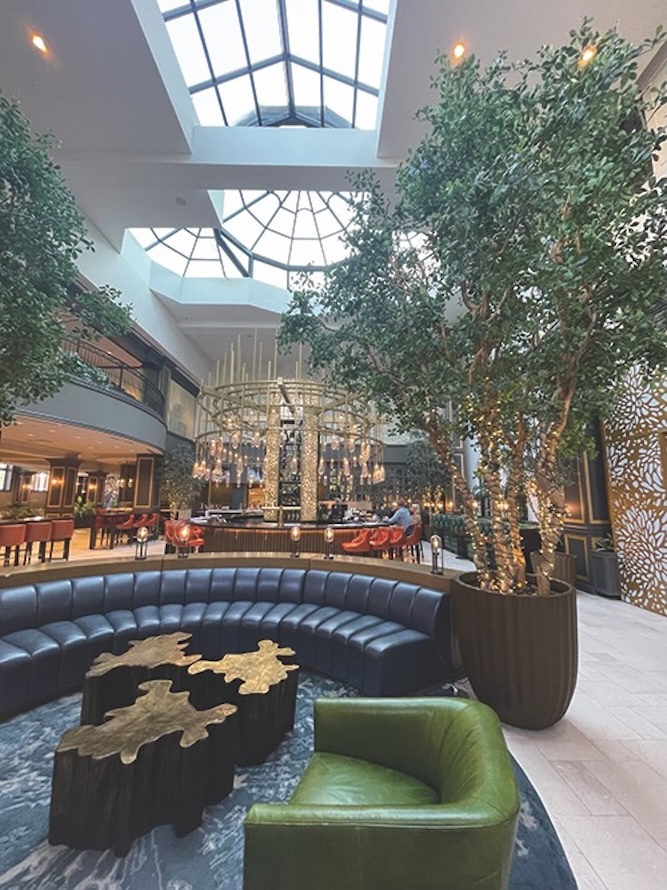
LYTLE PARK HOTEL. PHOTO BY HUCK BEARD
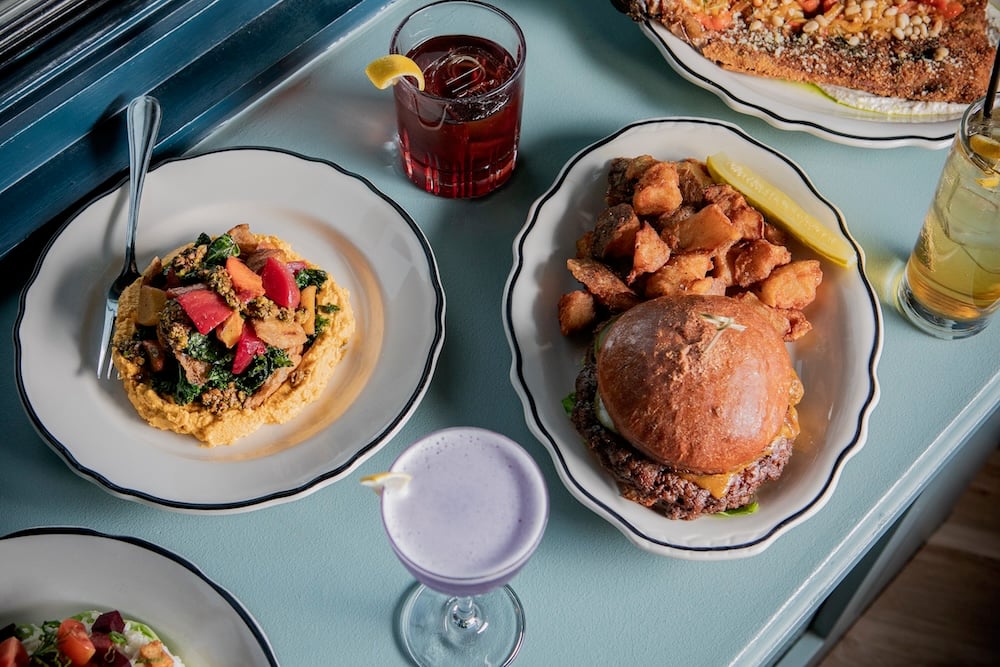
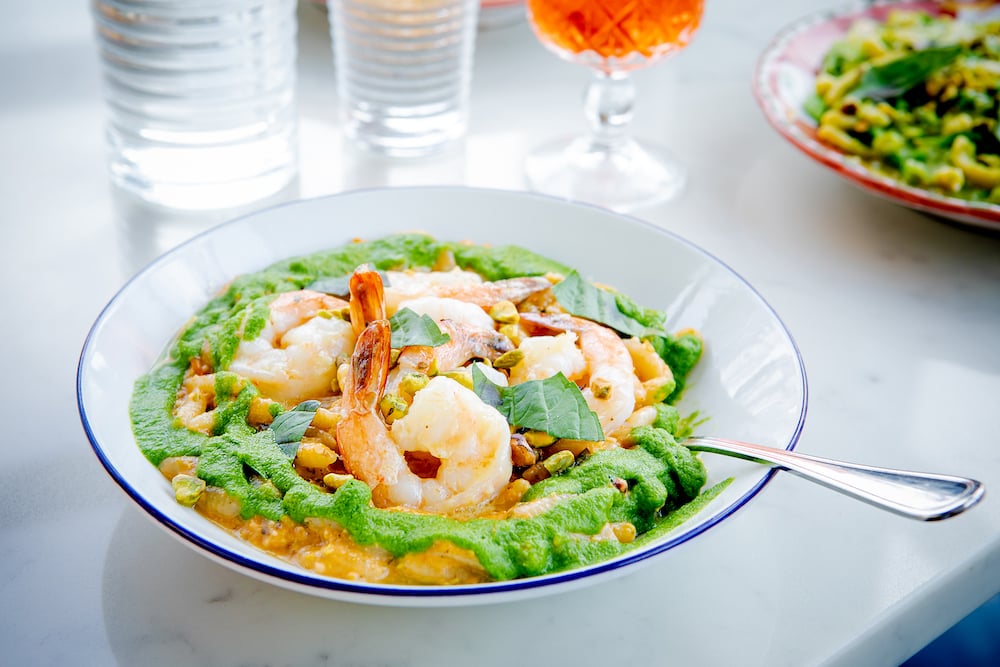
I based myself at the Lytle Park Hotel — a circa-1909 building on Pike Street that U.S. News named the best in Ohio for 2025. The hotel sits within Lytle Park, once a refuge for Cincinnati’s moneyed elite and flanked by the Taft Museum of Art. An elevated Italian feast is only steps away at the Lytle’s own Subito. The restaurant’s smoked grape crostini is not to be missed, and the notoriously tricky cacio e pepe is a peppery delight.
Tuesday morning began at Findlay Market, Ohio’s oldest public market. Opened in 1852, it’s often named one of the top food markets in the world. Linnea Eschenlohr of Cincinnati Food Tours led me on a private breakfast run through its colorful stalls; fifty full-time merchants packed into a stretch of Over-the-Rhine that smells like smoked meat and baked bread at 9 a.m.
We hit Eckerlin’s, Dean’s Mediterranean, Gramma Debbie’s Kitchen, Harmony Plant Fare and Makers Bakers Co. At Eckerlin’s I got my first taste of goetta — a German-American sausage of pork and oats that Cincinnatians eat with civic pride. It’s better than it sounds. Considerably.
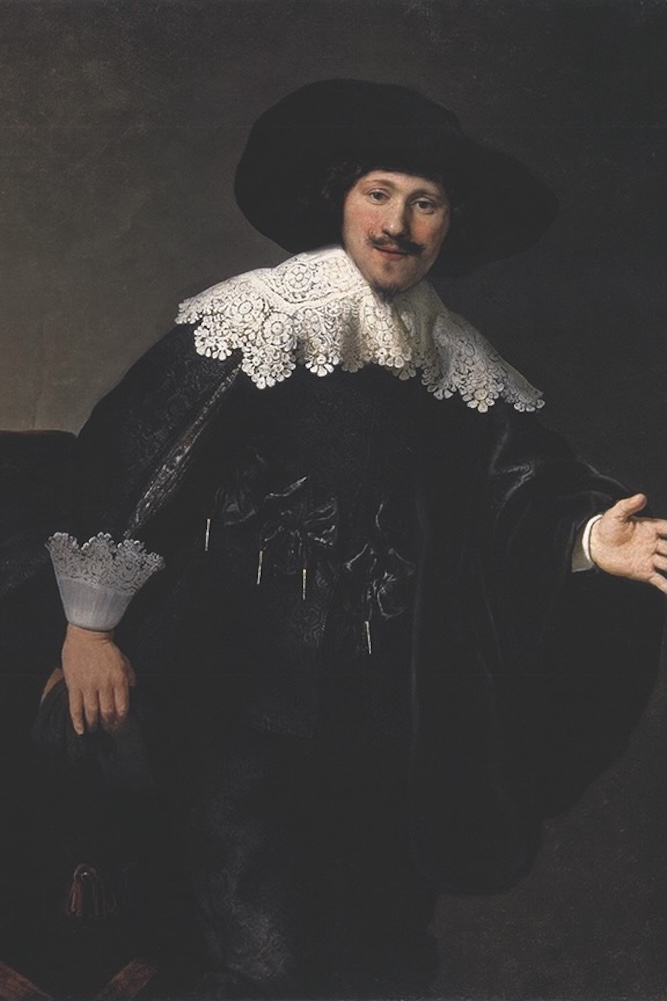
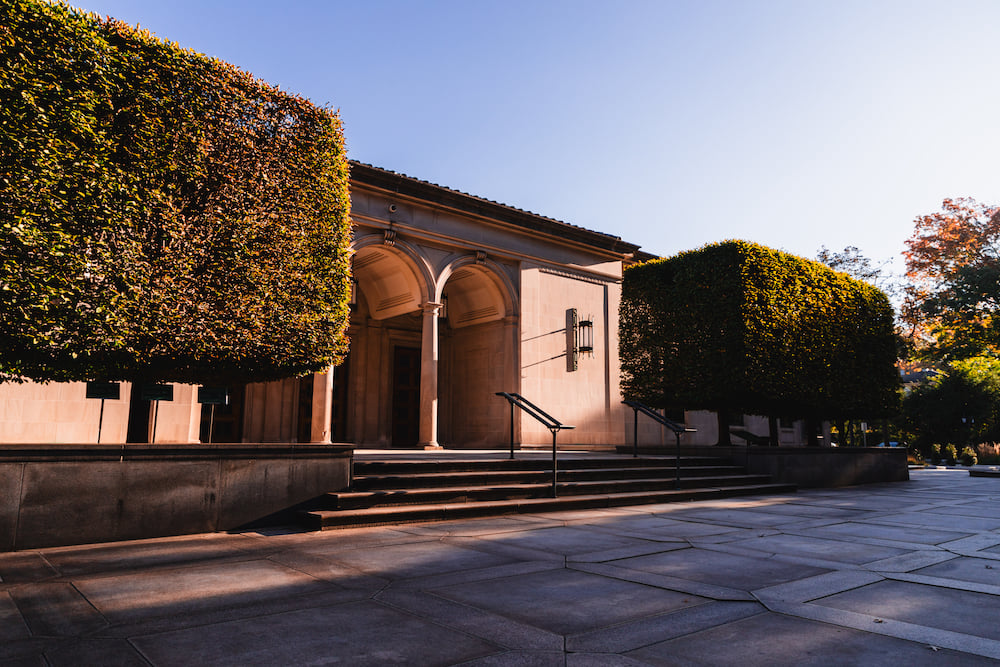
After Findlay Market, I walked to the lovely Taft Museum of Art. Built around 1820, it is one of Cincinnati’s oldest surviving residences. The museum has been a civic treasure since Charles Phelps Taft and Anna Sinton Taft bequeathed their home and collection to the people of Cincinnati in 1927.
Opened to the public in 1932, the house holds National Historic Landmark status. The collection of more than 800 works spans European old masters — Rembrandt, Turner, Gainsborough, Goya, Whistler — alongside Chinese porcelains and French Renaissance enamels. Highlights include Rembrandt van Rijn’s “Portrait of a Man Rising from His Chair” (1633) and James McNeill Whistler’s “At the Piano” (1858–59).
Each is a reason to linger.
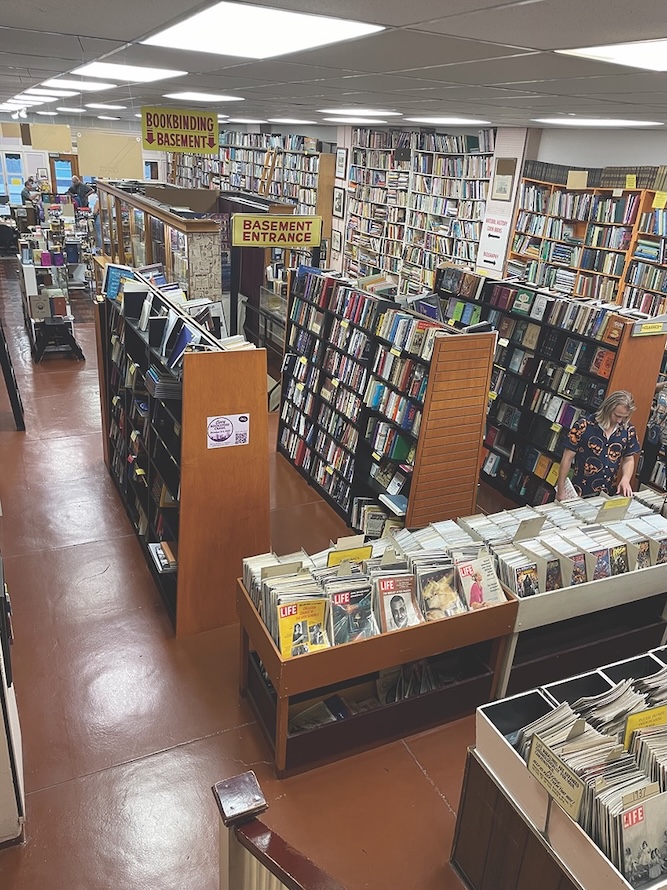
OHIO BOOK STORE PHOTO BY HUCK BEARD
Open since 1940, the Ohio Book Store on Main Street is a five-floor labyrinth of more than 300,000 used books and vintage magazines covering virtually every subject imaginable. The store also houses a bindery where skilled craftspeople repair and restore books entirely by hand, from stitching pages with needle and thread to hand-lettering gold titles on spines.
For years I’ve searched for a copy of a childhood favorite, “Dickon Among the Indians” by M.R. Harrington … and I found it here. It’s a true bibliophilic rabbit hole.
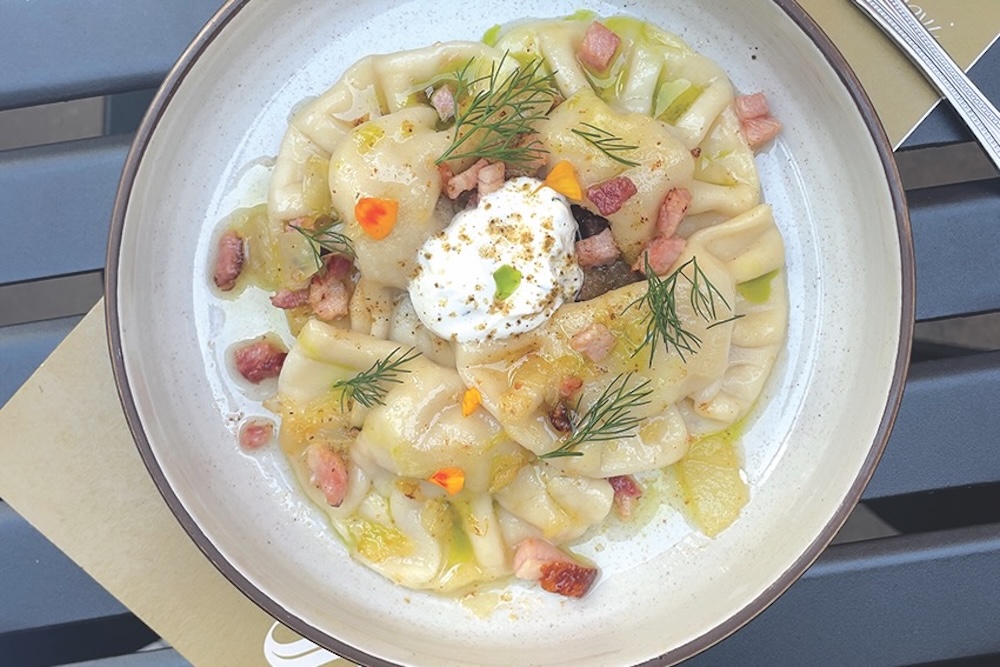
SUDOVA PHOTO BY HUCK BEARD
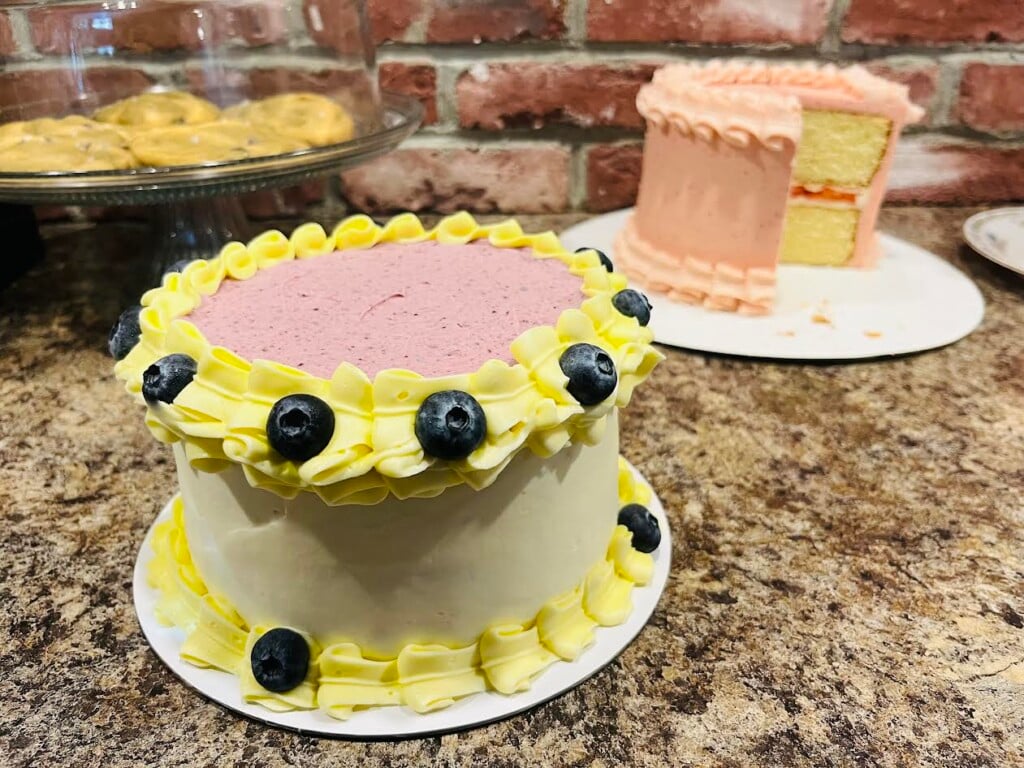
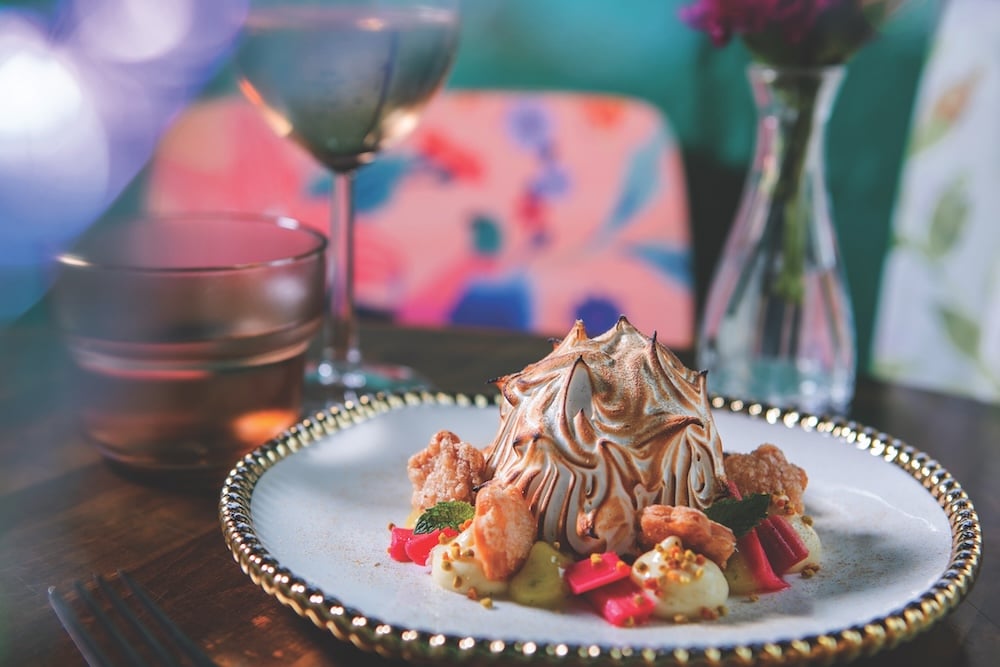
For dinner, I walked to Sudova on Court Street, a new Eastern European restaurant driven by owner Sara Dworak’s Ukrainian roots. (She also runs Babushka Pierogies at Findlay Market.) The rye varenyky dumplings — with potato, sauerkraut, apple butter, pancetta, caramelized onions and dill smetana — were a table favorite, and the medovik, a lemon poppyseed wildflower honey cake, brought sweet dreams all night.
The evening ended at Ghost Baby. More than 150 years ago, Cincinnati’s brewing companies dug lagering tunnels beneath the city to cold-age their beer before refrigeration existed. Located four stories under Vine Street, Ghost Baby occupies one of these tunnels and is reached by elevator or stairs. The speakeasy has a low-light atmosphere and live jazz.
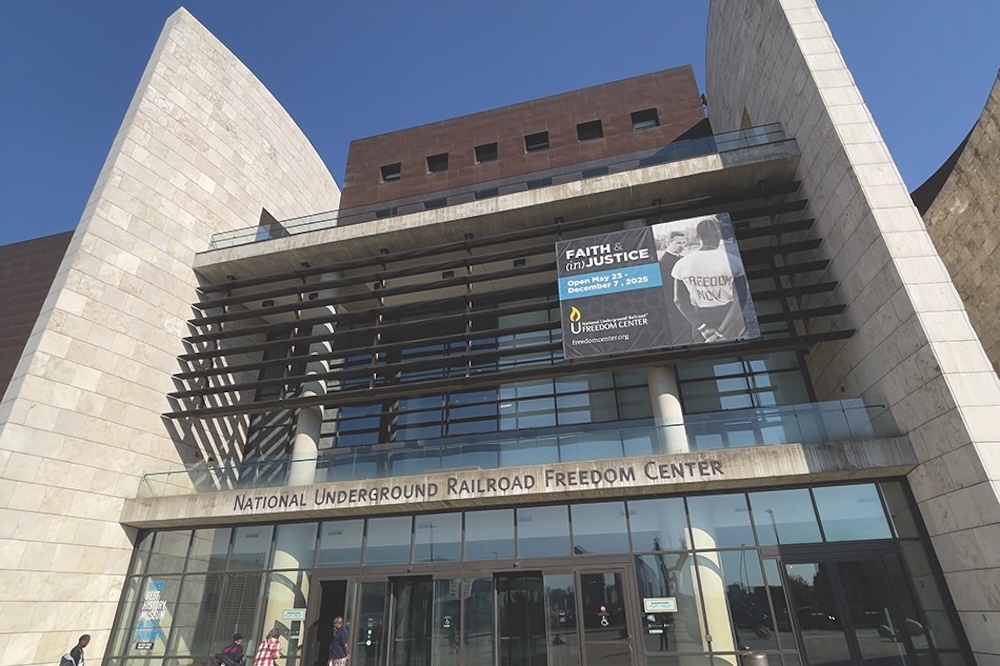
PHOTO BY HUCK BEARD
The National Underground Railroad Freedom Center is just steps from the Ohio River. In the tumultuous 19th century, the river was the historical barrier that enslaved people longed to cross to freedom. Opened in 2004, the museum tells the stories of those who crossed the river, those who helped them cross it, and what freedom has actually cost this country to achieve.
A rebuilt and restored rural slave jail is a somber walk-through, listing names of those imprisoned there — Simon, Phenton, Malinda and child, George. One chart tells the story of Pennsylvania’s slave population in 1770: 5,561, or 2% of the state’s population. Another state’s slave population soared to 61%.
Here I felt the weight of history still unfinished. It’s a difficult visit, utterly necessary and human.
From there, the Cincinnati Black Music Walk of Fame offered a different kind of reckoning — celebratory and defiant. The walk chronicles King Records and its gravitational pull on soul and funk, including James Brown and Bootsy Collins, whose careers the company shaped. The 2025 inductees — Nancy Wilson, Dottie Peoples, The O’Jays and The Ohio Players — personify Cincinnati’s deepest musical roots.
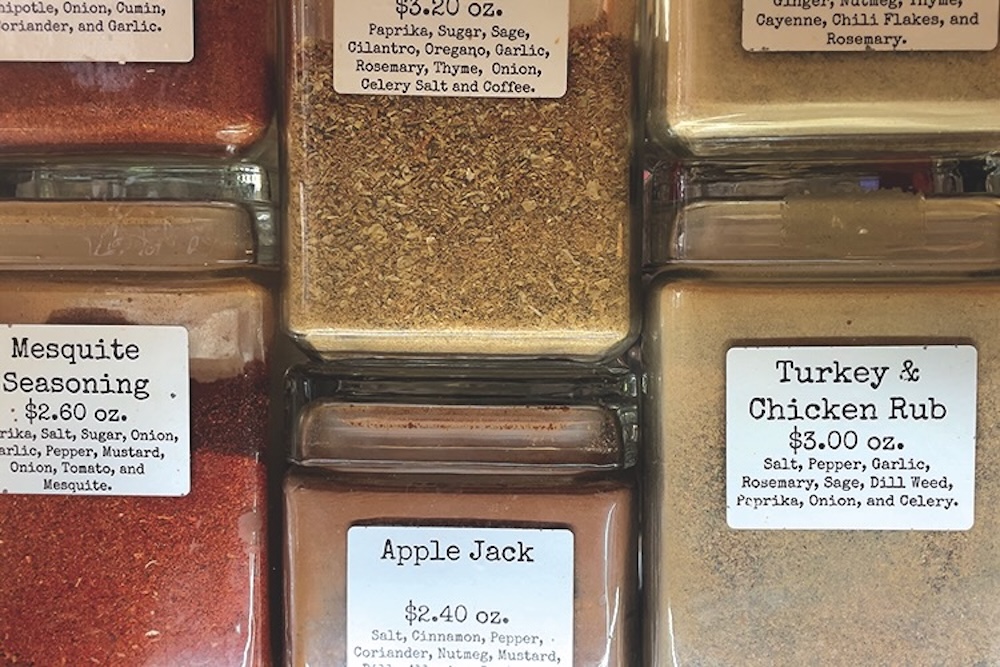
PHOTO BY HUCK BEARD
In Cincinnati proper, the layering is relentless: German immigrant heritage in the architecture and the sausage, African American history in the music and the river crossings, Eastern European immigrants cooking Ukrainian food in a new restaurant downtown, jazz playing four stories underground.
That’s the thing about Cincinnati. In the Queen City, the past isn’t behind a velvet rope.