Can Reading Bring Us Together Again? Sony Ton-Aime Thinks So
The Haiti native is growing a new chapter at Pittsburgh Arts & Lectures.
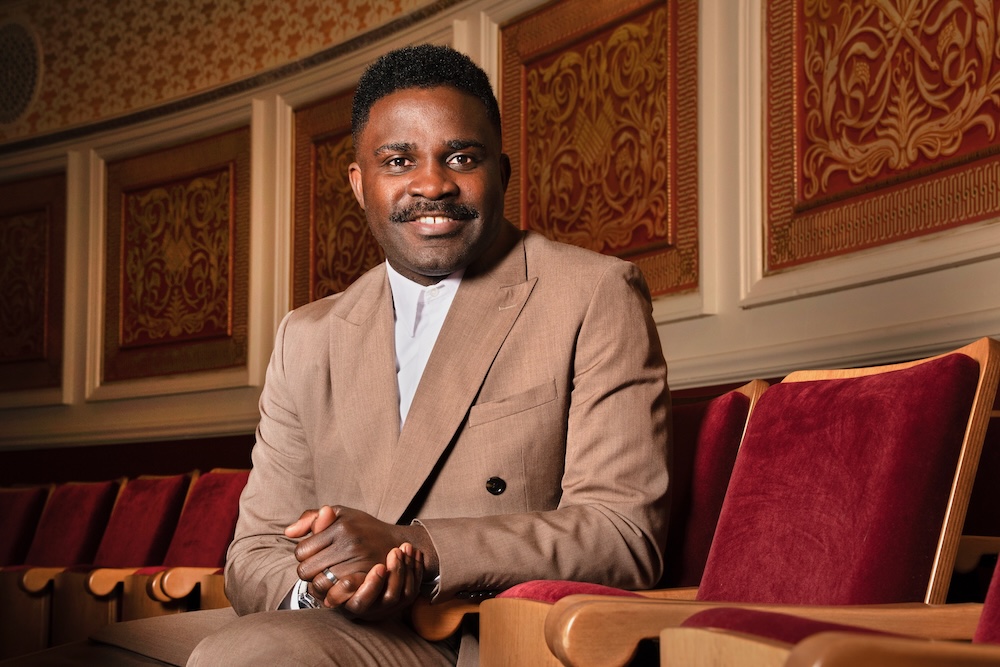
SONY TON-AIME PHOTO BY MARTHA RIAL
In Greenfield yard, Sony Ton-Aime is looking to cultivate avocado and passion fruit, bringing a bit of his native Haiti to his home in Pittsburgh.
It’s a modest garden, but for Ton-Aime — now two years into his role as executive director of Pittsburgh Arts & Lectures — it’s symbolic of how he’s planting ideas of community and connection that first took root on the bright Caribbean island where he grew up.
“In Haiti,” he says, “reading was never solitary. It was something we did together — to learn, to act, to find joy.”
That sense of shared experience, of literature as a living dialogue, has guided Ton-Aime as he reshapes one of the area’s storied cultural institutions.
Ton-Aime’s journey to Pittsburgh began when he left Haiti at 19, embarking on a scholarship to study accounting at Kent State University in Ohio. After a brief return to Haiti, his love of storytelling brought him back to Kent State, where he earned a master of fine arts degree in poetry. He then spent nearly a decade helping to build community-centered literary programs at Kent State and the Chautauqua Institution in New York.
Since arriving here, he’s quietly been transforming the mission of Pittsburgh Arts & Lectures — from simply presenting writers onstage to promoting the organization by building civic conversations around books and ideas.
Among his initiatives, the Western PA Book Read brings readers across the region together around a single title — a shared reading experience that echoes the communal spirit Ton-Aime first encountered in Haiti.
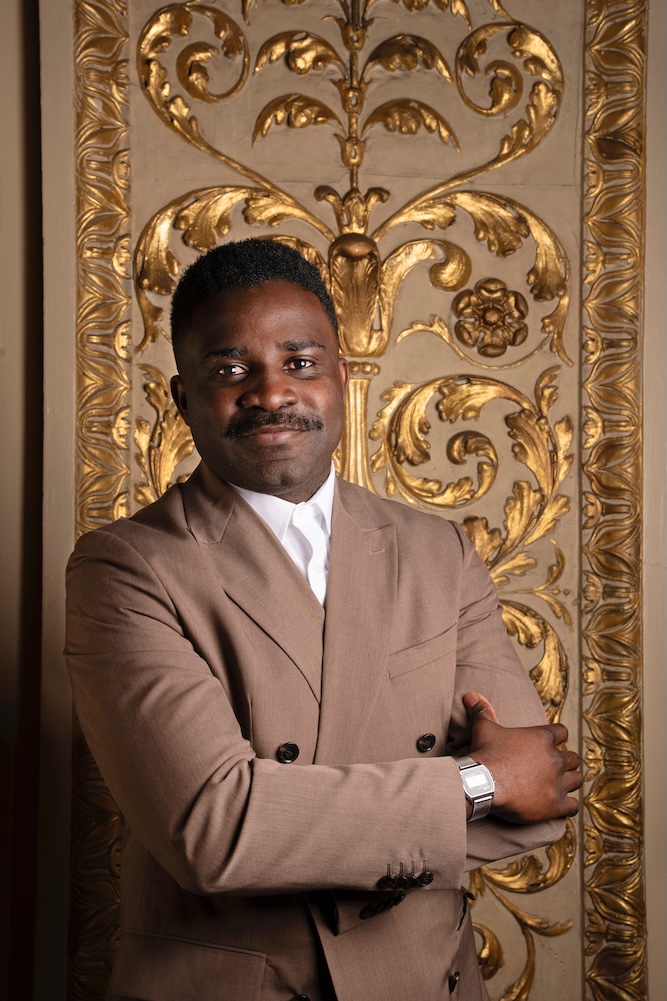
SONY TON-AIME PHOTO BY MARTHA RIAL
The lecture series has expanded to embrace literary conversations and libraries across the region through collaborations with local authors like Sharon G. Flake (who is part of the series’ Authors to School Program) and other new initiatives. These include partnerships with the recently launched Pittsburgh Review of Books, a Carnegie Mellon University project to use book criticism and essays to engage critical issues.
Ton-Aime chose Flake’s latest book, “The Family I’m In,” for a reading and discussion at Community College of Beaver County, where more than 250 Beaver County students were bused in.
“Books open doors,” he says. “But it’s people — reading, questioning, reflecting together — who keep those doors open.”
“Because my book is about young boys and relationships with their fathers,” says Flake, an award-winning author of teen literature, “it was amazing to be on that stage and hear the young boys say that you’re saying something that resonates with them … that ‘you see me’ … how do you know me?”
“There was a certain power to that,” adds Flake. “For Ton-Aime, it’s the kind of connection that illustrates how the power of literature is both personal and civic. When people read together, they begin to imagine a collective future,” he says. “It’s not just about understanding a character on a page; it’s about understanding each other.”
The lineup for the lecture series include Pulitzer Prize-winning writers such as Percival Everett and Edwidge Danticat, whose work reflects the complexities of identity and belonging — themes that resonate deeply with Ton-Aime’s own story. His intentional about that curation.
“I want every event to offer a tool — something that helps people make change or find joy,” he explains. “It’s not enough to admire a book. What happens when we leave the auditorium? What will we do with what we’ve read?”
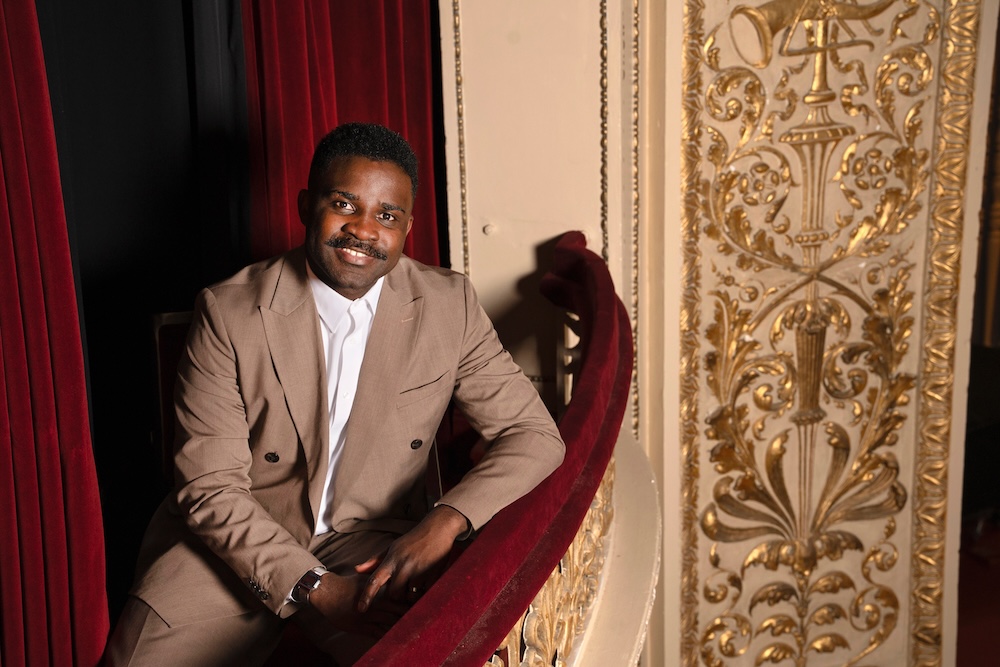
SONY TON-AMIE PHOTO BY MARTHA RIAL
That call to act, to be inspired rather than passive, threads through the series’ spirit.
At home, Ton-Aime shares quiet moments with his wife, Ying Zhao. They’re repairing what they can, painting walls and discovering the quirks of old Greenfield house.
“It’s all part of building a life,” he says. “Just like building community — you take care of what’s already here and nurture what’s still growing.”
Political and social instability in Haiti and the complications of U.S. immigration policy have prevented Ton-Aime from recent visits with family. Nevertheless, in Pittsburgh, Ton-Aime stays grounded to the kind of literary ecosystem he first experienced as a child in northeastern Haiti near the border of the Dominican Republic.
It’s a place where, nightly, at dinner, words brought people together, where stories fed the spirit and where Ton-Aime and friends shared books and saw every new book as a seed of possibility.
Ton-Aime also is drawing from Haitian history and culture to complete his new collection of poetry, “Konbit,” a Haitian Creole word roughly meaning “coming together.”
“I want Pittsburgh to see reading as a ‘coming together,’” he says. “Something that connects us, that keeps growing — just like a little garden.”