Need-O the NeeDoh: Pittsburghers Are on Board With the Newest Toy Trend — Mostly
Love it or hate it, the squishy sensory toy is having a moment.
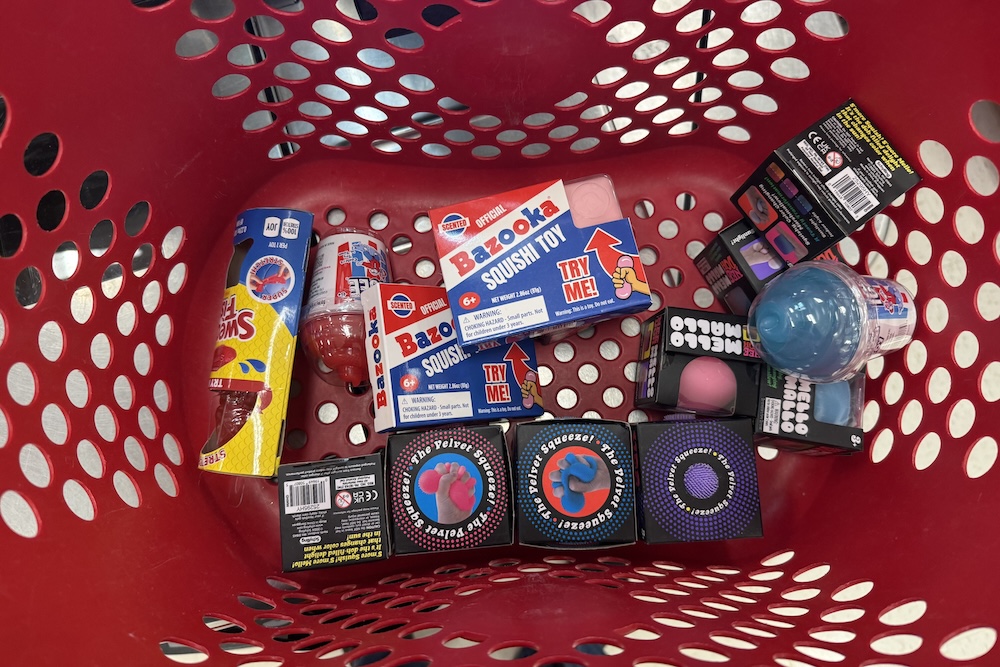
AN ASSORTMENT OF NEEDOHS AND OTHER POPULAR SQUISHY TOYS IN A TARGET BASKET | PHOTO COURTESY OF CRYSTAL BRAY
First, there were Cabbage Patch Kids and Neopets. Then, there was Labubu. Now, a new contender has entered the retail arena to assert itself as the newest toy trend in 2026.
It’s called NeeDoh.
The squishy sensory toy comes in a variety of shapes and sizes, although the square ones — dubbed “nice cubes” and “nice bergs” — are the most popular. From teenie “Groovy Globs” to the noodle-shaped “Mac ‘N’ Squeeze,” the soft and stretchy toys have taken the Internet by storm.
Videos on social media showing NeeDoh restocks have garnered tens of thousands of views, and “NeeDoh hunting,” or cruising from store to store in search of the squishy blobs, has become a viral trend for content creators of all ages.
The craze has led to long lines outside of shops across the country, including many in the Pittsburgh area.
“It has definitely been an adventure,” says Beth Ann Vernon, manager at Hobby Express, a toy store in Cranberry Township. “It’s been amazing seeing so many new customers.”
In January, Vernon says the store placed an order for 1,500 NeeDohs, expecting them to last for at least the next six months. But instead of taking the two weeks it normally takes to receive the shipment, it took seven weeks; by the time they arrived, the NeeDoh craze was in full bloom.
“We posted on Facebook and Instagram we had them available, limit 2 per person,” Vernon says. “We knew we wanted to limit them to make sure we could spread them out to as many people as possible.”
The response was overwhelming.
“There was a line of people waiting for us to have them ready to sell, then there was a line waiting when we opened the next morning,” she says. “We sold through the 1,500 in less than two days.”
Dragonfly Castle, a longstanding toy shop in Lawrenceville, may not have seen the long lines outside, but they have been getting calls. Lots of them.
Owner Nan Dowiak estimates that about 99% of the phone calls her store has received in recent weeks have been asking about NeeDohs.
It’s interesting, she says, because the toys aren’t new. They’ve been around for years, sitting discretely on her shelves and selling only occasionally — mostly to people in their 20s or 30s looking for a fidget toy.
“My first buyers were young adults, and even a good friend of mine who enjoyed them as a stress-relief toy,” she says. “And then the younger kids started getting interested in them.”
Dragonfly Castle sold the last of its NeeDohs about two weeks ago, Dowiak says. She placed an order last month to Schylling, the company that makes and sells NeeDohs, for more of the squishy cubes and the wide range of other toys she sells from the brand.
Usually, shipments take about two weeks from “order placed” to “package delivered,” but they still haven’t arrived as of April 3, Dowiak says, echoing the shipping woes Hobby Express experienced earlier this year.
When Dowiak called the company, they told her she was in the queue.
“The other toys I buy from them, I didn’t have in stock for Easter,” she says. “That makes me grumpy.”
It isn’t only specialty toy stores that are seeing a bump in NeeDoh-related traffic, for better or for worse. Big box stores like Target and Walmart have also been receiving phone calls, seeing long lines and grappling with disappointed customers when the popular toy inevitably sells out, workers say.
“We get multiple calls for them every day,” explains an employee at a Pittsburgh-area Target who wishes to remain anonymous. “They sell out in hours.”
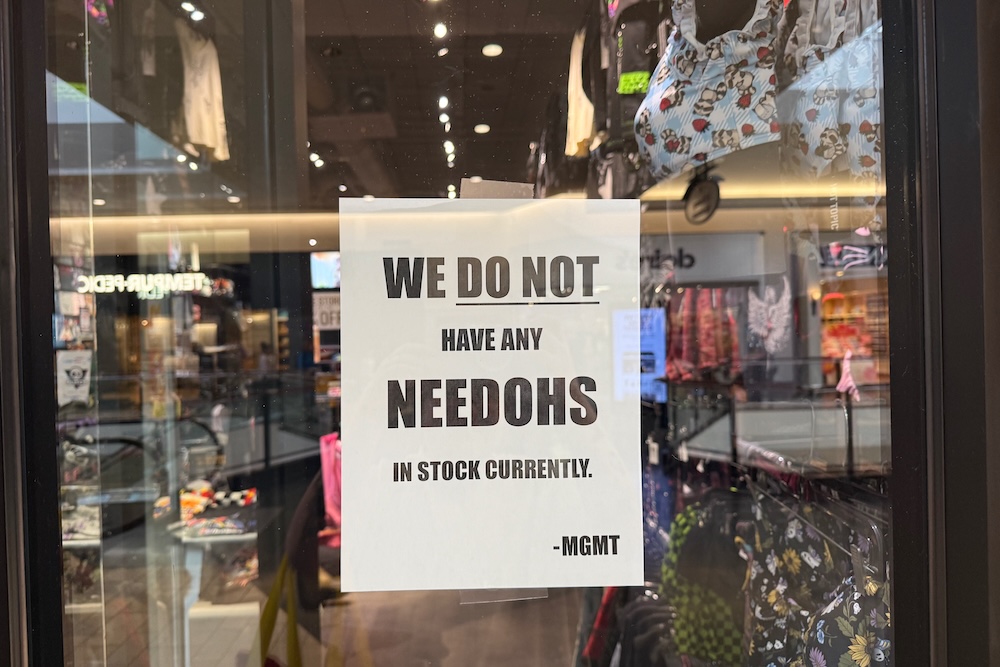
A SIGN ON THE WINDOW OF HOT TOPIC IN ROSS PARK MALL | PHOTO BY OLLIE GRATZINGER
At the forefront of the NeeDoh surge are self-professed “NeeDoh hunters” like Crystal Bray, who has become a regular at her local Target stores.
The Cranberry resident has been on the hunt for about a month and currently has more than 50 pieces between her and her four daughters, she says. Bray explains that her journey began when one of her daughters asked for a NeeDoh, and she obliged.
“Once it came, she wanted more, but once I went to the stores, the shelves were empty,” she says. “The stores started to tell me that they sell out as soon as they’re placed on the shelf. For me, that meant, ‘Challenge accepted.’”
The trick, she says, is being persistent.
“Call the stores. Not just one phone call, but multiple times per day,” she says. “Ask about trucks. Get their restock times. Most important, get to the stores before they open and stand there.”
That’s exactly what she did.
Bray was one of the handful of NeeDoh hunters at the Target in McCandless early Wednesday morning. Bray, along with her oldest daughter and about six other people, were lined up outside of the store at 7:30 a.m., primed and ready for when doors opened at 8 a.m.
When the time came, they ran.
At first, they were met with another empty shelf.
“Then, a worker comes with boxes and asks us to form a line,” Bray says.
She made it out with a decent haul of glittery nice cubes and textured fuzz balls.
“It was fun,” she says. “I’ve always enjoyed finding hard-to-find toys. It’s been a few years since a fad.”
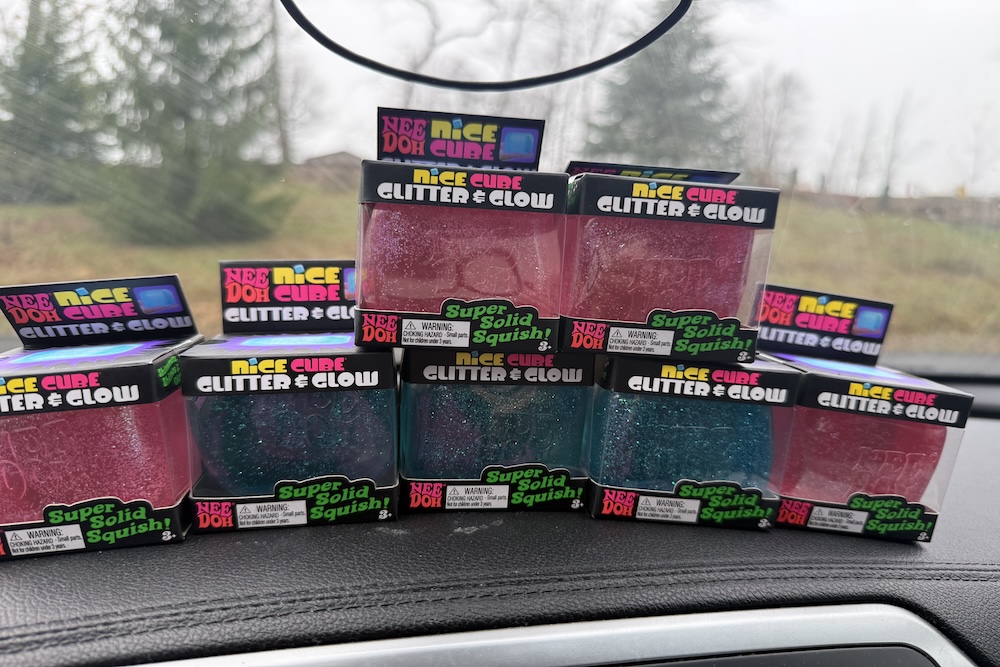
SOME OF CRYSTAL BRAY’S NEEDOHS | PHOTO COURTESY OF CRYSTAL BRAY
Almost all viral toys are popularized on social media sites like TikTok, according to Samantha Connell, associate editor of The Toy Insider.
“It’s easy to come across products like NeeDoh regularly, and soon enough, your entire feed will feature the toy,” she says. “After engaging with a handful of TikTok videos or Instagram posts, social media users might feel like they’re missing out and start the process of building their own collection.”
She adds that the videos of folks going NeeDoh hunting can also add to the popularity of the item; when people see others doing something that looks fun or trendy, they might decide to go on the same adventure to get a piece of the action — and the clout.
“There’s also a certain thrill when looking, and eventually finding, your desired NeeDoh product,” Connell says. “Part of the fun for some social media users is tracking retailers through online videos and getting a small rush when they see the item on the shelf.”
Almost all viral toys have a few things in common, too. Recent trends, Connell says, have featured an unboxing, a sensory element or a collectability factor. Some products, like NeeDoh and Labubu, have all three.
“It’s easy to integrate this toy into everyday life, especially because it’s quiet, doesn’t require intense focus and is budget-friendly, so you can continue building your collection,” Connell says.
But not everyone sees the novelty of these trends in a positive light.
Attempts to crowdsource information on social media were met with mixed reviews. Some users explain the benefits of NeeDoh toys among nervous or neurodivergent children at UPMC Children’s Hospital of Pittsburgh, for example, and others say it has helped them build memories with their families.
Others, however, condemn the trend as overly commercial or just plain annoying.
“I’m doing my part by not bothering to look up these things,” another user wrote on the same subreddit. “The sooner they stop being ‘viral,’ the sooner nobody has a reason to write about them.”
Folks also point to some dangerous misinformation that’s spreading online about the toys; some posts by popular content creators have suggested that microwaving the NeeDohs can make them more pliable and squishy, but microwaving the toy can actually cause it to explode, and the boiling gel inside can cause severe burns. Last year, PEOPLE Magazine reported that a 7-year-old from Missouri ended up in a medically-induced coma with severe burns after copying videos she saw online.
Another 9-year-old boy in Michigan ended up with severe burns on his face in February after copying the microwave trend. Loyola University Medical Center told local TV stations that the boy’s case is the fourth they have seen this year involving NeeDoh toys.
There is also a thriving resale market for toys, which has been the case with just about every popular item, from sneakers to concert tickets.
On average, most NeeDohs retail for around $5 to $10, depending on the size, shape and shop at which they’re purchased. At Five Below, some NeeDohs only cost between $1 and $3. But on websites such as Ebay, Facebook Marketplace and StockX, they’re selling for three times that price — at least. Some posts on StockX are asking for more than $220 for a set of three NeeDohs. On Staples’ website, the same toy is listed as out of stock, but priced at only $11.99 per cube.
For Bray, and for many NeeDoh hunters like her, it isn’t about making a profit through reselling, or even about building up an impressive collection. Instead, she says it’s about the “thrill of the hunt.”
“I started because it’s fun,” she says. “It’s creating memories for my kids.”