Know-It-All: What Do You Know About The Smokey City?
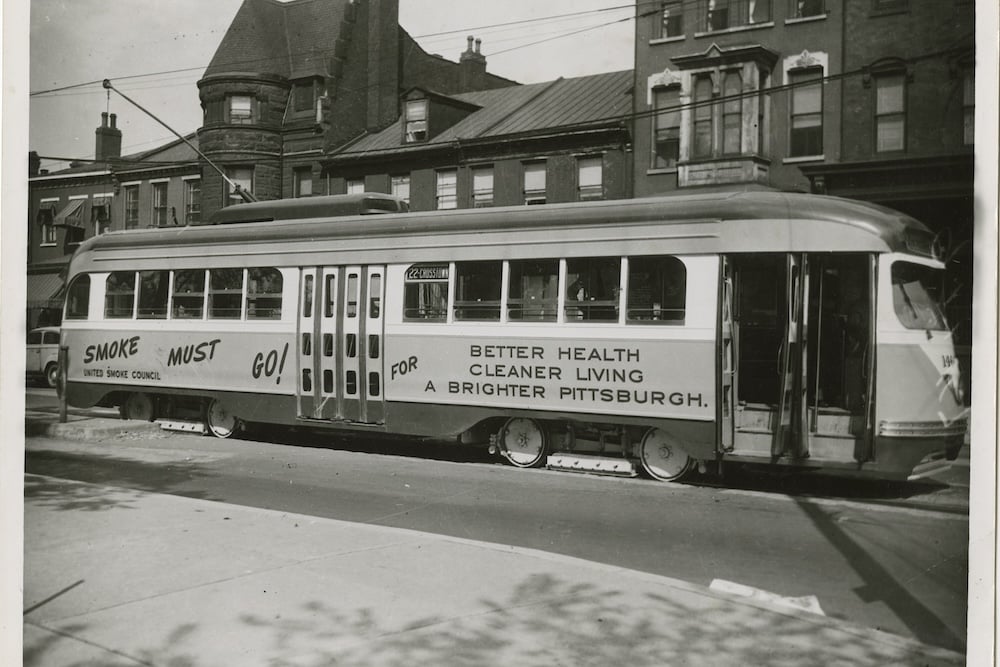
For decades, coal-fired mills and furnaces made sooty skies in Pittsburgh.
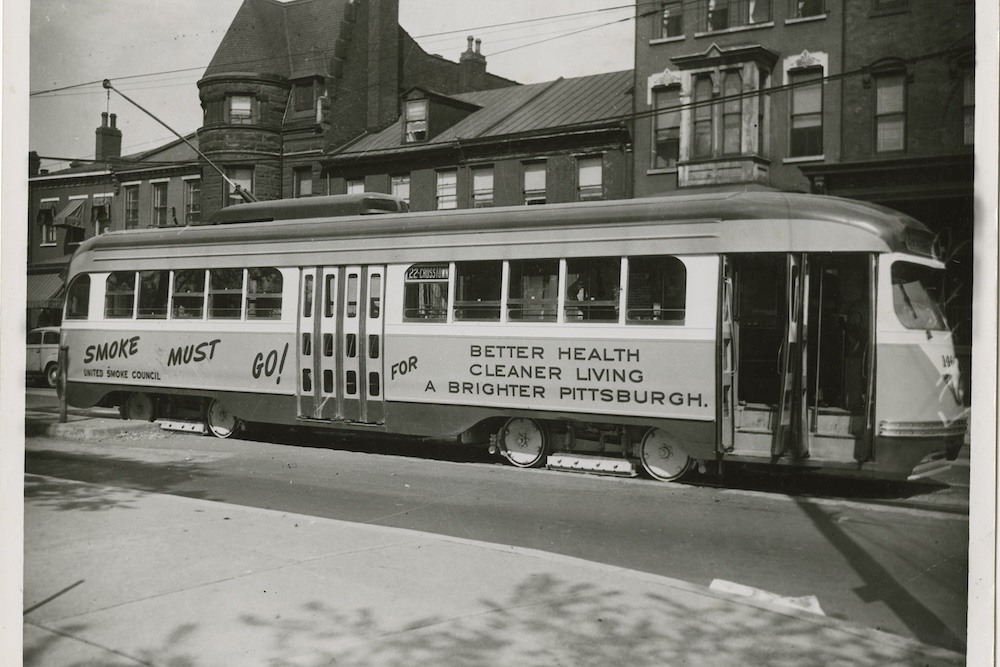
ALLEGHENY CONFERENCE ON COMMUNITY DEVELOPMENT PHOTOGRAPHS, 1892-1981, COURTESY HEINZ HISTORY CENTER
For decades, Pittsburgh didn’t just have weather — it had atmosphere you could taste.
Streetlights burned in noon darkness while white laundry surrendered to gray by dinnertime. Coal-fired mills and furnaces made Pittsburgh infamous as “The Smoky City.”
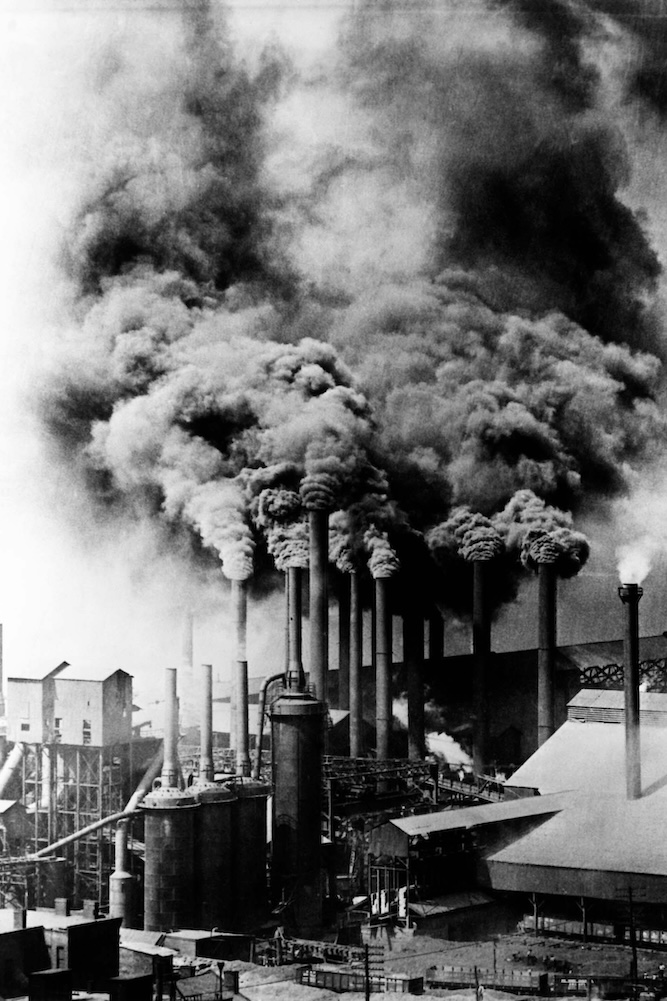
1890s, Pittsburgh, Pennsylvania, USA — Smokestacks from factory in Pittsburgh, Pennsylvania, belch black smoke into the atmosphere, 1890s. — Image by © Bettmann/CORBIS
Early ordinances in 1892 to curb the pollution had little bite. Stronger legislation in 1906 faltered in court before state authority clarified enforcement. Reformers insisted the soot wasn’t destiny.
In 1908, the Bureau of Smoke Regulation declared, “The smoke nuisance is not a necessary evil. It is the result of wasteful and careless combustion, and it can be prevented.”
The Civic Club of Allegheny County insisted, “We do not object to industry; we object to unnecessary smoke.” The Ladies’ Health Association framed smog as a public health issue.
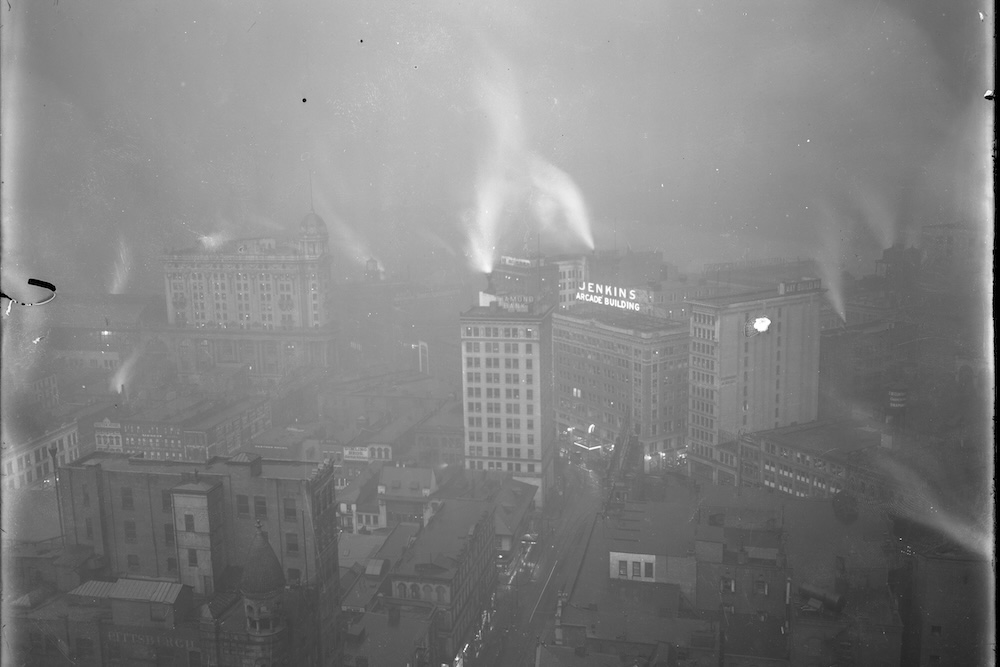
Real change came slowly — inspectors, opacity standards, countywide rules in 1941, post-war tightening in 1946. Then, almost miraculously, Pittsburgh learned to see itself.
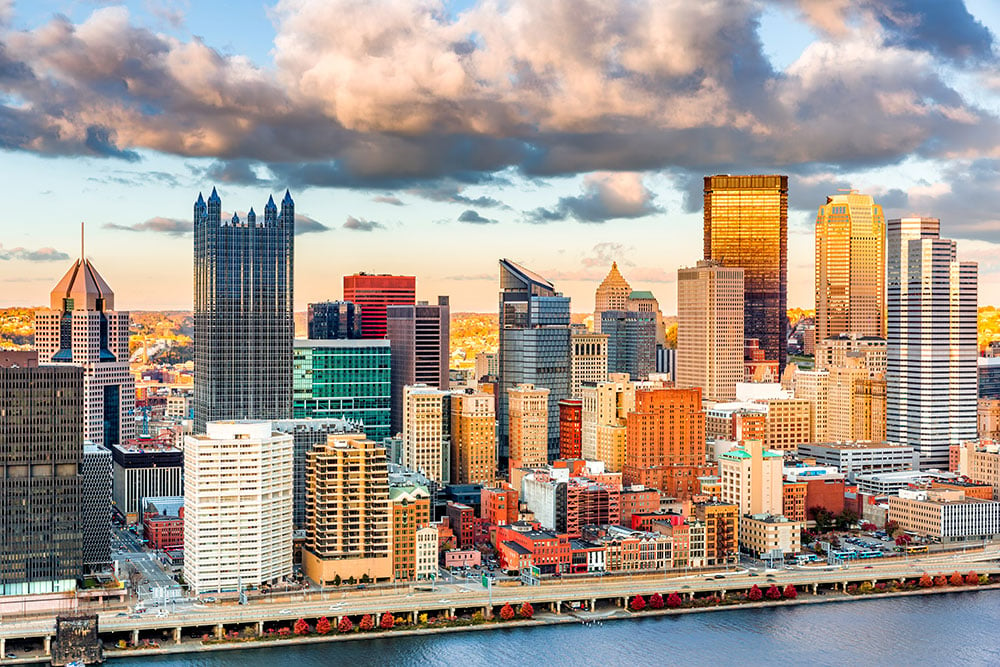
By the 1950s, skylines reappeared. Today, joggers run river trails under bright blue skies. The city that once bottled its soot eventually figured out how to clear the air.
Pittsburgh, you’ve come a long way, baby.
By the Numbers:
0
The number of days in 1940 when Pittsburgh escaped measurable smoke haze.
(At the height of the “Smoky City” era, soot was a daily fact of life.)
800+
Tons of Heinz ketchup once produced per day in Pittsburgh during peak 20th-century operations.
40°26’ N
The latitude of Pittsburgh — roughly the same as Madrid (Spain), Naples & Rome (Italy), Istanbul & Ankara (Turkey), Beijing (China), and Aomori (Japan).