How Did the NFL Draft Really Touch Down in Pittsburgh?
To bring the Draft to the city, the region’s power brokers collaborated on a sprawling, public-private partnership.
In September 2022, Pittsburghers had their pick of festivals: pierogies at Kennywood, Chinese culture in Mellon Park and ribs on the North Shore. Still, power brokers gathering in Rich Fitzgerald’s Downtown office that month were angling for an even bigger event — the NFL Draft.
The Allegheny County Executive at the time, Fitzgerald joined with the Pittsburgh Steelers to call a key meeting — no fanfare, no press. Then-Mayor Ed Gainey was there. So were executives from the Steelers and VisitPittsburgh, the local tourism agency. When they wrapped after about an hour, their direction was clear: The region would pool money and influence to chase one of the landmark prizes in professional sports.
Securing the 2026 NFL Draft would take over a year — a sprawling public-private endeavor to claim the national spotlight and draw hundreds of thousands of visitors to Pittsburgh.
Officials today credit the bid’s competitive success to the vision of Steelers President Art Rooney II, cross-sector cooperation and sheer persistence. Lobbying came from as high as the state capital; Gov. Josh Shapiro said he was relentless in pitching Pittsburgh to NFL Commissioner Roger Goodell at and after the Super Bowl in February 2023.
“My words, not his: I was a pain in his ass and just constantly pushing him,” Shapiro says. “And ultimately, when the NFL chose Pittsburgh, I think it validated the desire of the Rooneys and the leadership of the Steelers.”
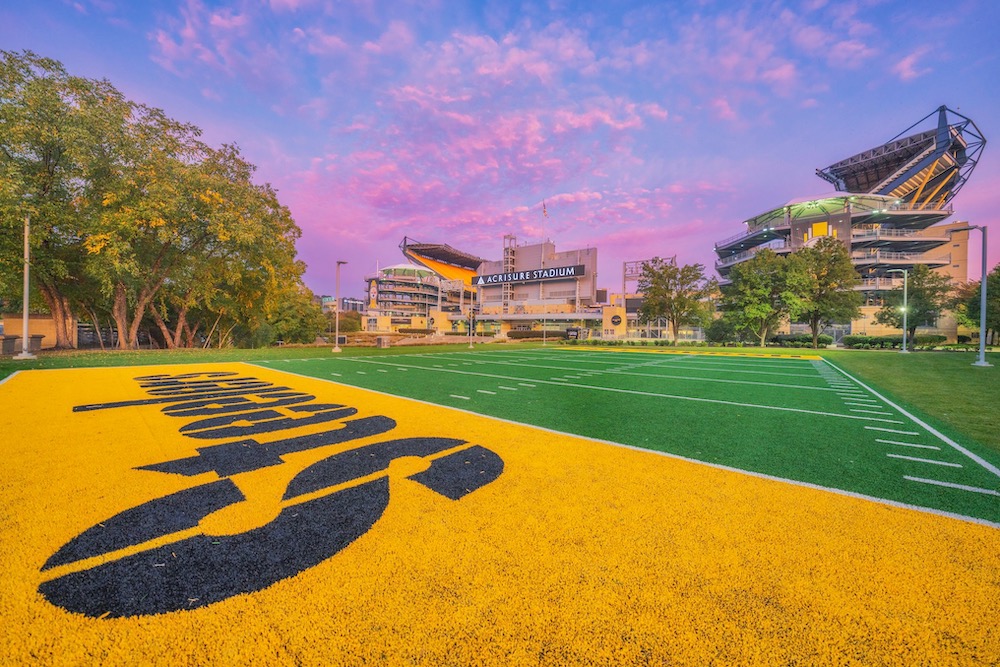
PHOTO BY DAVE DICELLO
It also marked a civic coming-together in “a community who not only loves football, but understands how this can be a catalyzing event” for a Pittsburgh resurgence, according to the governor. Within the Steelers organization, Vice President Dan Rooney, whose focus is on business development and strategy, says prospective conversations about hosting the draft began years earlier. His father, Art Rooney II, has long seen the event as a perfect fit for Pittsburgh. Discussions turned more concrete and specific leading up to the 2023 draft, which Kansas City, Mo., hosted and hosted well, the younger Rooney says.
“For us, it was just the right time, watching the growth of the draft,” Dan Rooney says, pointing in part to attendance at draft cities that has eclipsed 700,000. The Steelers realized “Pittsburgh can do this — and do this probably better than anyone else.”
He emphasizes that’s partially about location, as Pittsburgh sits within driving distance of about a dozen other NFL cities. There’s also a rich football legacy: Established in 1933, the Steelers represent the seventh-oldest franchise in the league. Plus, the draft itself sprouted from a proposal at a 1935 meeting of NFL team owners in Pittsburgh, Dan Rooney says. The legendary Steelers teams of the 1970s “were built through the draft.” “All of our Hall of Famers were draft picks from that era,” he says. “And you know that that was really a model for success at the time.”

ACRISURE STADIUM, TAKEN JULY 2025 by FEIXU CHEN / NEXT GENERATION NEWSROOM
In all, more than 20 Pro Football Hall of Fame inductees are from Western Pennsylvania — a prominence that gives fans across the NFL an interest in the region. Pittsburgh hosted the draft just once before, in 1947, at the since-demolished Fort Pitt Hotel on Penn Avenue, Downtown. “To me, it was deserving of the Rooneys to have the draft,” Gainey says. The Rooney family is “more than deserving.”
He ticks off Steelers hallmarks since Arthur J. “Art” Rooney Sr. founded the team in 1933: six Super Bowl championships, strong leadership in the league, a vigorous fan base for more than a half-century. During an initial meeting after his 2021 election as mayor, Gainey says he told Art Rooney II that he would “do anything” to help launch a bid for the draft. The then-mayor imagined a homecoming opportunity — a window to draw in former Pittsburghers who still see the city as home.
“And it would be a great story to tell, to bring their grandkids, their great-grandkids back” and reminisce, Gainey says. “Think about it: That’s a phenomenal story all around.”
He and other advocates saw a chance, too, to reintroduce Pittsburgh to an international audience, showcase its evolution and encourage new investment. The 2025 draft, held in Green Bay, Wis., logged an average of 7.5 million viewers across broadcast, cable and digital channels, according to the NFL.
“At the end of the day, we want people to come back if this is their first time visiting,” says Sara Innamorato, the current Allegheny County Executive. “We want people to move home if they have family or connections here. And we want businesses to invest when they see what Pittsburgh is all about. “We’ll be selling the region to everybody.”
PHOTO BY DAVE DICELLO
When Innamorato succeeded Fitzgerald in January 2024, the county had already made a financial pledge to the bid through VisitPittsburgh, which organized the pitch. The county’s $3 million contribution represents nearly 30% of local funds coordinated through the nonprofit to support draft expenses, including infrastructure needs and public safety.
Under Fitzgerald, the county set its share following revenue forecasts for the event. Projections show some $4 million to $5 million from county hotel, sales, car-rental and alcohol taxes and fees, according to the budget office. A tourism-promotion fund that collects the county hotel tax covered the $3 million outlay.
“Even though they’re earmarked for tourism, they’re public dollars. We wanted to make sure [this was] a good investment,” Innamorato says of her own review before she agreed to the disbursement. “The answer was yes — and then some.”
Such buy-in from the public and private sectors helped telegraph to the NFL a regional commitment to the draft, according to participants in the bid. Upward of 20 cities were in contention to host the 2026 event, the league reported.
VisitPittsburgh president and CEO Jerad Bachar says his agency had been evaluating the draft for around a decade, attending almost every event since 2016. In mid-2022, VisitPittsburgh and the Steelers inked a formal letter of intent to the NFL, a prelude to the detailed bid that materialized over the next year.
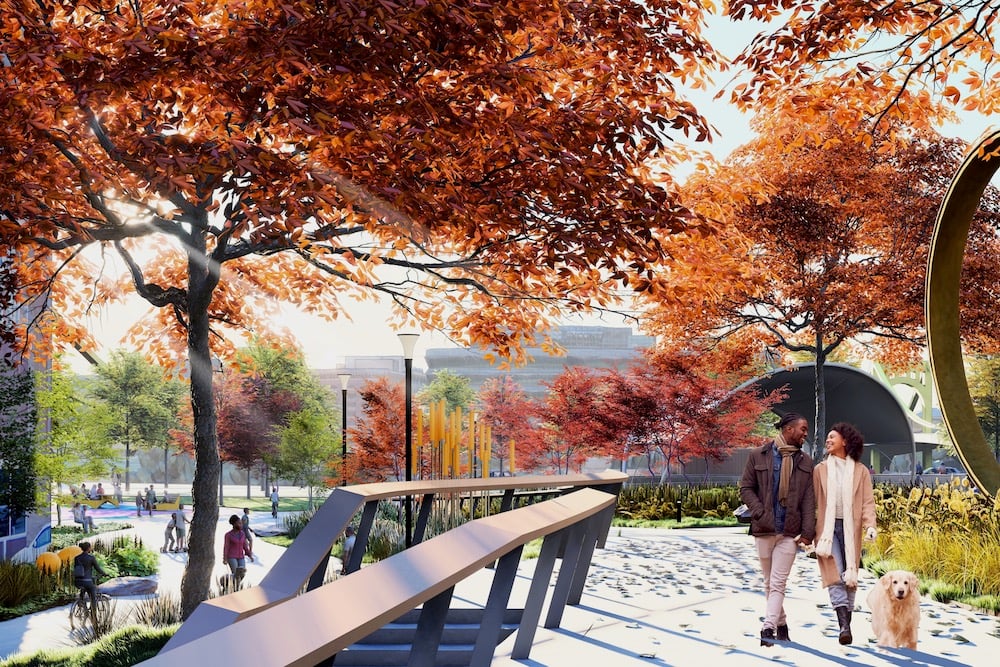
The COVID-19 pandemic had much to do with the timing, Bachar says. Local leaders believed the draft could “really embolden our recovery process,” motivate development and bring the community together. “I think it’s done just that,” Bachar says. Infrastructure improvements ranging from Arts Landing — a 4-acre civic space in the Cultural District — to a Market Square refresh accelerated “because of the deadline created by the draft.”
Further, 2026 will be a big year for high-profile events in Pennsylvania with the celebration of America’s 250th anniversary. Philadelphia is a host city for FIFA World Cup 26, an international soccer tournament with matches at Lincoln Financial Field from mid-June to early July. The City of Brotherly Love is hosting the MLB All-Star Game in July as well.
Without the NFL Draft, Bachar fears southwestern Pennsylvania might have been left behind while the spotlight was on its cross-state peer. The draft will help balance attention across the commonwealth.
“It was important on a lot of levels that the NFL Draft take place now” in Pittsburgh, Bachar adds.

PHOTO BY DAVE DICELLO
The coalition crafting the bid set out to show Pittsburgh would bring energy, collaboration and community as a host, he says. Early on, a local delegation met with counterparts in Kansas City — including at the tourism board there — to understand their logistics and planning for the event.
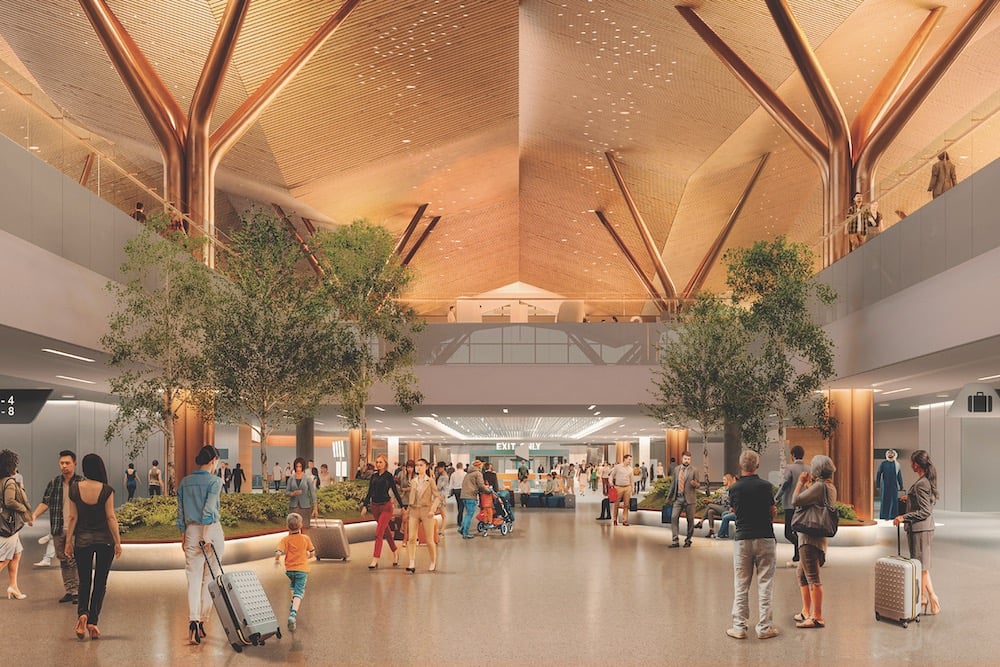
Ultimately, the proposal highlighted the new Pittsburgh International Airport, the capacity of area hotels and the city’s walkability, Bachar says. It reflected community spirit and infrastructure; cooperation among government and nonprofit groups; and how the draft would boost diverse businesses, youth sports and the natural environment through its affiliated programs.
In the end, it was Art Rooney II who clinched the deal by selling other NFL owners on Pittsburgh, according to Bachar; a committee of owners decides on host cities. “We had to prove, logistically and otherwise, that we can do this, but it was Art Rooney who had to convince them,” Bachar says. “He was the closer in this entire process.”
Fitzgerald figured Rooney family influence within the league would sharpen Pittsburgh’s chances. Shapiro’s commitment to improving Point State Park — part of the draft venue — was another key, the former county executive said. He couldn’t think of any local events that have paralleled the draft in scale and impact.
When the national media comes to town, Fitzgerald expects reporters will explore the region’s role in artificial intelligence, life sciences and other technology.
“I think this message can go out that we have become a much different city around technology and around innovation,” he says.
At Downtown-based PNC Bank, regional president Louis Cestello says every Pittsburgh employer has a vested interest in making the draft a success. The national company underwrote, contributed to and helped marshal a $5 million corporate contribution to the bid’s $11 million local commitment. Corporate enthusiasm rallied easily, Cestello says. A distinction for great cities is their ability “to think about the greater good of the community.”
“People in this town care about each other. They have each other’s backs,” Cestello says. “They have a great long-term vision of what Pittsburgh can be.” Pittsburghers sense “that we’re better together than we are individually,” an attitude that Cestello suggests could stem from the city’s sports legacy.
“Everybody pulling together to make [the draft] a reality was truly a unique thing, something I think we all can be proud of as leaders in this town — seeing everyone embracing and joining arms and making sure we brought this thing home.”