Dahn Memory Lane: Halley’s Comet
The 1910 arrival of Halley's Comet sent Pittsburgh into a panic for the ages.

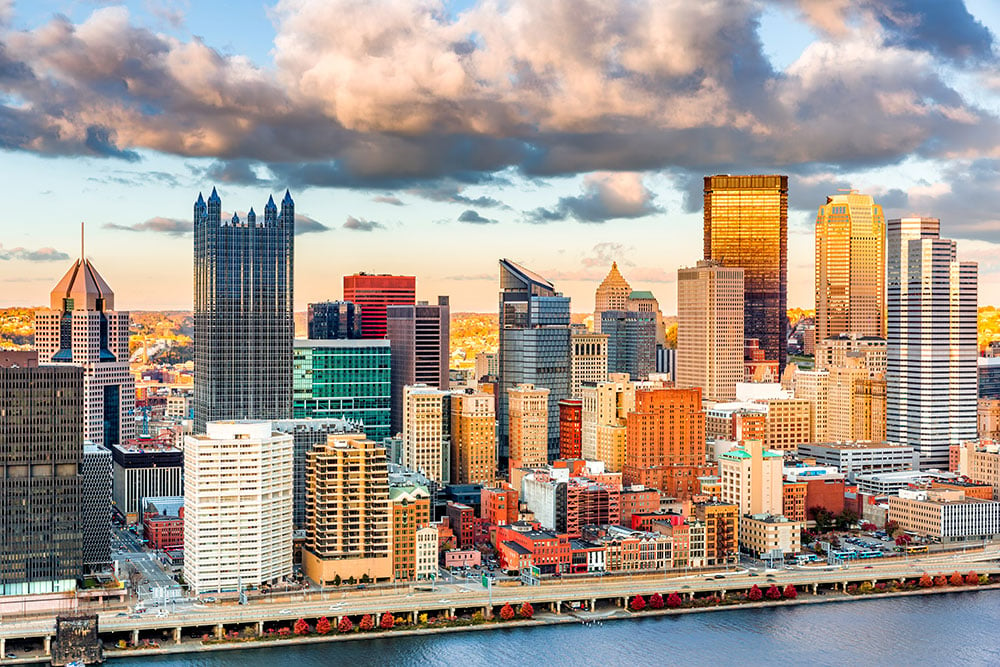
PHOTO VIA ADOBE STOCK
In early May of 1910, a young woman arrived at her bookkeeping job in the Wabash Building in Downtown Pittsburgh, reportedly in a tearful state. On this day, she wasn’t there to complete her tasks, but to resign her position. “If I am to die, I want to be with my mother and father when the time comes,” she informed her confused boss.
What malevolence lurked in her periphery to drive her to such measures? What disease was robbing her of life? What storm was threatening to descend on a city still in its industrial heyday? Scientists have an official name for the monster that chased her home to New York in terror — Halley’s Comet.
The 1910 arrival of the ancient cosmic snowball sent Pittsburgh, and much of the world, into a panic for the ages — panic that was exacerbated by misinformation, bad actors and general confusion that accompanied the Earth’s trip through the tail of what the Pittsburgh Post termed a “celestial vagabond.” Which, it goes without saying, would make a great band name.
The previous visit by the famed comet, which had been astounding humanity every 76 years (give or take) since at least 240 B.C., occurred in 1835 when its close approach was generally treated as a scientific curiosity rather than a harbinger of doom. Although, there were certainly some who insisted comet arrivals brought with them destructive supernatural and natural disasters.
The 1910 approach was especially panic-inducing because scientists calculated that the orbit would bring Earth in contact with the comet’s 24-million-mile-long tail for several hours — a tail they had previously found to contain the toxic gas cyanogen. For their part, Pittsburgh’s world-respected scientists did their best to allay public fears. John Brashear, the legendary astronomer and the father of the new Allegheny Observatory, reassured, “There is little to be afraid of … It will have no more effect than a slight breeze sweeping over the land.”
Unfortunately for the impressionable public, sensationalist newspapers around the country chose to stoke fear with terrifying headlines that suggested the event would not be a harmless encounter between two celestial bodies passing by with no more than a courtesy wave. Doom and mass suffocation, they suggested, might be arriving with Halley’s toxic tail. While the vast majority of reputable scientists remained adamant that research had long ago established that there was no extinction-level danger to be found in the tail of a comet, front pages featured full-throated, scary headlines based on the apocalyptic predictions of a handful of outlier “experts.”
Pittsburgh’s newspapers largely favored good journalistic practices, but still devoted plenty of column inches to the unfounded and terrifying “what ifs” they printed alongside science-based reassurances. As we have ourselves experienced, established science has a heck of a time batting down misinformation when the press chooses to give air to unsupported claims.
The Pittsburgh Post, for instance, chose to lead a mostly science-based article with, “All disputes regarding Halley’s comet, as to whether the inhabitants of the earth will be enveloped in cyanogen gas, which is a deadly poison, or whether they will be subjected to a disastrous shower of meteors, or whether nothing extraordinary at all will occur, will be settled tomorrow night.” Well, that’s … comforting?
Perhaps the best illustration of this “don’t worry, but probably worry” tactic was the Pittsburgh Press’ March 27, 1910 headline that screamed, “Blazing Comet Monster Approaches; Scientists Say, ‘Don’t Get Scared!’” This is like hearing, “I think there’s a rattlesnake in your bed, but don’t panic.” The article itself was a continuous stream of dichotomy; the same paragraph that starts with “chances are it will be nothing but light — terrific, but harmless,” ends with, “This gaseous head, 51 times as big as our earth … will be boiling, fuming, exploding, blasting, in titanic convulsions of heat.”
By April, the Pittsburgh Gazette used page A1 to tell of a local pastor’s prediction that the comet would bring with it the second coming of Jesus Christ and “the end of sin.” Meanwhile, the Press was publishing a multi-page spread with the headline, “What Would You Do if You Knew The Comet Would Destroy This Planet on May 18th?” Above it was an illustration of the Earth being destroyed by the comet. While the subhead insisted, “Of Course, Nothing of the Kind is Likely to Happen; But JUST SUPPOSE,” the author, Gertrude Gordon, fretted of not an end to man’s sinfulness, but a post-apocalyptic “orgy of crime.” Dozens of well-known Pittsburghers told her what they would do if the worst happened. Amid tales of seeking forgiveness and expressing love, the Rev. J. T. McCrory of the Third United Presbyterian Church said, “I would go crazy.” Honestly, same.
With constant fear-stoking being tacked on to science-based reassurances, it’s no wonder the public indeed went a little “crazy” by the time the comet arrived in mid-May. Despite Brashear’s reassurance on May 8 that “there is not the slightest danger of anything happening to the world,” plenty of Pittsburghers turned to “the bracing influence of a highball,” as one local man put it.
Alas, the panicked hand-wringing was for naught. As promised by scientists, Earth’s rendezvous with the comet’s tail proved completely uneventful. Deflated at the lack of celestial spectacle and elated to have escaped harm, citizens were left with little to do but go home to bed. Many were seen deeply inhaling the night air, hoping for enough comet-residual nitrous oxide to induce the giggles.
It’s all so comical to us now, isn’t it? Our silly, naive ancestors being led astray to anti-science fears by nothing more than misinformation, sensationalist reporting and the occasional bad actor. How ridiculous they were, ignoring experts and believing unfounded whispers and malicious suggestions. It’s a good thing that we, as a more intelligent and evolved society, are careful to never let that happen to us.
Right?