Getaway: The Enduring Allure of Berkeley Springs
At West Virginia’s smallest state park, centuries-old baths, flowing mineral waters and a walkable arts town create a restorative escape.
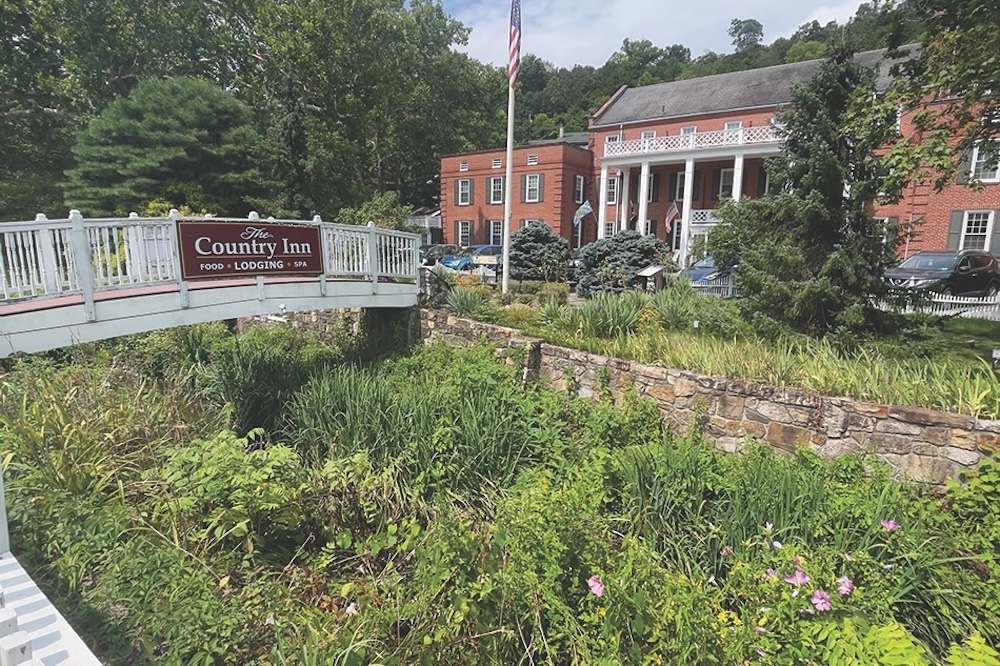
THE COUNTRY INN OF BERKELEY SPRINGS. PHOTO BY HUCK BEARD
For more than two-and-a-half centuries, people have come to Berkeley Springs in West Virginia not simply to visit, but to heal.
Long before wellness became an industry, Native Americans revered the warm mineral waters that rise there at a constant 74 degrees. By the mid-18th century, word had traveled across the frontier; a 16-year-old surveyor named George Washington made his way to what he called “ye fam’d warm springs,” returning nearly a dozen times in adulthood.
“I think myself benefited from the waters,” he wrote, “and am not without hope of their making a cure of me. A little time will show now.”
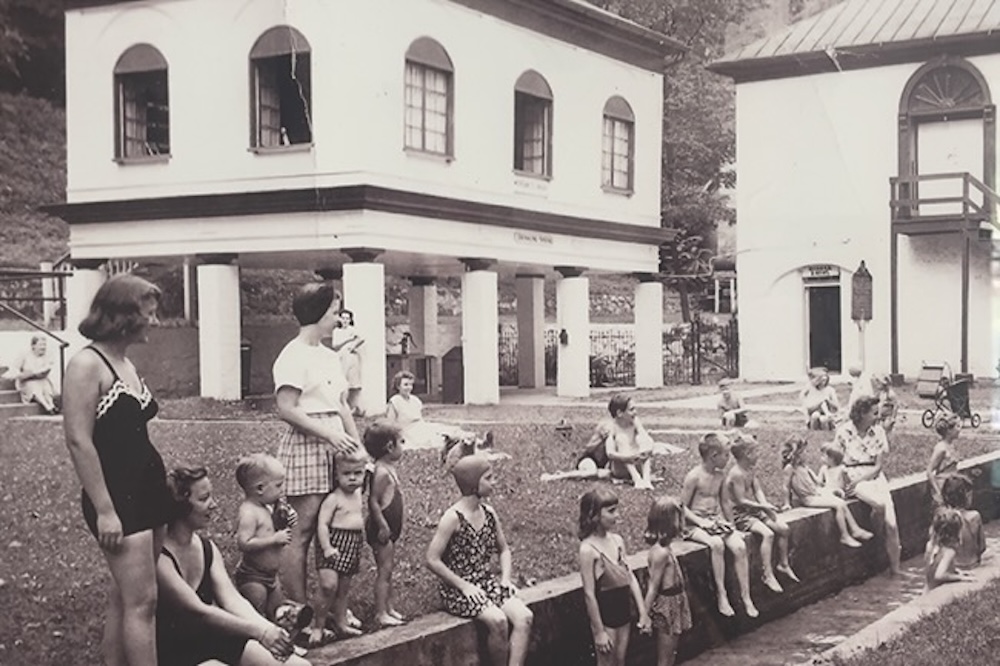
More than 250 years later, the water still flows — over 1,000 gallons per minute — unchanged in temperature or composition. It fills bathtubs, municipal taps, public fountains and glass bottles. It is, quite literally, the lifeblood of the town.
At the center of it all sits Berkeley Springs State Park, listed on the National Register of Historic Places and the smallest state park in West Virginia. The springs have never been privatized; Thomas Lord Fairfax, colonial landholder, decreed them free for public use. A park has surrounded them since the 1740s; today, you can still fill a jug beneath the stone springhouse or sit quietly beside the open pools along the western wall.
Built in 1815, the Roman Bath House, the oldest public building in town, remains in continuous use. Inside, the nine tiled chambers each hold 750-gallon tubs of spring water heated to 102 degrees. The experience is simple and ceremonial: draw the curtain, lower yourself into mineral warmth, and let time soften.
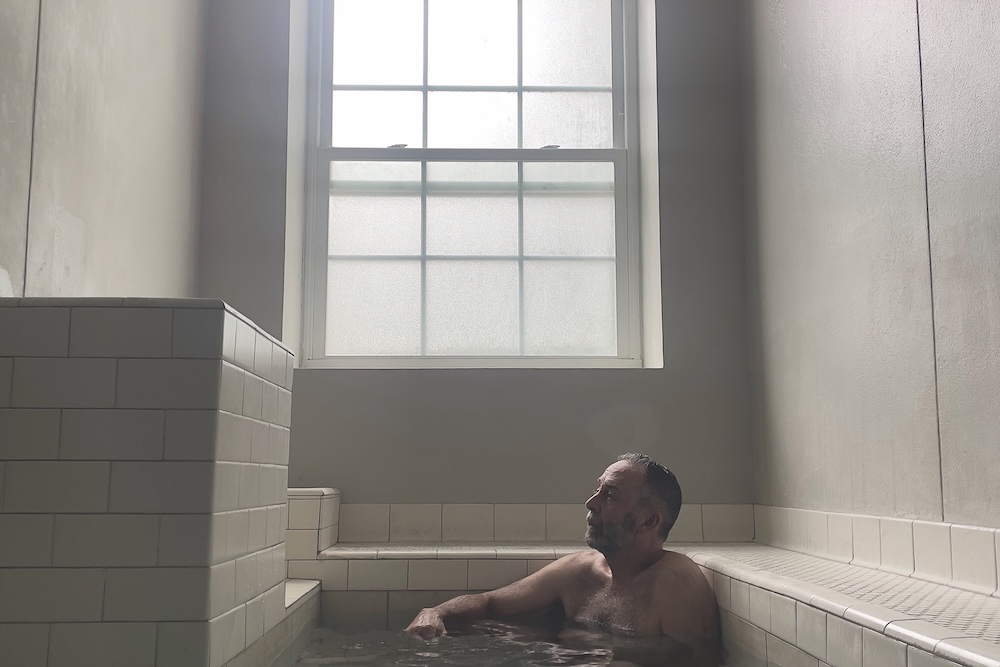
INSIDE THE ROMAN BATH HOUSE. PHOTO BY HUCK BEARD
Upstairs, a modest museum traces the natural and cultural history of a town that has survived war, fire and the slow churn of changing industries. (Although the population center is Berkeley Springs, its post office name since 1802, the official municipality is called Bath, established in 1776.)
Outside the park, Bath unfolds in walkable elegance. The original town lots were sold in 1777; buyers included Washington himself, along with Revolutionary generals, signers of the Declaration and members of the Continental Congress. The colonial elite selected Bath as a fashionable summer escape, and that genteel past still lingers in the architecture and tree-lined streets.
Lodging leans historic but unfussy. The Country Inn of Berkeley Springs pairs colonial façades with modern comforts; its wide porch and gardens are made for late-afternoon unwinding. The adjoining Renaissance Spa extends the town’s therapeutic tradition with hot stone massages and Moroccan scrubs.
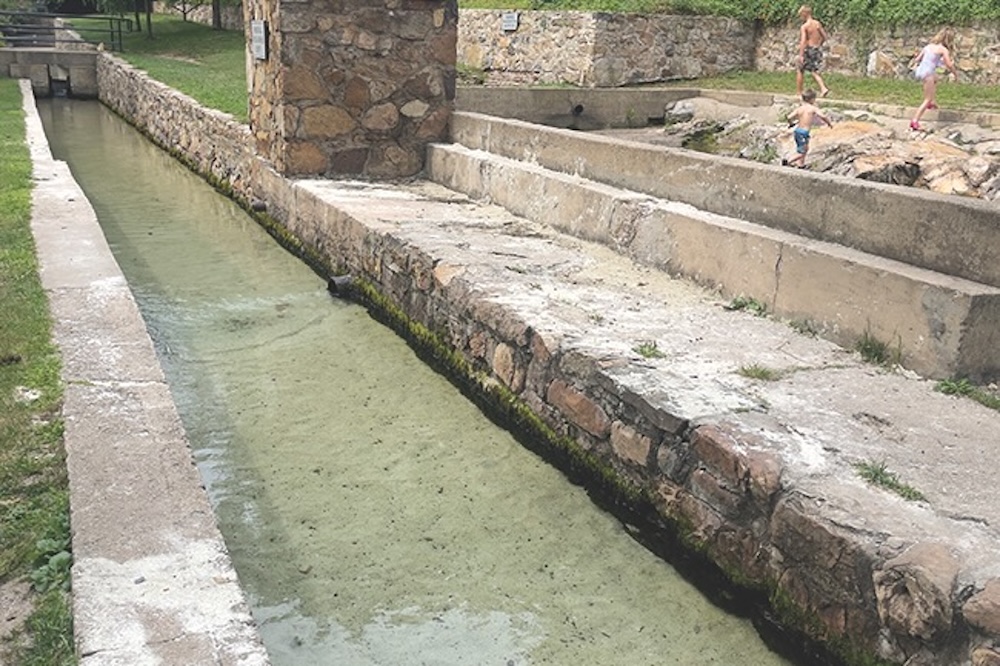
THE ROMAN BATH HOUSE. PHOTO BY HUCK BEARD
For something more intimate, the Mendenhall 1884 Inn sits steps from the park, its blown-glass windows and Irish Love Knot stained glass hinting at layered histories. Your stay is overseen by owners Greg and Claire Schene (Greg also is the mayor of Berkeley Springs). In Claire’s hands, breakfast feels less like a meal and more like a well-considered craft.
Berkeley Springs also is an art town, and that identity feels organic rather than curated. The Morgan Arts Council anchors the scene at the Ice House, while galleries and studios fill storefronts that might otherwise have gone quiet. The historic Star Theatre, romantic and slightly creaky in the best way, hosts films and live performances that reinforce the town’s cultural pulse.
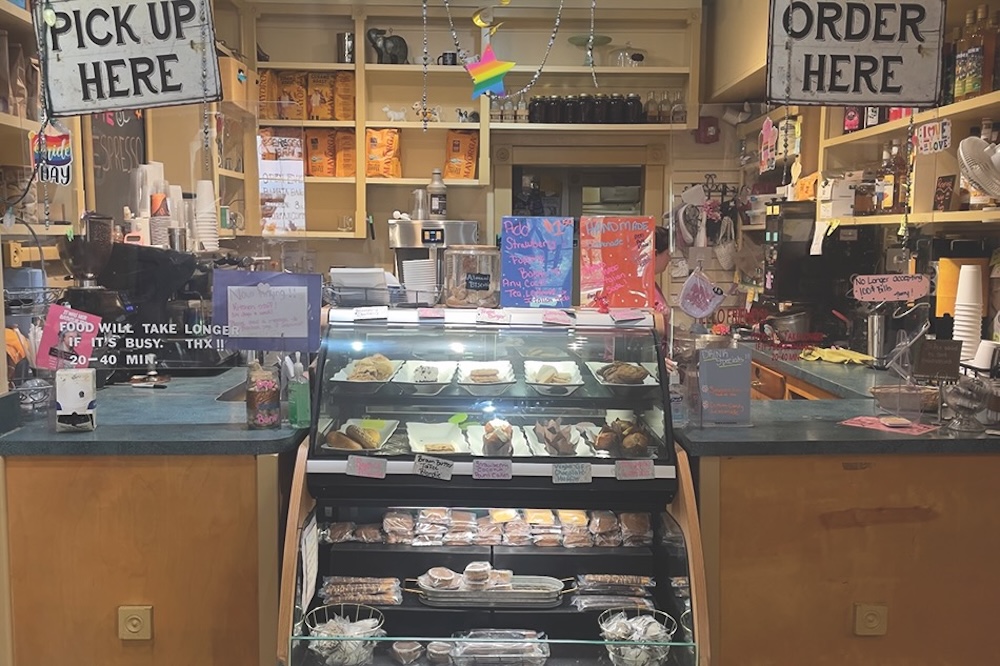
FAIRFAX COFFEE HOUSE. PHOTO BY HUCK BEARD
Outdoors, the appeal expands. A short drive west leads to Panorama Overlook atop Cacapon Mountain, where three states — Maryland, Pennsylvania, West Virginia — unfurl in a single sweep. The C&O Canal (on the Maryland side) and the B&O Railroad (West Virginia side) trace a compressed history of American transportation in one sweeping glance.
Farther afield, Eidolon Nature Preserve offers more than four miles of marked trails across a 354-acre ridge once held under a Fairfax grant. At 1,650 feet, the views from the top are expansive and quietly restorative.
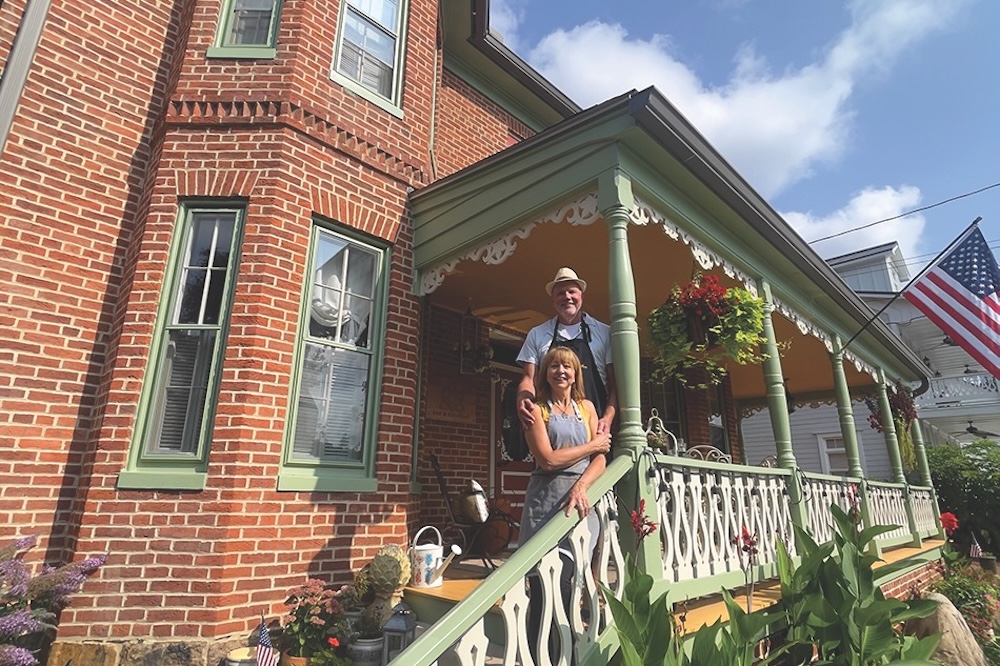
GREG AND CLAIRE SCHENE AT MENDENHALL 1884
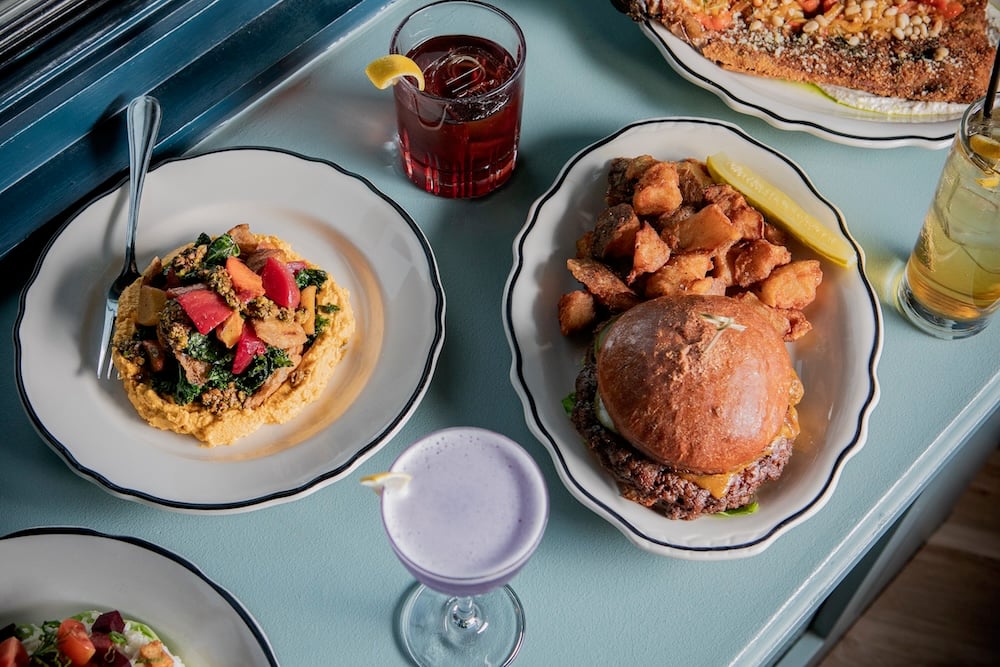
Back in town, daily rhythms settle around small pleasures. Mornings might begin at Fairfax Coffee House with strong espresso and breakfast sandwiches. Lunch could mean smoothies and provisions from Creekside Provisions + Supplies or a stop at Panhandle Apothecary, where teas, tinctures and elixirs blur the line between mercantile and medicine.
Dinner invites a nod to history. At Proof on Washington, “feast like a revolutionary” isn’t just branding; it’s a reminder that this small Appalachian town has long balanced refinement with frontier resilience.
Berkeley Springs does not overwhelm with spectacle. Its power is quieter. You walk from bathhouse to café to overlook without ever needing your car. You fill a bottle with the same water Washington drank. You sit on a porch as evening gathers over Cacapon Mountain.
Wellness here isn’t trend-driven — it’s inherited. And after a weekend in Bath, you begin to understand why generations have kept coming back: to take the waters, yes, but also to experience restoration.