5 Local Companies Making a Mark on Pittsburgh — and Far Beyond
They all began with a single idea: a way to solve a problem or close a gap in services.
Gecko Robotics
North Side | 100 South Commons, Suite 145
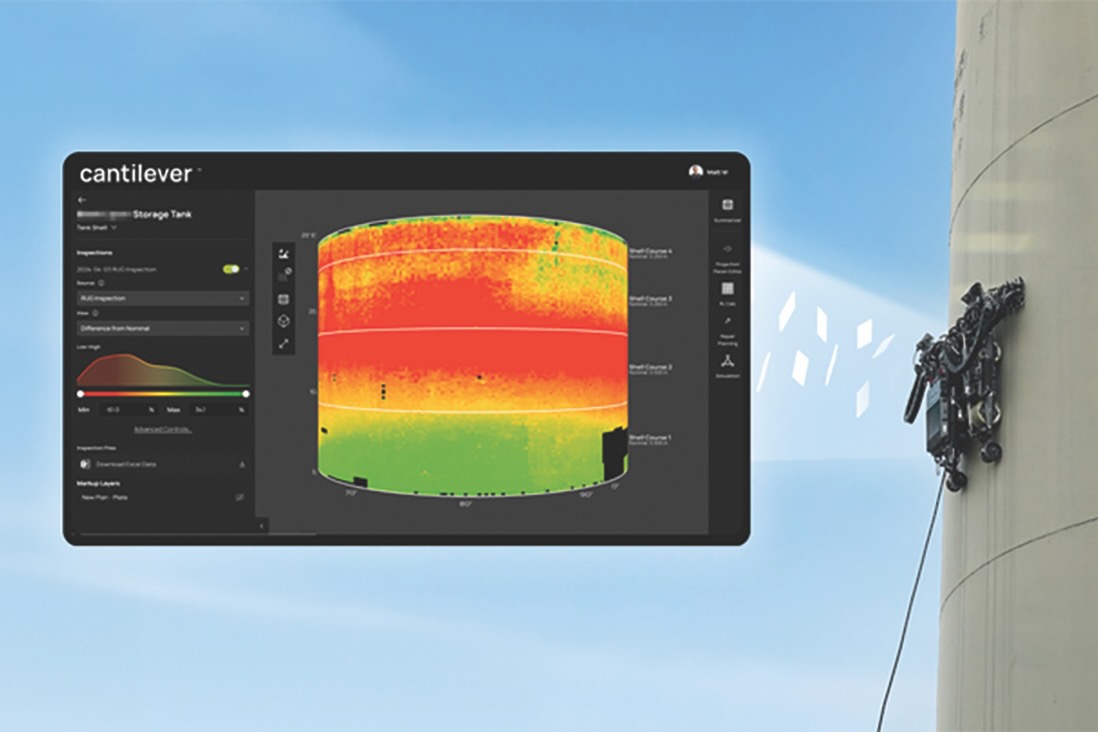
A ROBOT CLIMBS UP THE SIDE OF A A CHEMICAL TANK. | PHOTO COURTESY OF GECKO ROBOTICS
In a dorm at Grove City College over a decade ago, Jake Loosararian built a robot. Today, he’s the co-founder and CEO of a “unicorn” company, which means it’s valued at over $1 billion. That’s quite the trajectory for a college student — and Loosararian says it couldn’t have happened anywhere but Pittsburgh.
The electrical engineering major, who graduated in 2013, observed a problem that needed to be solved while touring the Scrubgrass Generating Plant in Venango County. Loosararian learned of a worker who was killed while trying to repair boilers and other equipment at plants and factories. He designed a robot that could venture into dangerous conditions — keeping humans safely behind the remote control.
Soon after, a trip to Costa Rica led to the creation of a new company. While watching geckos scamper along vertical surfaces, Loosararian realized that skill could be transferred to improving workplace safety and efficiency. He founded Gecko Robotics in 2013 with fellow engineering student Orion Correa (who has since moved on).

JAKE LOOSARARIAN & TROY DEMMER | PHOTO COURTESY OF GECKO ROBOTICS
Loosararian spent the next several years couch-surfing, sleeping in power plants and listening to soon-to-retire boomers share the wealth of knowledge they had learned over years on the front lines. He began to think about how their expertise could be used to train artificial intelligence language learning models to analyze data and improve the effectiveness of the robots. He sunk $30,000 of his own money into Gecko; at times, he had just $100 to his name.
In 2016, that all changed. Gecko Robotics was accepted into Y Combinator, a tech accelerator in California then led by Sam Altman, the current CEO of OpenAI.
Today, Loosararian and Troy Demmer, a 2011 graduate in finance and economics from Grove City College, oversee Gecko.
Demmer had been working in the health-care sector but says he was intrigued by how the power industry could be disrupted (in a good way) by technology. He felt there was an unmet need to make the industry safer. “Not everyone can just waltz into a power plant … you sort of really have to get behind the curtain,” Demmer says. “Being able to do that more and more captivated my interest.”
California helped shape Gecko into the company that it is today, but the team decided to move central operations back to Pittsburgh just five months later for one main reason — its Rust Belt roots.
Gecko Robotics has raised $347 million from investors, and today is valued at $1.25 billion. In addition to creating climbing and swimming robots that go where humans cannot, their AI-driven operating platform Cantilever improves the efficiency of these robots by incorporating current data and the wisdom gleaned from a century of industrialization in Western Pennsylvania. The company has taken what they call a “federation approach” — its main office is in Pittsburgh, with satellite locations in Boston, Houston, New York City, Washington, D.C., and Abu Dhabi.
Loosararian is now focusing on training a workforce for the next generation — and using AI to help.
He asked himself how he could train incoming workers in as little as two to three months while still giving them the knowledge base of a career expert. It’s possible, he says, when those workers are given robots trained on decades of expertise combined with real-time data collected by Cantilever. “And you can do that using AI that’s built off the back of really great information, data and hardware tools — like robotics — that are able to make those people superhuman.”
Parcel Health
Point Breeze North | 201 N. Braddock Ave., Suite 126
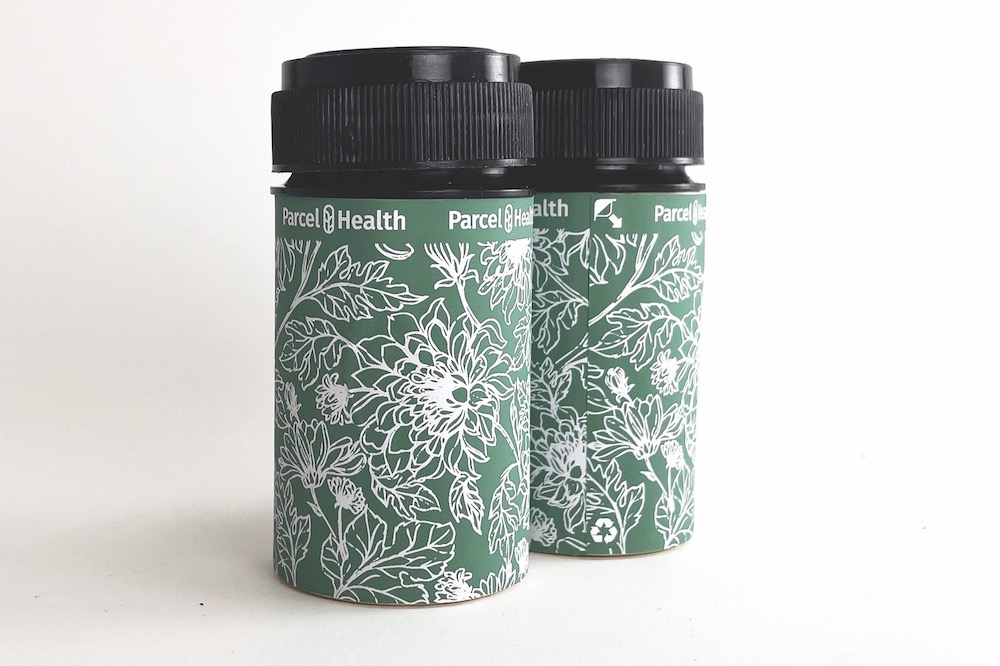
PHOTO COURTESY OF PARCEL HEALTH
One Pittsburgh-based startup has its roots far from the Steel City. Parcel Health co-founder Melinda Su-En Lee was born and raised in Malaysia, just a short distance from a landfill overflowing with plastic waste.
Years later, while completing a doctoral pharmacology program at the University of Michigan, Su-En Lee remembered the amber vials filling landfills in her home country. She began to envision a different type of pill bottle — one made of paper.
On a whim in 2020, she reached out to Mallory Barrett, a student at North Carolina State University, on LinkedIn; Barrett’s name came up in a search about sustainable packaging solutions because she had just won a design competition at her school.
“When I first messaged Mallory on LinkedIn, I’ll admit it felt like a mix of bold optimism and a little bit of a shot in the dark,” recalls Su-En Lee.

MALLORY BARRETT & MELINDA SU-EN LEE | PHOTO COURTESY OF PARCEL HEALTH
An indicator of their future successful partnership, Barrett says she was not startled by the cold pitch — she was excited. She replied the next day. “I was grateful she was on LinkedIn and was so open to exploring this idea with a complete stranger,” Barrett recalls. Her work on sustainable packaging paired perfectly with Su-En Lee’s vision and the problem she wanted to solve.
“The way I was trained to think and problem-solve as a designer was exactly what I would need to grow Parcel Health and its portfolio of world-changing paper-based pharmaceutical packaging solutions from a concept into a real company,” says Barrett.
From that LinkedIn message, Parcel Health was born. Both founders relocated to Pittsburgh when the company was accepted into the longstanding AlphaLab Health tech accelerator program, which offers startup funding, office space and hands-on guidance from trained mentors. Barrett and Su-En Lee jumped headlong into the local innovator community.
In 2024, the company launched Tully Tubes. These paper medication bottles are both recyclable and compostable. The plastic lid and patent-pending Capdapter, which are needed to meet child safety standards, are also manufactured from recyclable plastic. A coveted spot at AlphaLab Health and the guidance of Innovation Works (which supports early-stage startups), as well as several rounds of investment, brought Su-En Lee and Barrett’s idea to the local market earlier this year.
Tully Tubes are an industry-changer — and most industries resist change, at first.
Allegheny Health Network decided to take a chance on change, agreeing to trial the bottles at Allegheny Valley Hospital in early 2025. Pharmacists were initially skeptical but quickly adopted the product.
The trial was a resounding success. Tully Tubes will be rolled out in all AHN facilities, as well as the University of Virginia Health System and Hackensack Meridian System in New Jersey over the coming months.
Parcel Health is primed to change the pharmaceutical industry beyond Pittsburgh, but the city was integral to its success.
Barrett had not anticipated leaving North Carolina, but now it feels like kismet. “With the resources in place to grow, Pittsburgh became the natural hub where I could fully commit to Parcel Health,” she says. The city’s size also played a key role. “In a smaller market, we stood out more quickly, which helped us access mentors, investors and talent in ways that might have been harder in a larger, more crowded startup ecosystem.”
Deka Lash
3527 Washington Road, McMurray
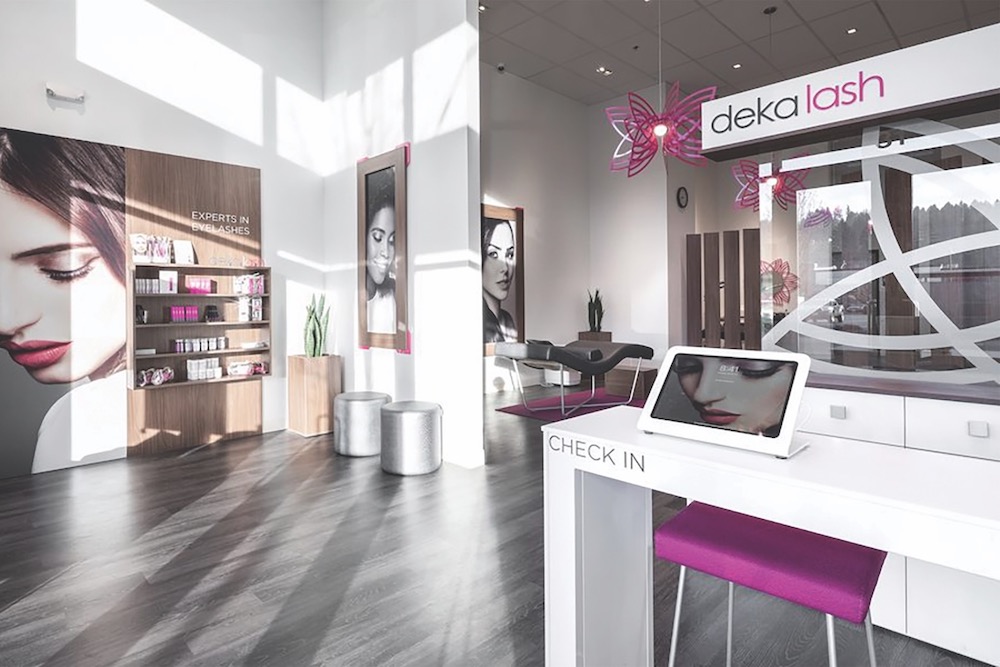
PHOTO COURTESY OF DEKA LASH
Deka Lash has 130 locations across the U.S., and it’s still growing. It all began in a small studio in Shadyside — by a local woman who wanted to solve a problem.
Jennifer Blair, CEO and founder of Deka Lash, says the idea to open a lash-extension studio for everyday women was born out of her own frustration. “There was a gap in the industry,” she says. “I was not inventing lashes, I was looking to reinvent the way women get them done.”
At that time, in 2012, lash-extension experts were hard to come by. Blair’s concept? A beauty studio dedicated solely to lash extensions. While once considered a splurge for special events like weddings, lashes began to go more mainstream at that time. Blair and her fledgling company hit the market at just the right moment.
“That shift from ‘special-occasion splurge’ to ‘everyday essential’ is really what’s fueled the growth in lashes,” says Blair.

JENNIFER BLAIR | PHOTO COURTESY OF DEKA LASH
Today, 85% to 90% of Deka Lash customers return every two to three weeks for lash services, while the remaining customers come in for specific events. Packages and subscription models make regular lash maintenance simple — and create loyal customers.
The original Shadyside location, then known as Lash Spa Studio, opened in 2012 with two lash beds. It turns out that offering women a convenient way to get lash extensions regularly was popular — customers drove over an hour regularly for Blair’s services. She quickly added a third bed and soon outgrew the space.
She scaled up to four Pittsburgh lash studios by 2015.
Blair did not initially have aspirations beyond her local studios. Her husband, Michael, encouraged her to think bigger — in particular, to consider franchising. The couple, who raised four children together in Washington County, had been involved in several other small businesses and realized they had something special.
“Women were coming back. They were talking about it. They loved the way they felt, which was what drove the growth,” says Blair. “We were onto something here that was making people feel better about themselves, so we asked ourselves, ‘How do we continue to do this?’”
The couple relaunched the lash studios in a franchise format in 2016. They renamed the company Deka Lash after the first two letters of their daughters’ names, Demi and Karli. With an initial round of investment from family and friends and a business model that resonated with women, Deka Lash expanded rapidly.
Today, Blair remains committed to listening to customer feedback in a constantly evolving industry. Based on that feedback, she’s added brow services, facials and dermaplaning at some locations, while others are adapting to offer med spa services such as Botox and microneedling.
As to why Pittsburgh was integral to her founder story?
Blair says it’s everything. “It’s affordable. It’s more forgiving than LA or New York City.” The tight-knit community of local business owners offered networking opportunities and the chance to experiment and refine their business model, she says.
And, just as critical to their success, it’s home. “I was already raising my four kids here,” she says of the early days of Deka Lash. The couple was heavily involved in the local community, which provided the support needed to launch their business. “It was the right foundation for us to start here.”
EKTO VR
North Side | 100 South Commons, Suite 102

PHOTO COURTESY OF EKTO VR
For virtual reality startup EKTO VR, their Pittsburgh story is as much a love story as it is a success story.
When Brad Factor was trying to come up with a gadget that would reduce the motion sickness many experience when using virtual reality headsets as well as to enhance the immersive experience, he was a one-man show. As an engineer at Honeywell Aerospace until 2016, Factor dreamed of going out on his own and creating something unique — maybe even something fun.
“As a kid, I loved motion-simulator rides,” says Factor. “SeaWorld had one, Mission Bermuda Triangle. I just kind of queued up to ride again and again whenever I could.”
Just as he grew restless at Honeywell, virtual reality was taking off. Oculus launched its first DK1 headset in 2013. After some conversations with its founder, Palmer Luckey, Factor decided it was time to make his move. “He said, ‘Maybe give this a shot; it’s pretty good.’”
Virtual reality was about to have its moment.

JENN SYDESKI & BRAD FACTOR | PHOTO COURTESY OF EKTO VR
Factor left Honeywell and enrolled in a master of science program in Robotic Systems Development at Carnegie Mellon University in 2016, loaded up on business courses when he could, and launched EKTO VR upon graduation the next year.
In 2019, Factor was accepted into AlphaLab Gear, where he was granted funding to develop his product and a bay to build in. He got to work.
In another bay at AlphaLab Gear was Jenn Sydeski, working on a medical device. Factor had first met Sydeski at Ascender Bootcamp for fledgling companies, and the pair kept crossing paths.
“He and I were going to a lot of the same events and in a lot of the same programs,” recalls Sydeski. At one such event, developers were rotating tables to give their elevator pitch. “I plop down, and Brad gives his pitch. And my response was, ‘Oh, I could never use that. I get so motion sick.’” Factor explained that’s just the problem he was trying to solve.
The duo soon paired up to work on EKTO VR together, developing virtual-reality boots that reduce motion sickness by constantly recentering the player while creating a more realistic experience. They keep VR users safe and centered in the room. The boots also enhance the immersive experience.
“We ended up in a situation where I was single, Brad was single, and I had a kid who adored him,” laughs Sydeski. “And he had a company I adored. And so we adopted each other’s kids.” The couple married in 2023.
EKTO VR raised money with a valuation cap of $15 million and just completed a round of Honeycomb investment that raised more than $50,000. The bulk of those investments were just $100. The couple also attended Seattle’s PAX West gaming expo this fall. The world’s hardcore gamers wanted in on the EKTO boots; preorders are rolling in. EKTO plans to run a Kickstarter fundraising campaign next and expects the consumer product born of that first prototype to be on people’s feet by the end of this year.
The couple’s path to success is complex, but they say the network of smart, creative people in Pittsburgh was integral to it.
“Advanced robotics can’t be built just anywhere,” Sydeski says. “We have benefited so much from the support and expertise of CMU’s technical talent —everything from a program and adviser who were willing to do things differently than they ever had before and [to] let him walk in the door with a project.
“Beyond that, the cost of operating here is so much more manageable than other ecosystems that it has de-risked cashflow in a way that has allowed us to develop at a responsible pace to meet a rising market.”
Korion Health
Oakland | Pitt Big Idea Center, 3601 Forbes Ave.
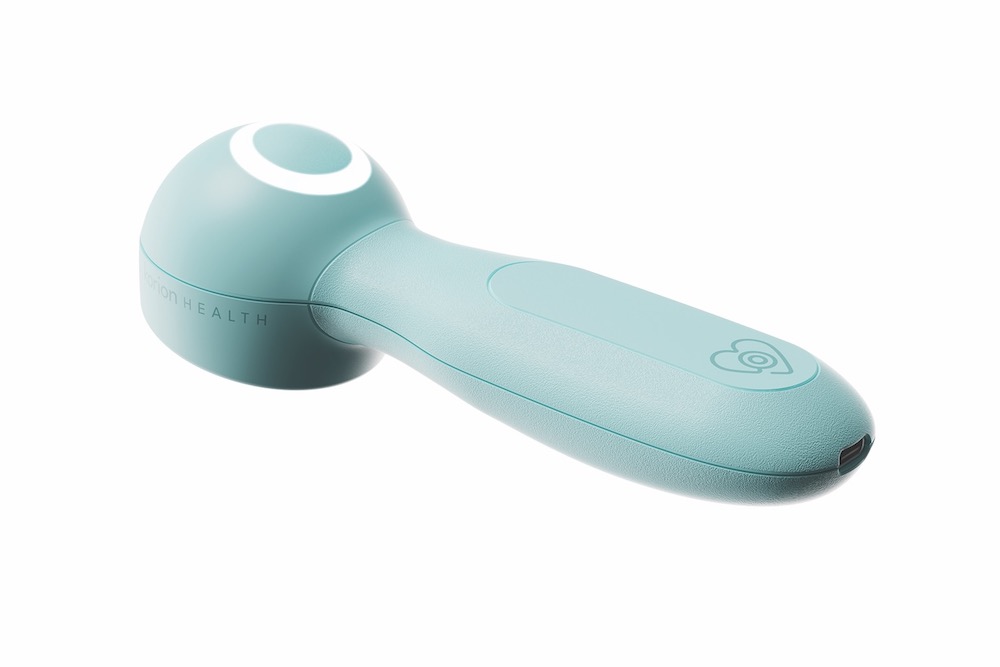
PHOTO COURTESY OF KORION HEALTH
As a first-generation American born to Chinese immigrant parents, Anna Li grew up with a complex view of the United States’ health-care system. It’s shaped her every move since.
“Growing up, [my parents] didn’t really speak English, so I often had to translate for them and be their health-care advocate,” says Li. A close friend’s struggles with cystic fibrosis — a genetic condition that impairs the normal clearance of mucus from the lungs — deepened her awareness of issues within the health system.
“I grew up with this background of deeply understanding both the logistical barriers to accessing care but also the cultural barriers, like my parents being from an Eastern culture and not really trusting Western medicine.”

ANNA LI | PHOTO COURTESY OF KORION HEALTH
This desire to improve access to care spurred Li toward medicine. Today, she’s the founder and CEO of Korion Health, a Pittsburgh-based startup that makes electronic stethoscopes for the home that allow doctors to collect vital signs from patients remotely.
In 2020, Li moved to Pittsburgh from her home in North Carolina to pursue a dual Ph.D./MD program at the University of Pittsburgh and Carnegie Mellon University. The pandemic gave Li an even deeper look into the inequities of the health-care system — in particular, telehealth. Li watched doctors struggle to assess vitals through a screen and wondered if there was a way to improve that process.
While learning to use a stethoscope in cardiology class, she realized how simple it was. “I was like, you know, I’m not that smart. Like, if I can do it, anyone can do it.”
Li studied both engineering and biology for her undergrad degree at Duke University. Those engineering skills led to Korion’s first product — an affordable electronic stethoscope that patients could easily use at home.
Creating a digital stethoscope was only part of the challenge; patients also needed to know how to use it.
That idea came from Snapchat.
While the social-media app is merely entertainment, Li wondered if Snapchat’s filter tech could be repurposed. “They use augmented reality to locate your body,” Li realized. “We can also use augmented reality to look at your body and find the heart valve positions.” Using similar technology, Korion’s consumer product will have an interface that walks patients through the process.
Colleagues helped Li envision Korion Health as a company rather than just a product. Her mentor Dr. Eric Dueweke (now Korion’s chief medical officer) urged her to consider FDA clearance as a path to helping more patients. Akshaya Anand, a talented coder who was involved in the development of the stethoscope and software, joined the company as co-founder and chief technology officer in 2022.
After several rounds of capital investment, a slew of awards and grants, and a partnership with Hellbender, a Pittsburgh-based electronics design and manufacturing company, Korion Health is on its way to changing the way telehealth is done.
The stethoscope is being trialed at several Allegheny Health Network and UPMC facilities across the region while the company works toward FDA clearance. Korion Health won the prestigious $1 million Hult Prize this fall, a global entrepreneurial competition with nearly 10,000 competitors.
Li remains shocked by the waves she’s making. “I’m a little bit different from many entrepreneurs,” she says. “Many of my other startup friends are like, ‘I’ve always wanted to start a company. This is my dream.’ And I am like, ‘Man, I got peer pressured in starting this company.’”
Meg St-Esprit is a Bellevue-based freelance journalist who covers real estate, lifestyle, education, business, parenting and travel for a variety of local and national outlets.